Clear Sky Science · en
Contrasting selective signatures of gene expression plasticity in response to antifungal clotrimazole and common environmental stresses in yeast
How tiny cells handle changing worlds
Yeast may seem simple, but these single-celled fungi are masters at coping with change. From salty dough to rising body temperature to antifungal drugs, yeast cells must rapidly adjust which genes are switched on or off to stay alive. This study asks a big-picture question with these tiny cells: when the environment changes, are these quick gene-expression shifts a useful survival trick that evolution works to preserve, or are they just side effects of how cells are built?
Flexible gene activity as a survival trick
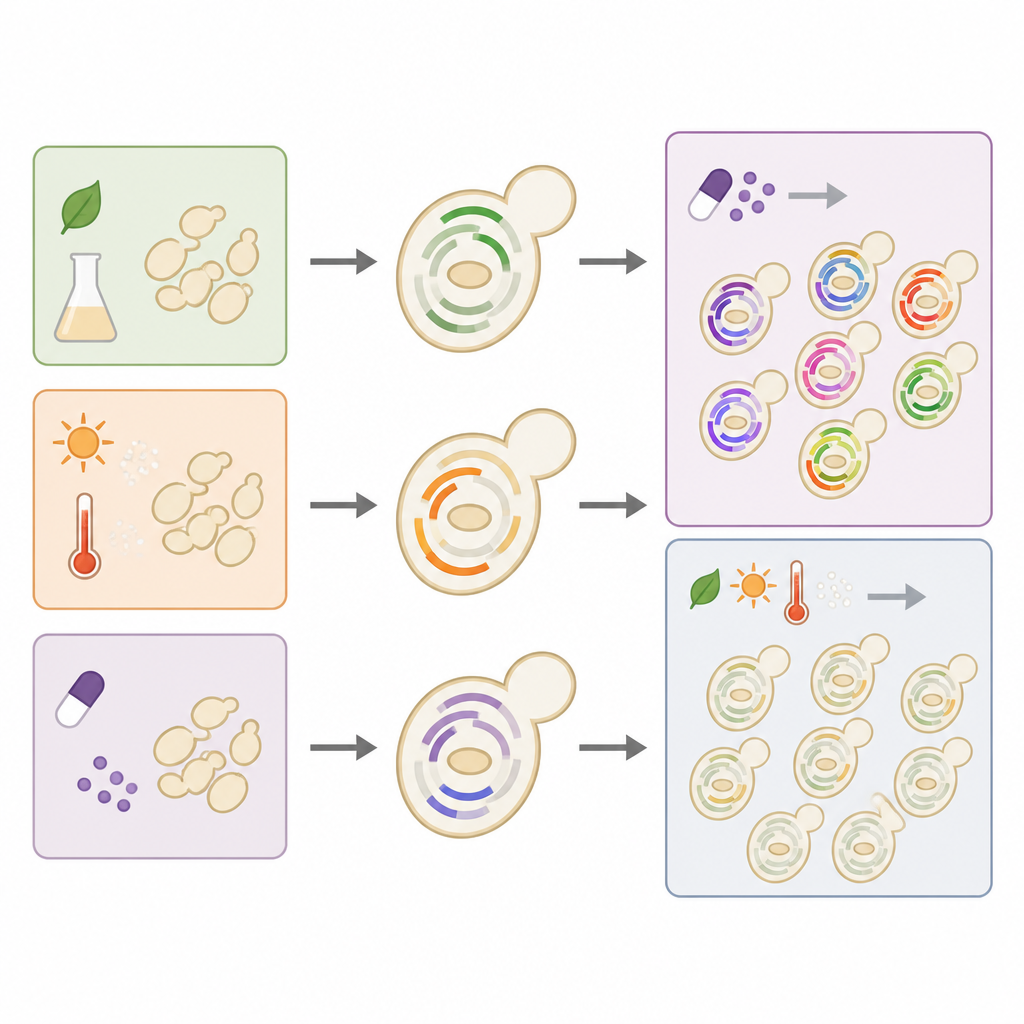
Living things often rely on phenotypic plasticity, the capacity of one genetic blueprint to produce different traits under different conditions. In yeast, a key part of this flexibility lies in altering which genes are active when the environment turns harsh. The authors focused on three stresses: salty conditions, moderate heat, and exposure to clotrimazole, a common antifungal medicine that blocks a component of fungal cell membranes. Salt and heat are old, familiar challenges in yeast’s evolutionary history, while clotrimazole is a relatively new, synthetic threat. By comparing how gene activity changes across these different settings, the study probes whether plastic responses are truly helpful adaptations or merely neutral side effects.
Letting mutations pile up to reveal natural selection
To tease apart the role of natural selection, the researchers used a clever evolutionary setup. They examined ordinary yeast strains collected from nature, where selection has acted for many generations, and compared them with mutation accumulation lines. These special laboratory strains were forced through repeated single-cell bottlenecks so that random genetic changes built up with minimal selection. All strains were grown in a rich medium, in salty medium, at higher temperature, and in clotrimazole. The team then used RNA sequencing to measure gene expression under each condition and calculated plasticity for every gene as the size of its activity change between normal and stressful environments.
Drug stress reveals adaptive flexibility
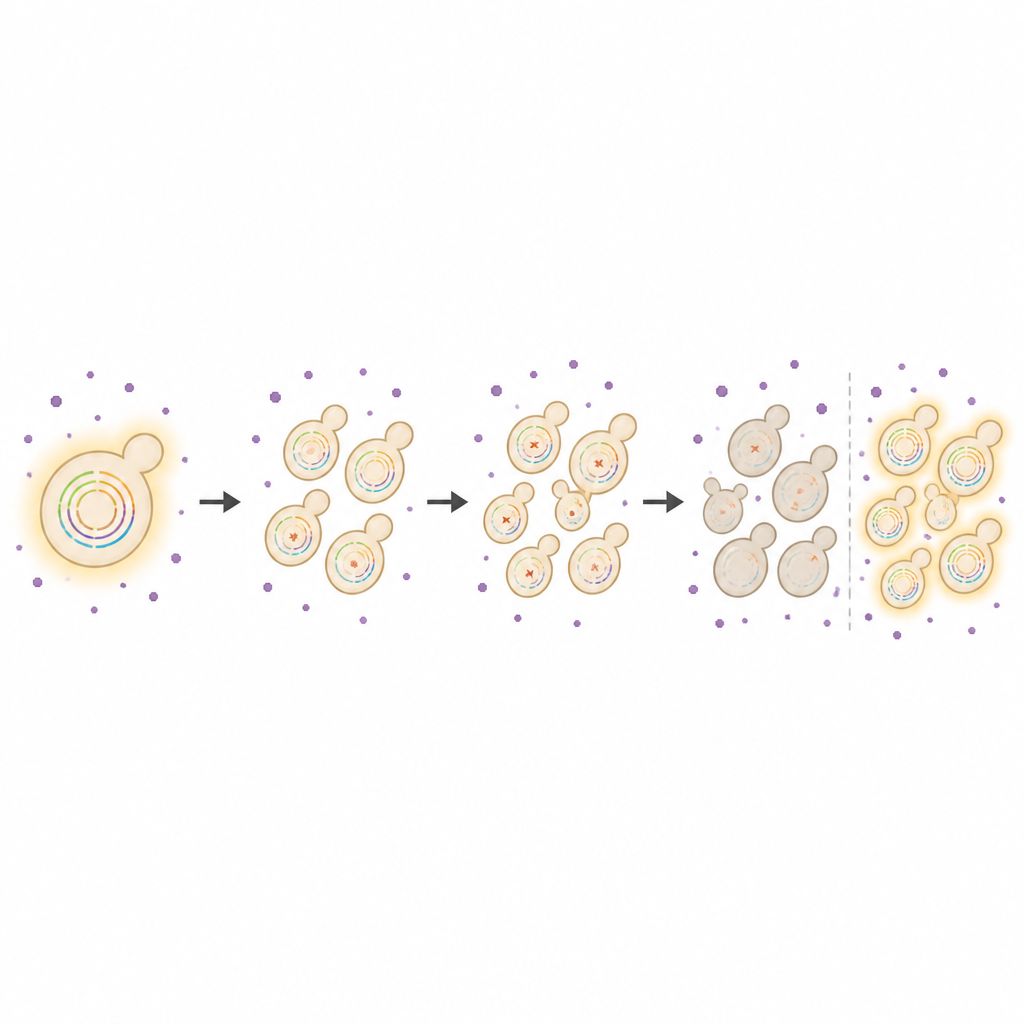
Across thousands of genes, a clear pattern emerged. Under salt and heat, the mutation accumulation lines showed mixed, largely random changes in plasticity compared with their ancestor: some lines became more flexible, others less so, with no consistent direction. This fits what would be expected if most gene-expression shifts under these common stresses are neutral. In sharp contrast, every mutation accumulation line showed reduced gene-expression plasticity in clotrimazole, and many genes flipped their response direction relative to the ancestor. The number of genes that significantly changed activity under the drug also dropped sharply in these lines. Together, these results indicate that, in the antifungal environment, plastic gene responses in the original strain were beneficial and had been preserved by natural selection; once selection was relaxed, that helpful flexibility eroded.
Shared stress pathways at the heart of the response
To understand what made the drug-response flexibility useful, the authors looked for biological pathways that were strongly activated in the ancestor and natural strains but largely lost in mutation accumulation lines. They found that genes involved in general stress-handling systems, especially responses to oxidative damage and chemical exposure, were often missing from the plastic response in the mutated strains. Because clotrimazole can trigger harmful reactive molecules and disrupt basic metabolism, turning on these broad stress pathways likely helps cells survive. When the team tested growth in both clotrimazole and hydrogen peroxide, which directly causes oxidative stress, they saw that lines that fared poorly in one environment also tended to fare poorly in the other, supporting the idea that the lost oxidative-stress response reduced fitness in both cases.
What this means for evolution and new threats
The study concludes that not all gene-expression flexibility is equal. For long-familiar challenges like moderate salt and heat, much adaptation may already be built in, so many additional shifts in gene activity behave like neutral noise. But when yeast face a novel chemical threat such as clotrimazole, quickly rewiring gene activity through general stress pathways can be a true adaptive asset that natural selection maintains. This work shows how tiny changes in when and how genes are used can give microbes a head start against new stresses, including antifungal drugs, and highlights that the evolutionary value of flexibility depends strongly on the kind of challenge a cell confronts.
Citation: Qian, Y., Yao, Z., Yao, Y. et al. Contrasting selective signatures of gene expression plasticity in response to antifungal clotrimazole and common environmental stresses in yeast. Nat Commun 17, 4467 (2026). https://doi.org/10.1038/s41467-026-71153-0
Keywords: phenotypic plasticity, yeast stress response, gene expression, antifungal clotrimazole, evolutionary adaptation