Clear Sky Science · en
Targeting a super-enhancer induced aldehyde dehydrogenase metabolic loop mitigates CDK4/6 inhibitor resistance in estrogen receptor-positive cancers
Why this research matters for people with cancer
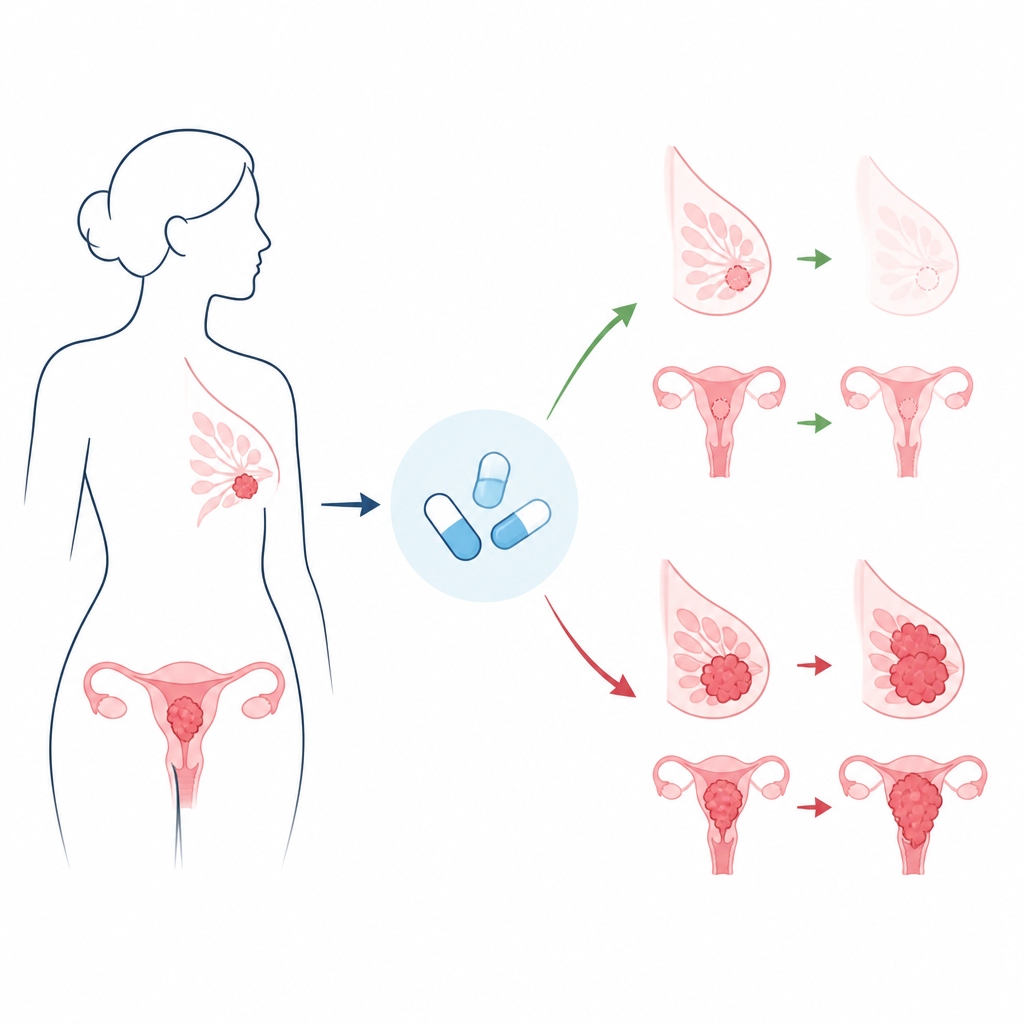
Drugs that slow the cell cycle, called CDK4/6 inhibitors, have changed care for many people with estrogen receptor positive breast and endometrial cancers. Yet many tumors either do not respond or eventually outgrow these medicines. This study uncovers a hidden metabolic loop involving vitamin A that helps cancer cells escape CDK4/6 treatment and suggests practical ways doctors might shut down this escape route.
Powerful drugs meet a stubborn problem
CDK4/6 inhibitors work by freezing cancer cells at a key checkpoint before they divide, which has extended the time before disease worsens in many patients when combined with hormone therapy. However, both primary resistance (when tumors are insensitive from the start) and acquired resistance (when they adapt over time) limit their long term benefit. Known genetic changes, such as damage to the RB1 gene or extra copies of CDK6, explain only a fraction of resistant cases. This led the authors to explore non genetic changes in how DNA is packaged and read, asking whether shifts in the control switches that drive gene activity might underlie resistance.
Rewiring cancer’s control switches
The team examined tumor samples and patient derived organoids from women with endometrial cancer, grouping them by how well they responded to a CDK4/6 drug called Abemaciclib. They mapped both gene activity and chemical marks on DNA associated proteins and found sweeping changes between sensitive and resistant tumors. In resistant samples, large clusters of regulatory regions known as super enhancers were redistributed to boost many genes tied to cancer growth and hormone response. Similar patterns appeared in breast cancer models, suggesting a shared resistance program across estrogen driven cancers that does not depend solely on mutations.
A vitamin A fueled feedback loop
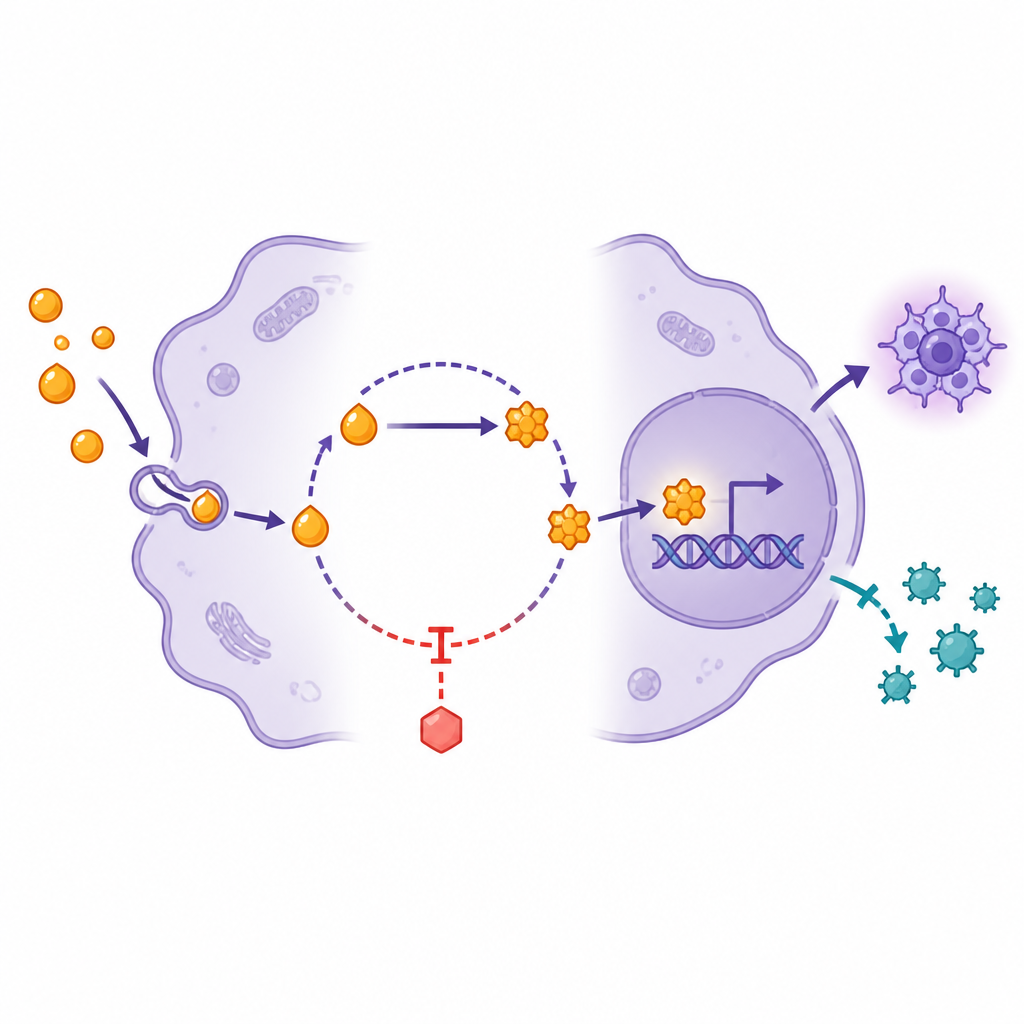
Among the super enhancer driven genes, one stood out: ALDH1A1, an enzyme that converts vitamin A into retinoic acid, a potent signaling compound. Resistant cells showed high ALDH1A1 levels, higher enzyme activity, and more retinoic acid. When the researchers blocked ALDH1A1 with genetic tools or an existing drug called disulfiram, cells that had resisted CDK4/6 treatment became vulnerable again and underwent cell death. Adding vitamin A or retinoic acid, by contrast, made normally sensitive cells less responsive to CDK4/6 inhibitors, and this effect grew stronger at higher doses. Animal studies mirrored these findings: a vitamin A rich diet blunted the benefit of Abemaciclib, while inhibiting ALDH1A1 restored tumor shrinkage.
Hormone signals join the resistance circuit
The study also shows how retinoic acid uses hormone receptors inside the cell nucleus to reinforce this loop. Retinoic acid binds a protein called RARα, which forms a complex with the estrogen receptor ERα. In resistant cells, these partners accumulate in the nucleus and sit together on super enhancer regions near the ALDH1A1 gene, keeping it switched on. This creates a self reinforcing circle: ALDH1A1 makes more retinoic acid, which strengthens RARα and ERα activity, which in turn further boosts ALDH1A1 and other growth related genes such as those driving the cell cycle and aggressive cell behavior. Drugs that block RAR signaling or disrupt the broader enhancer machinery also broke this circuit and re sensitized resistant organoids and tumors to CDK4/6 inhibition.
Turning findings into future treatment choices
To a lay reader, the key message is that some estrogen driven cancers learn to use vitamin A processing as a survival trick against important targeted drugs. By rewiring powerful control regions in their DNA, they lock in high activity of a vitamin A converting enzyme that, together with hormone signals, keeps growth programs running even in the presence of CDK4/6 inhibitors. The work suggests that monitoring this pathway and limiting vitamin A load, or pairing CDK4/6 drugs with medicines that inhibit ALDH1A1, RAR signaling, or related epigenetic regulators, could offer new ways to delay or overcome resistance in the clinic.
Citation: Chen, X., Liu, S., Luo, D. et al. Targeting a super-enhancer induced aldehyde dehydrogenase metabolic loop mitigates CDK4/6 inhibitor resistance in estrogen receptor-positive cancers. Nat Commun 17, 4507 (2026). https://doi.org/10.1038/s41467-026-71144-1
Keywords: CDK4/6 inhibitor resistance, estrogen receptor positive cancer, ALDH1A1, vitamin A metabolism, retinoic acid signaling