Clear Sky Science · en
Sgk1 upregulation in hippocampus-projecting amygdala neurons underlies the delayed onset of PTSD-like avoidance behavior
Why some trauma fears arrive late
Most people think of post traumatic stress disorder, or PTSD, as an immediate reaction to a terrible event. Yet for many, a powerful urge to avoid places and situations linked to the trauma emerges only weeks later. This study in mice asks why that delay happens, tracing the problem to a specific brain pathway and a single stress sensitive molecule.
From electric shocks to lasting avoidance
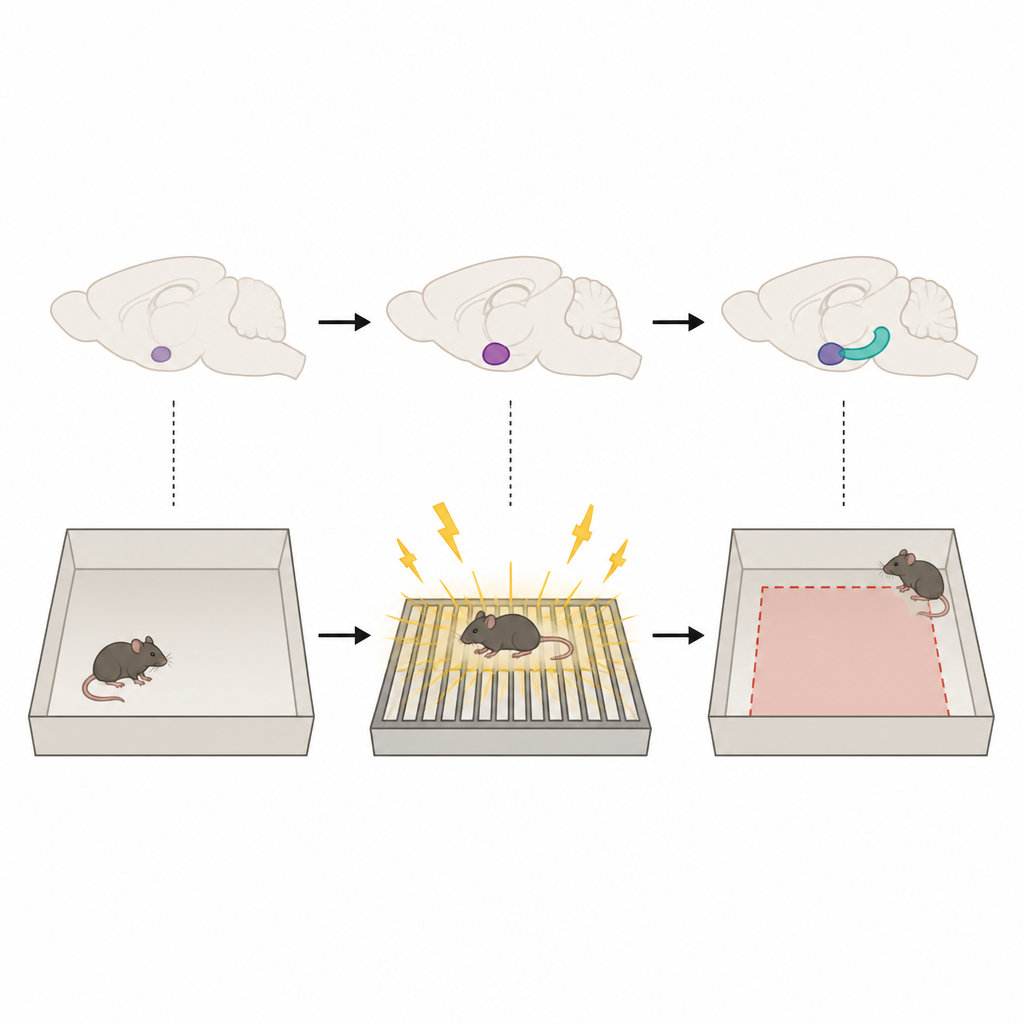
The researchers used a well established mouse model of PTSD in which animals receive inescapable mild footshocks over two days. The shocks did not make the mice generally sluggish or sick, but over the following week the animals gradually started to avoid open, exposed areas that they would normally explore. This growing tendency to stick to the edges of a box or shun the open arms of a raised maze mirrors the persistent avoidance often seen in people after trauma.
A key link between fear and memory
To search for the brain systems behind this delayed avoidance, the team focused on the amygdala, a region that helps tag experiences as threatening, and its connections to other areas. Using light based recordings of activity in living mice, they found that a particular set of amygdala nerve cells that send signals to the ventral hippocampus, a part of the brain involved in context and emotion, became unusually active a week after stress. Cells that instead projected to the brain’s reward hub did not show this change. Silencing the amygdala to hippocampus pathway with a chemogenetic switch reduced the mice’s avoidance, pointing to this circuit as a driver of the behavior.
Stress hormones leave a lasting fingerprint
The delayed changes were not due to a long lasting flood of stress hormones. Levels of corticosterone, the main stress hormone in mice, spiked only briefly after the shocks. However, blocking either the hormone itself or its preferred receptor, the glucocorticoid receptor, during the stress days prevented both the later avoidance and the extra firing in the amygdala to hippocampus pathway. This suggested that a short hormone surge imprints a longer lasting change inside these cells.
One molecule turns up the volume
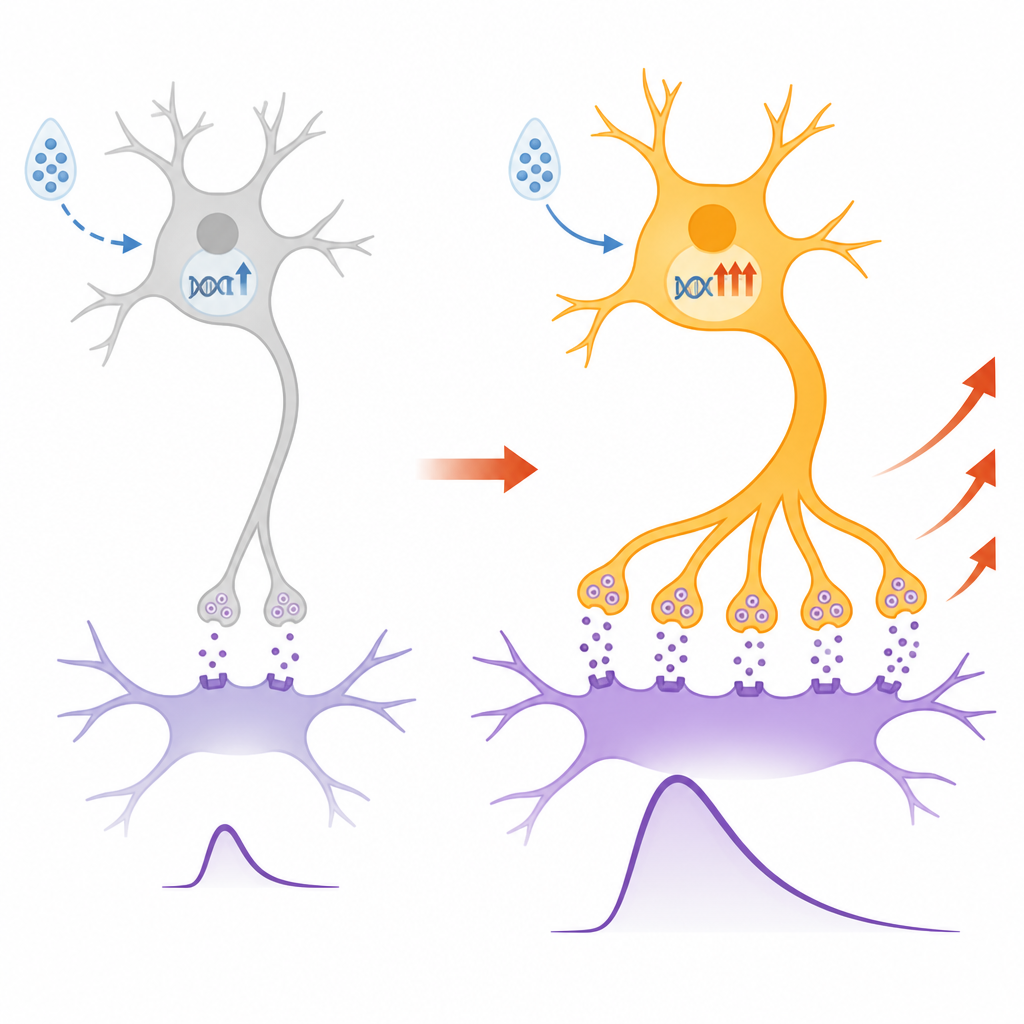
Diving deeper, the scientists measured activity of several genes controlled by the glucocorticoid receptor in the two amygdala pathways. Only one stood out: serum and glucocorticoid regulated kinase 1, or Sgk1, was selectively increased in the cells that project to the ventral hippocampus. This boost went along with greater electrical excitability and stronger excitatory input onto these neurons. When the team introduced a disabled version of Sgk1 into this pathway, the stress no longer made the cells overactive or the mice avoid open spaces. Conversely, raising Sgk1 levels did not by itself cause avoidance, but it made mice vulnerable: a milder “subthreshold” shock protocol that normally has little effect now triggered both heightened pathway activity and strong avoidance.
What this means for understanding PTSD
Taken together, the work reveals a chain of events in which a brief wave of stress hormone upregulates Sgk1 in a select set of amygdala neurons that talk to the hippocampus. This molecular change gradually turns up the gain on that pathway, making threat related signals louder and tilting behavior toward avoidance. In simple terms, the study suggests that PTSD like avoidance can arise when a particular fear to memory highway in the brain is sensitized by Sgk1, and that dialing down this molecule or this pathway might one day help reduce the delayed pull to withdraw from trauma linked situations.
Citation: Zou, JX., Liu, WZ., Li, YQ. et al. Sgk1 upregulation in hippocampus-projecting amygdala neurons underlies the delayed onset of PTSD-like avoidance behavior. Nat Commun 17, 4683 (2026). https://doi.org/10.1038/s41467-026-71129-0
Keywords: PTSD, amygdala, stress hormones, avoidance behavior, Sgk1