Clear Sky Science · en
Decentralized electric vehicle charging enables large-scale photovoltaic integration in tropical cities
Why city drivers and sunshine lovers should care
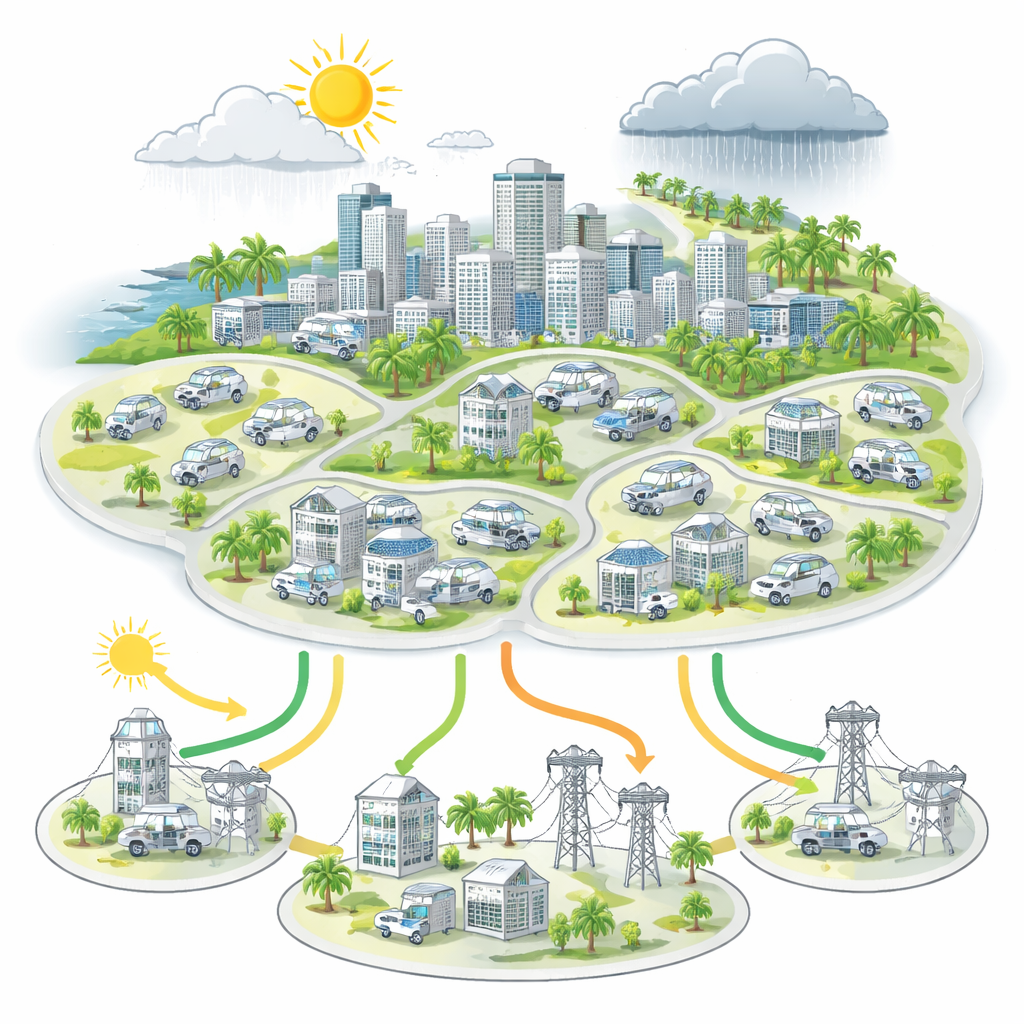
Tropical cities are growing fast and getting hotter, and many are betting on solar panels and electric cars to cut carbon pollution. But in places with intense sun and sudden thunderstorms, like Singapore, solar power can flicker wildly from one neighborhood to the next. This study asks a deceptively simple question with big consequences: if millions of electric cars plug in across a city, can their batteries quietly soak up these swings in solar power and spare the grid from overloads—without building miles of new cables and expensive backup plants?
Stormy weather and shaky solar power
In dry, sunny regions, power planners already worry about the “duck curve”: solar panels flood the grid with electricity at midday, then output crashes at sunset just as people get home and turn everything on. In the tropics, the problem is tougher. The authors show that fast-moving thunderstorms can make solar output plunge in one part of the city while staying high elsewhere, within minutes. Using detailed maps of sunlight and a realistic model of Singapore’s power network, they find that these sharp local drops in solar power force large bursts of electricity to flow across transmission lines to keep the lights on. During stormy periods, peak line loadings can more than double compared with clear days, pushing the grid close to its safe limits.
Electric cars as neighborhood batteries
Electric vehicles are, in essence, large batteries on wheels. When parked and plugged in, they can either charge from the grid or send power back, a concept known as vehicle-to-grid. The team combines mobile phone-based mobility data, solar patterns, and a detailed city-wide grid model to explore five futures for Singapore in 2050, when nearly all cars are electric and rooftop, wall-mounted, floating, and roadside solar installations add up to a major power source. They simulate where and when cars are parked, how much energy their batteries hold, and how different charging strategies affect both city-wide demand and the strain on individual power lines.
Central control that backfires
A common proposal is to control all charging across the city from a central perspective, aiming to smooth the total demand seen by large power plants. The authors test this “system-level” strategy and find an unexpected downside. While it does flatten the overall daily demand curve and helps with the classic duck-curve problem, it actually increases the stress on many transmission lines—especially on days with thunderstorms. Because the optimization only cares about the city as a whole, it is free to create large local imbalances: some districts may be charging heavily while others are discharging. Those differences have to be evened out by high power flows along the grid, which can exceed the loads seen with uncontrolled charging.
Local control that eases the strain
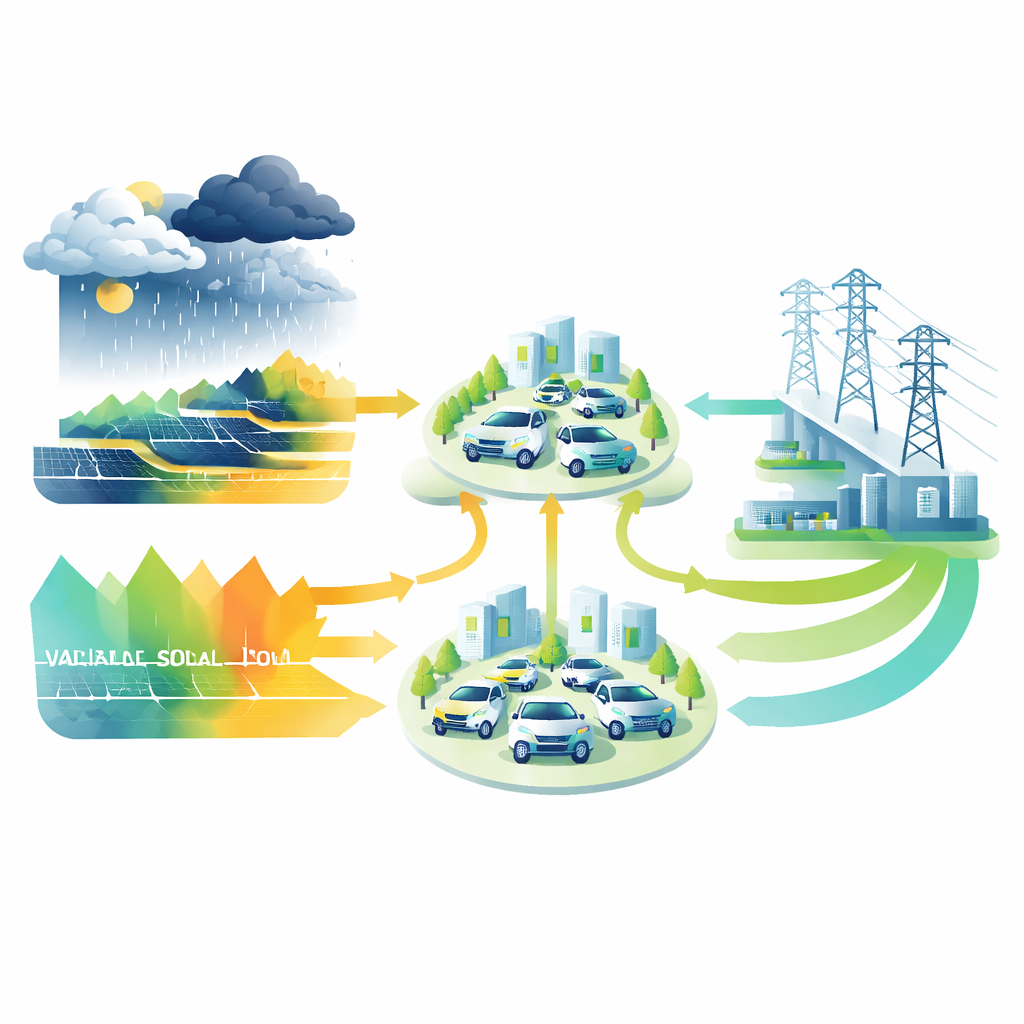
To fix this, the researchers design a “district-level” strategy that treats each urban district as a mini-system. Instead of only smoothing city-wide demand, it minimizes peak net demand within every district. In the simulations, this decentralized approach both tames the duck curve and cuts transmission line loads compared with uncontrolled charging, with typical reductions of nearly one-fifth on stormy days. The benefits hold under many different assumptions about battery size, charging speed, and how many vehicles are electric, and they appear in drier climates as well. The team also shows that mobility patterns matter: on weekends, when cars are more often parked during the day in residential areas, the grid benefits are noticeably larger than on commuting-heavy weekdays.
What this means for future tropical cities
Viewed through everyday experience, the message is straightforward: if cities use parked electric cars as neighborhood batteries instead of treating them as a single giant resource, they can host far more solar power without overloading their wires. The study suggests that a thoughtful mix of local charging control, fair payments for drivers who offer their batteries, and secure ways to use mobility data could save hundreds of millions to billions in grid upgrades for a city like Singapore. More broadly, it shows that the path to a low-carbon urban future does not rely only on building new hardware; it also depends on how cleverly we coordinate the devices we already plan to own.
Citation: Zhou, J., Dong, T., Yang, H. et al. Decentralized electric vehicle charging enables large-scale photovoltaic integration in tropical cities. Nat Commun 17, 3037 (2026). https://doi.org/10.1038/s41467-026-71123-6
Keywords: electric vehicles, solar energy, tropical cities, vehicle-to-grid, smart charging