Clear Sky Science · en
Lymphodepleting preconditioning impairs host antitumor immunity induced by adoptive T cell therapy in mouse models
Why this mouse cancer study matters
Adoptive T cell therapy, where doctors infuse lab-boosted immune cells to fight cancer, has brought striking results in blood cancers but only mixed success in solid tumors like melanoma. This mouse study digs into a key mystery: why some tumors stay under control long after treatment, while others come back with a vengeance. The researchers uncover how the body’s own immune cells help or hinder long-term protection, and how a common preparation step used in many clinical trials may quietly undercut that benefit. 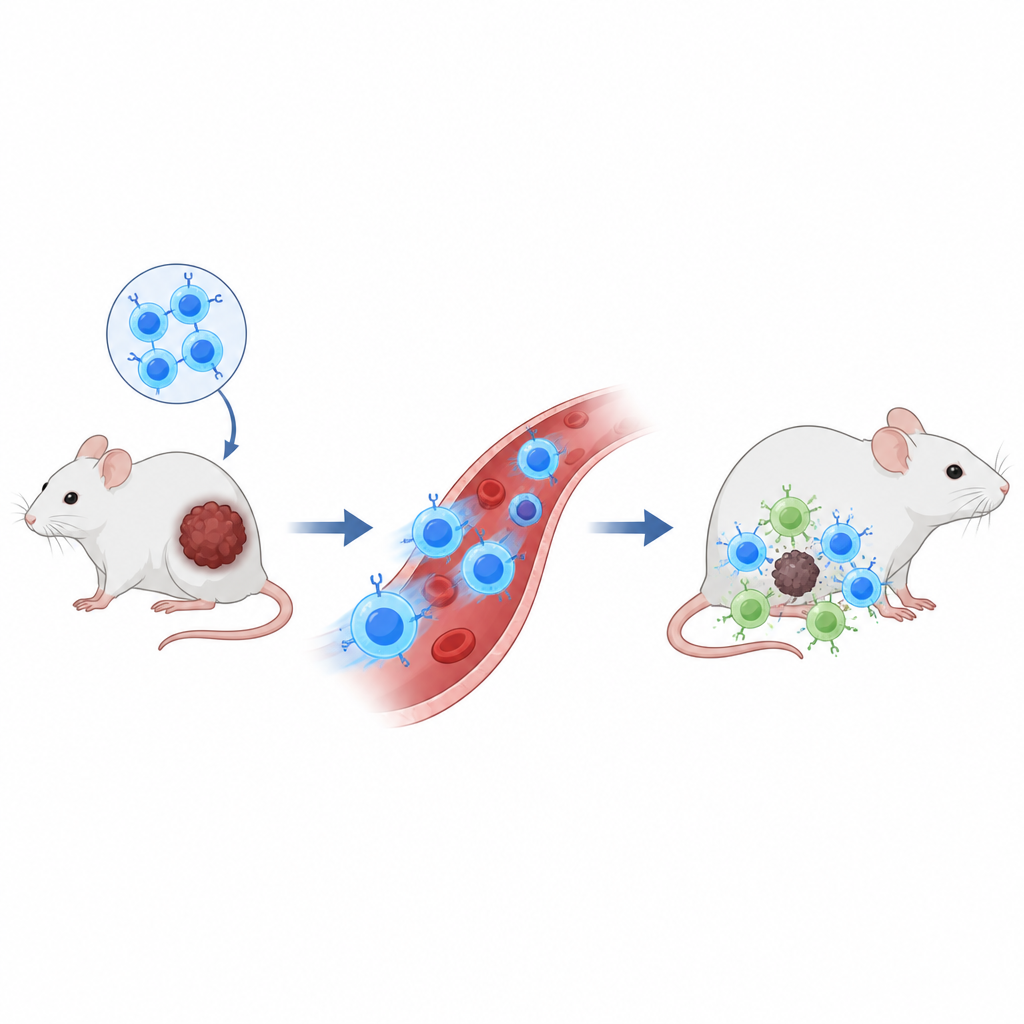
Borrowed fighters and local reinforcements
The therapy at the center of this work uses specially prepared killer T cells that recognize a specific molecule on tumor cells. When these cells were infused into mice with established melanoma, the tumors shrank quickly and many animals survived long term. But the infused cells did not act alone. The treatment also sparked a strong reaction from the animals’ own T cells, especially a group that settles in tissues and shows hallmarks of recognizing the tumor. These local defenders looked like they could help patrol the tumor site and nearby lymph nodes, supporting both rapid attack and long-lasting surveillance.
How helper cells and signals build lasting defense
To understand how this team effort worked, the researchers focused on dendritic cells, immune sentinels that pick up bits of tumor and show them to T cells. They found that the infused killer T cells released a signal called TNF, which switched dendritic cells into a more active state and encouraged them to travel to lymph nodes. There, these sentinels helped expand the host’s own tumor-hunting CD8 T cells. When TNF was blocked, or when the infused T cells were unable to make TNF, dendritic cells were less active, host T cells did not expand properly, and tumors were much harder to eliminate. A second type of signal, interferon gamma, worked together with TNF to fine-tune how aggressive these host T cells became. 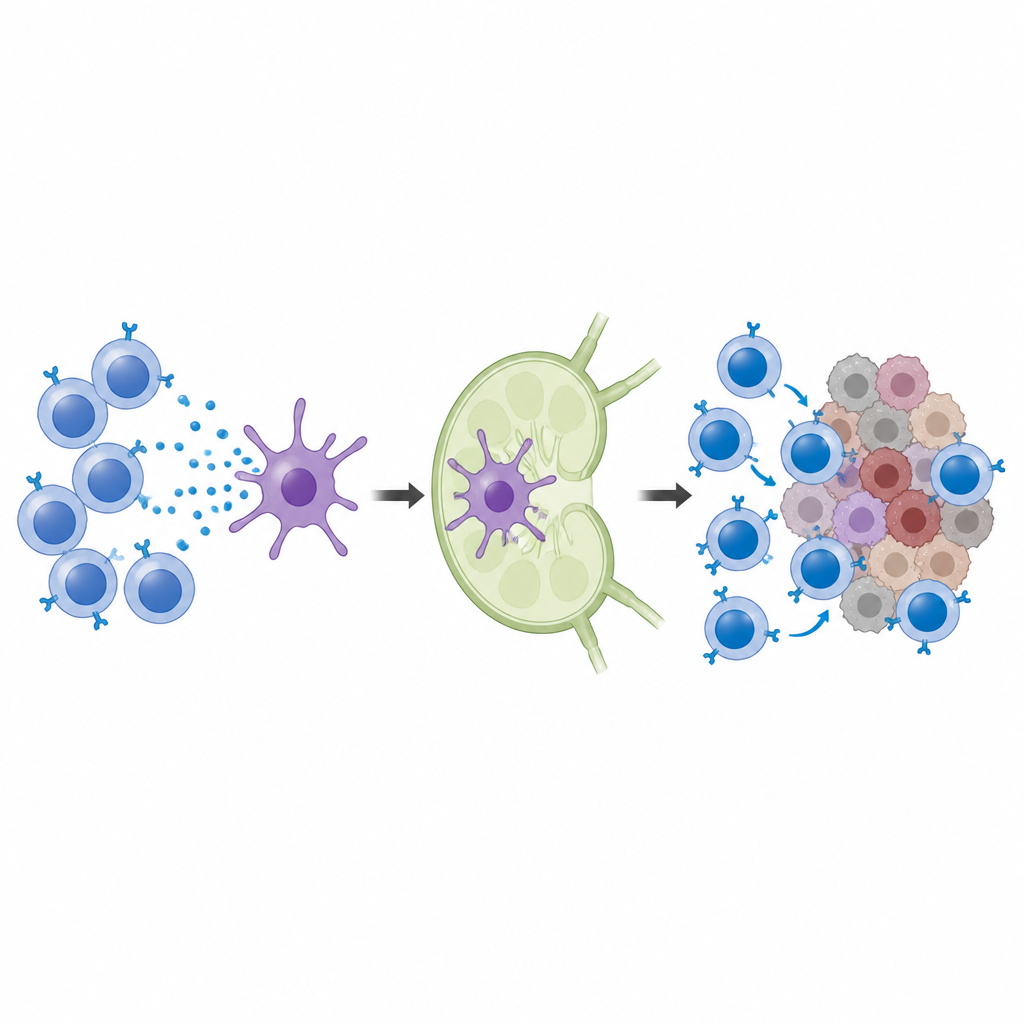
Guarding against shape-shifting tumors
Cancer can escape focused therapies by losing the very target they are designed to recognize. The team tested whether the host’s newly primed T cells could handle this trick. After mice cleared tumors that expressed a known target, they were challenged again with related tumors that no longer carried that marker. Many mice that had previously received effective adoptive T cell therapy resisted this new tumor, indicating that their own immune system had learned to recognize other tumor features, a process often called antigen spreading. This protection depended on host CD8 T cells and TNF from the infused cells, showing that the therapy had trained a broader, more flexible immune response.
When pre-treatment becomes a double-edged sword
In many human trials, patients receive drugs or radiation to temporarily clear out immune cells before adoptive T cell therapy, making room for the infused cells to expand. In the mouse models, this lymphodepleting step did exactly that: it boosted the growth of the transferred T cells and helped wipe out the original tumors, even when the cell dose was modest. But there was a cost. The same treatment left tumors and lymph nodes with far fewer host CD8 T cells and key dendritic cells, turning once “hot” immune-rich tumors into “cold” ones with weak priming of new T cells. When these pre-treated mice later faced tumors that had lost the original target, they largely failed to control them, even though they could still fight tumors that kept the target.
Clues from human melanoma patients
To see if similar patterns exist in people, the researchers reanalyzed genetic data from melanoma tumors taken before patients received adoptive T cell therapy. Tumors from patients who later responded well tended to show stronger activity of tumor-reactive CD8 T cells, activated dendritic cells, and TNF-related signaling. In contrast, tumors from non-responders showed gene patterns linked to immune resistance and poor response to immunotherapy. Across a separate large melanoma dataset, patients whose tumors carried these favorable immune signatures also tended to live longer, suggesting that an active, TNF-influenced network of T cells and dendritic cells may support better outcomes.
What this means for future cancer treatments
Together, these findings suggest that borrowed T cells work best when they act as both direct killers and teachers for the host’s own immune army. Signals like TNF help dendritic cells train new waves of tumor-hunting T cells, which in turn provide broader and longer-lasting protection, including against tumor variants that lose the original target. However, aggressive pre-treatment that strips away host T cells and dendritic cells can weaken this crucial backup force, leaving room for resistant tumor cells to grow. The study argues for refining adoptive T cell therapy protocols so that they not only clear the first tumor but also preserve and strengthen the body’s own lasting antitumor immunity.
Citation: Figueroa, D., Vega, J.P., Hernández-Oliveras, A. et al. Lymphodepleting preconditioning impairs host antitumor immunity induced by adoptive T cell therapy in mouse models. Nat Commun 17, 4337 (2026). https://doi.org/10.1038/s41467-026-71082-y
Keywords: adoptive T cell therapy, solid tumor immunity, lymphodepleting preconditioning, tumor antigen loss, dendritic cells