Clear Sky Science · en
A high-throughput conditioned-media-based screening system identifies inhibitors of aggregation induced by iPSC-secreted amyloid β
Why this research matters for future brain health
Many experimental drugs aimed at slowing Alzheimer’s disease have looked promising in test tubes but then failed when tried in living cells or animals. One big reason is that early tests are done in simple salt solutions that do not capture the messy reality of the human brain. This study introduces a more life-like, fast, and affordable way to search for substances that can stop harmful protein clumps linked to Alzheimer’s and related brain disorders.
A closer look at sticky brain proteins
Alzheimer’s disease is strongly associated with the buildup of amyloid beta, a small protein fragment that can clump together around nerve cells. These clumps are thought to damage neurons long before symptoms appear. Traditional lab tests watch amyloid beta clump in plain buffer solutions, which lack the many other molecules present in real brain tissue, such as lipids, sugars, and metabolites. Because of this mismatch, many compounds that stop clumping in the test tube turn out to be far less effective when they encounter the full complexity of living cells.
Using patient stem cells to mimic the brain environment
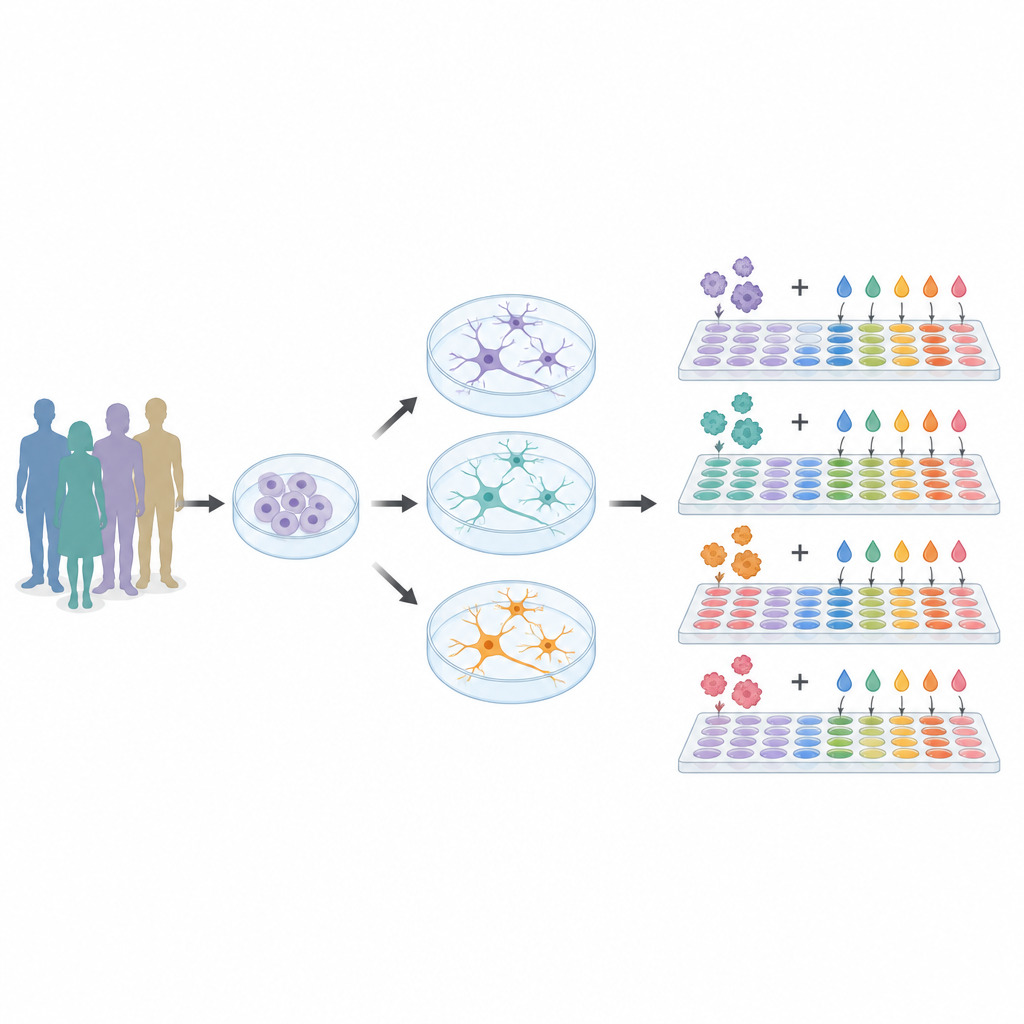
The researchers turned to induced pluripotent stem cells, or iPSCs, which can be made from a patient’s skin or blood and then coaxed into becoming nerve cells. They created neurons from a man with Alzheimer’s disease and grew these cells in dishes. Over time, the neurons released amyloid beta and many other small molecules into the surrounding liquid, known as conditioned medium. By carefully filtering this liquid to remove albumin, a common blood protein that strongly blocks amyloid clumping, they obtained a solution that still contained patient-derived amyloid beta and other cell-secreted factors while allowing clumps to form in a controllable way.
Building the HaiDap high-speed screening system
To track how amyloid beta clumps in this realistic medium, the team used quantum dots, tiny fluorescent particles attached to amyloid molecules. As clumps grew, the brightness pattern changed, and a microscope-based system automatically measured these changes in thousands of tiny wells at once. They named the overall platform HaiDap, short for High-throughput screening technology for Aggregation Inhibitors of Diseased cell-derived Aggregative Proteins. The system makes it possible to test many potential inhibitors quickly while preserving key aspects of the environment created by patient neurons, narrowing the gap between simple test-tube assays and full cell-based experiments.
Plant-based candidates that slow harmful clumps
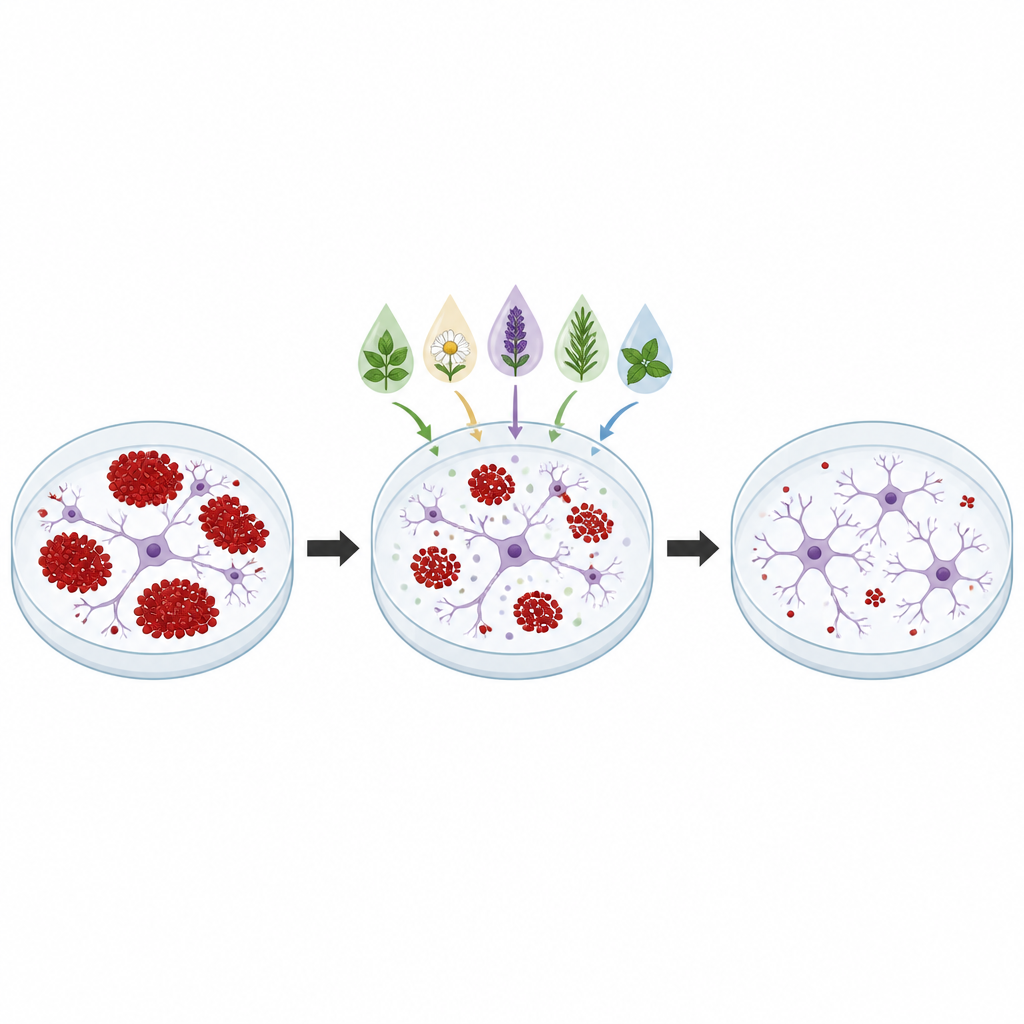
Using HaiDap, the researchers screened extracts from 22 edible plants that are considered safe for long-term consumption. Only three extracts stood out in the conditioned medium from Alzheimer’s neurons, even though more looked active in the older buffer-based test. Extracts from Orthosiphon aristatus (a medicinal herb), Syzygium aromaticum (clove), and Geranium yesoense all significantly delayed amyloid beta clumping in the HaiDap system. When these three extracts were then tested directly on live neurons in dishes, they also slowed the formation of amyloid deposits on cell surfaces. In contrast, some well-known laboratory inhibitors looked strong in simple buffer but showed weak or inconsistent effects in the neuron-based assay, underscoring the importance of testing in realistic conditions.
Beyond Alzheimer’s and toward tailored therapies
The study also showed that the same conditioned medium can support clumping of other disease-related proteins, including tau, alpha-synuclein, and serum amyloid A, which are involved in disorders such as Parkinson’s disease and systemic amyloidosis. This suggests that HaiDap could become a general tool for finding compounds that interfere with many kinds of harmful protein buildup. Because the medium is derived from specific patients’ cells, the approach could eventually help identify drugs tailored to particular forms of disease or even to individual people.
What this means for drug discovery
In simple terms, the HaiDap system offers a smarter way to do early drug screening by making the test environment more like the human brain while still being fast and relatively low cost. It helps weed out “false positives” that only work in oversimplified solutions and highlights candidates that remain effective in the presence of real cell-secreted molecules. Although much work remains before any therapy reaches the clinic, this method provides a better starting point for discovering substances, including those from everyday plants, that might one day help protect the brain from protein clumps.
Citation: Kuragano, M., Nishishita, N., Araya, K. et al. A high-throughput conditioned-media-based screening system identifies inhibitors of aggregation induced by iPSC-secreted amyloid β. Nat Commun 17, 4373 (2026). https://doi.org/10.1038/s41467-026-71078-8
Keywords: Alzheimer’s disease, amyloid beta, induced pluripotent stem cells, protein aggregation, drug screening