Clear Sky Science · en
Past political violence and interpersonal violence against children and youth in Africa
Why this matters for everyday life
Across the world, millions of children and young people grow up in places touched by war, riots, and other forms of political unrest. We usually think about the visible damage: deaths, destroyed homes, or people forced to flee. This study asks a different question that affects families long after the shooting stops: does living for years in politically violent settings make it more likely that teenagers and young adults will later suffer violence at home, in their communities, or in early romantic relationships?
Looking beyond the battlefield
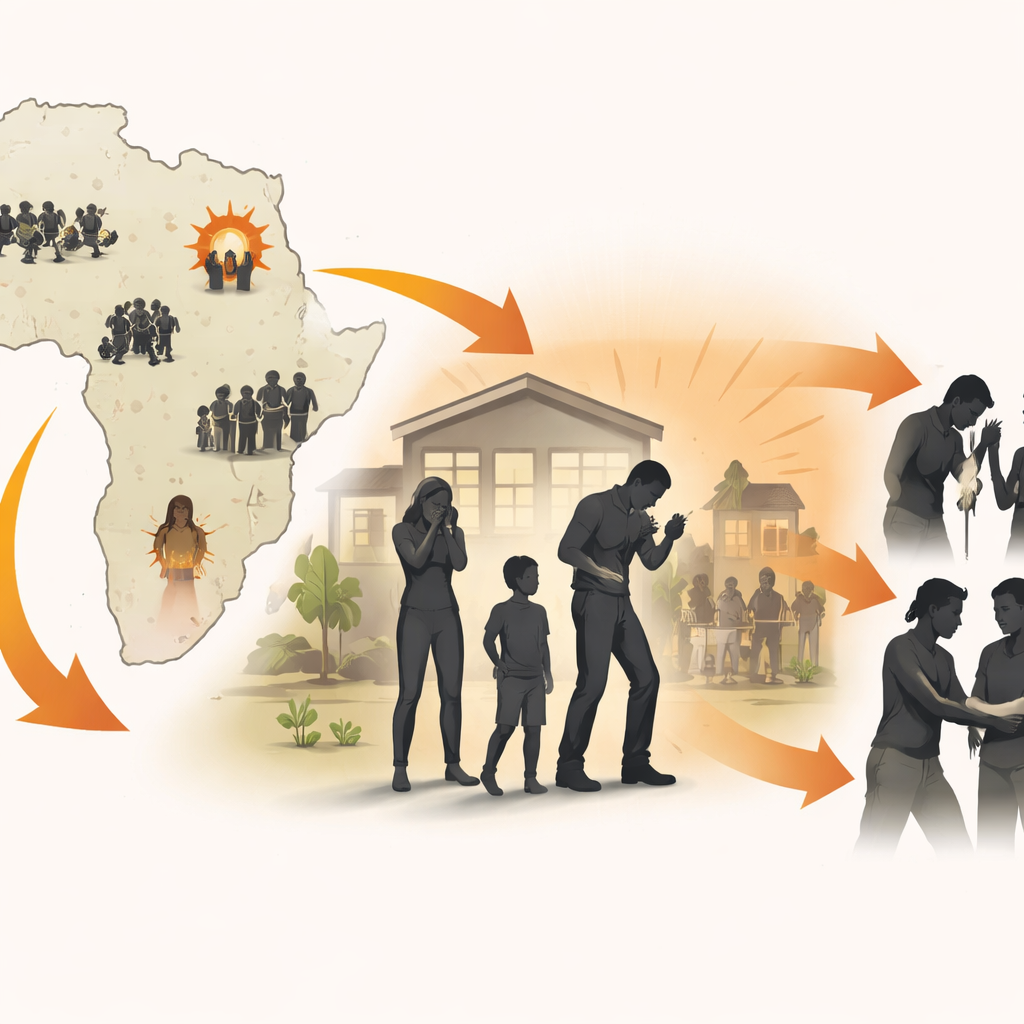
The researchers focus on a specific kind of harm: interpersonal violence against adolescents and young adults, meaning physical, sexual, or emotional violence from family members, peers, adults in the community, or intimate partners. They argue that political violence is not just something that happens between armed groups or protesters and security forces. Instead, it can seep into homes and everyday relationships, shaping how people deal with stress, power, and conflict. For example, long-term fear and uncertainty may fuel harsh parenting, while children who grow up watching violence around them may learn to see it as a normal way to solve disputes.
What the team did
To explore these hidden links, the authors merged two large data sources in a way not done before. First, they used Violence Against Children and Youth Surveys from nine African countries, which ask nationally representative samples of 13- to 24-year-olds about recent experiences of physical, sexual, and emotional violence. Second, they drew on the Armed Conflict Location and Event Data project, which records detailed information on political violence events—such as battles, riots, explosions, and attacks on civilians—across the continent. By matching these datasets by subnational regions and looking back over up to 15 years, the team could estimate how the intensity and type of political violence where a young person lives is related to the violence they personally report in the previous year.
What they found in the numbers
Across the nine countries, nearly one in four respondents reported physical violence in the last year, about one in ten reported sexual violence, and a similar share reported emotional violence from adult family members. The key finding is that long-term, but not short-term, exposure to political violence is linked with a higher risk of these harms. A rise in long-term political violence in a region is associated with greater odds that adolescents and young adults experience emotional violence from family, physical violence from intimate partners, any form of violence, or more than one type of violence. Young people from poorer households are especially likely to report sexual violence when political violence is high. In contrast, spikes in political unrest during just the previous one to five years show no clear relationship, suggesting that it is the slow build-up and lasting legacy of unrest that matter most.
How long-term unrest seeps into families
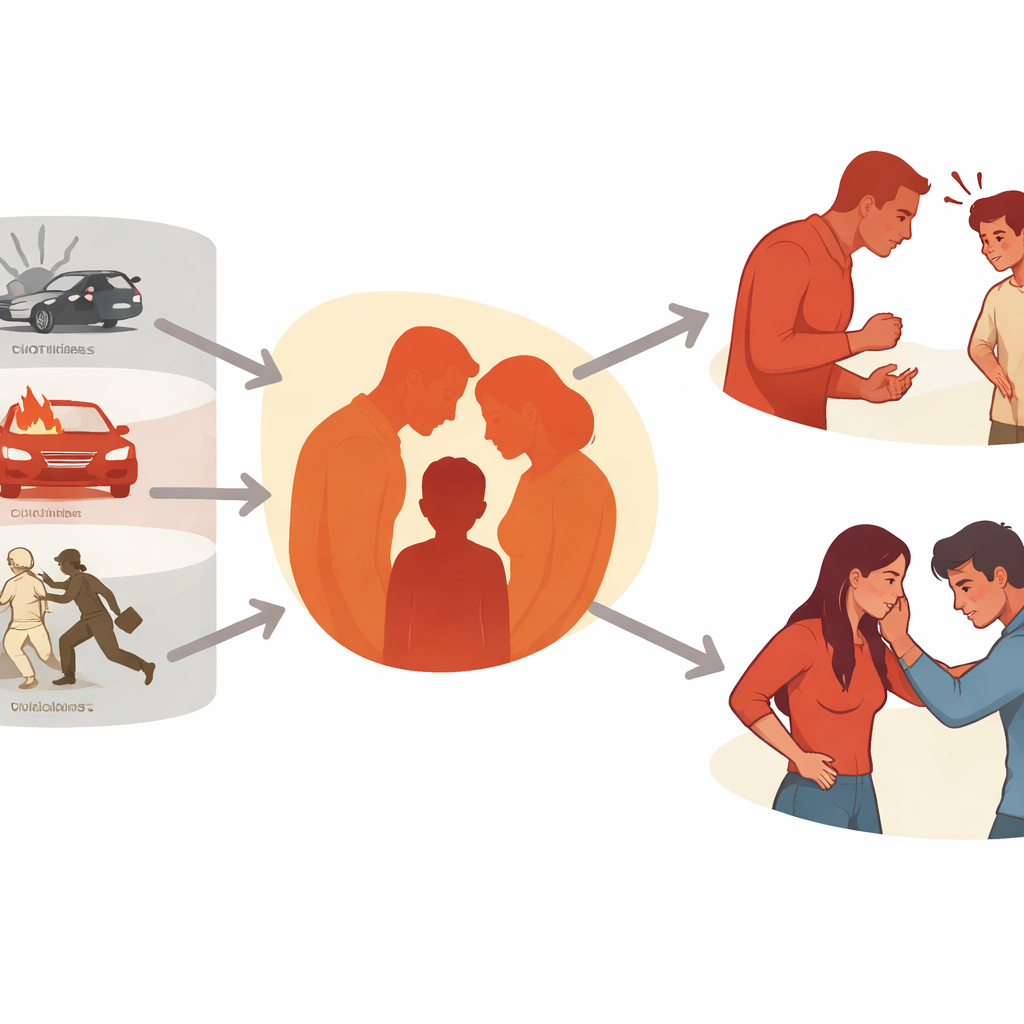
The study cannot prove cause and effect, but it offers plausible pathways. Years of political violence can leave parents and caregivers with deep psychological wounds, financial losses, and constant insecurity. These strains may erode patience and increase harsh or emotionally abusive behavior toward children. At the same time, young people who witness violent clashes and attacks may adopt violence as a learned response in their own relationships. The authors discuss how shifting social norms during war, economic hardship, weakened schools and child-protection systems, and the erosion of community support structures can all combine to raise the risk that children and youth experience violence at home or from partners later on.
What this means for protecting children and youth
For a general reader, the takeaway is stark: the legacy of political violence is not confined to history books or former front lines. It can live on inside households and relationships, showing up as shouting, humiliation, beatings, and sexual abuse directed at adolescents and young adults. The findings suggest that efforts to prevent violence against children and youth must account for the long shadow of past political unrest, not just current crises. Promising responses include parenting support, school-based programs, and interventions that address both intimate partner violence and violence against children together. In short, building safer futures for young people in conflict-affected societies requires looking beyond peace agreements to how families and communities heal—or fail to heal—over many years.
Citation: Vigneri, M., Fadare, O., Devries, K. et al. Past political violence and interpersonal violence against children and youth in Africa. Nat Commun 17, 3044 (2026). https://doi.org/10.1038/s41467-026-71075-x
Keywords: political violence, youth safety, family violence, conflict aftermath, Africa