Clear Sky Science · en
HR3/RORα-mediated cholesterol sensing regulates TOR signaling
How Cells Sense Cholesterol to Control Growth
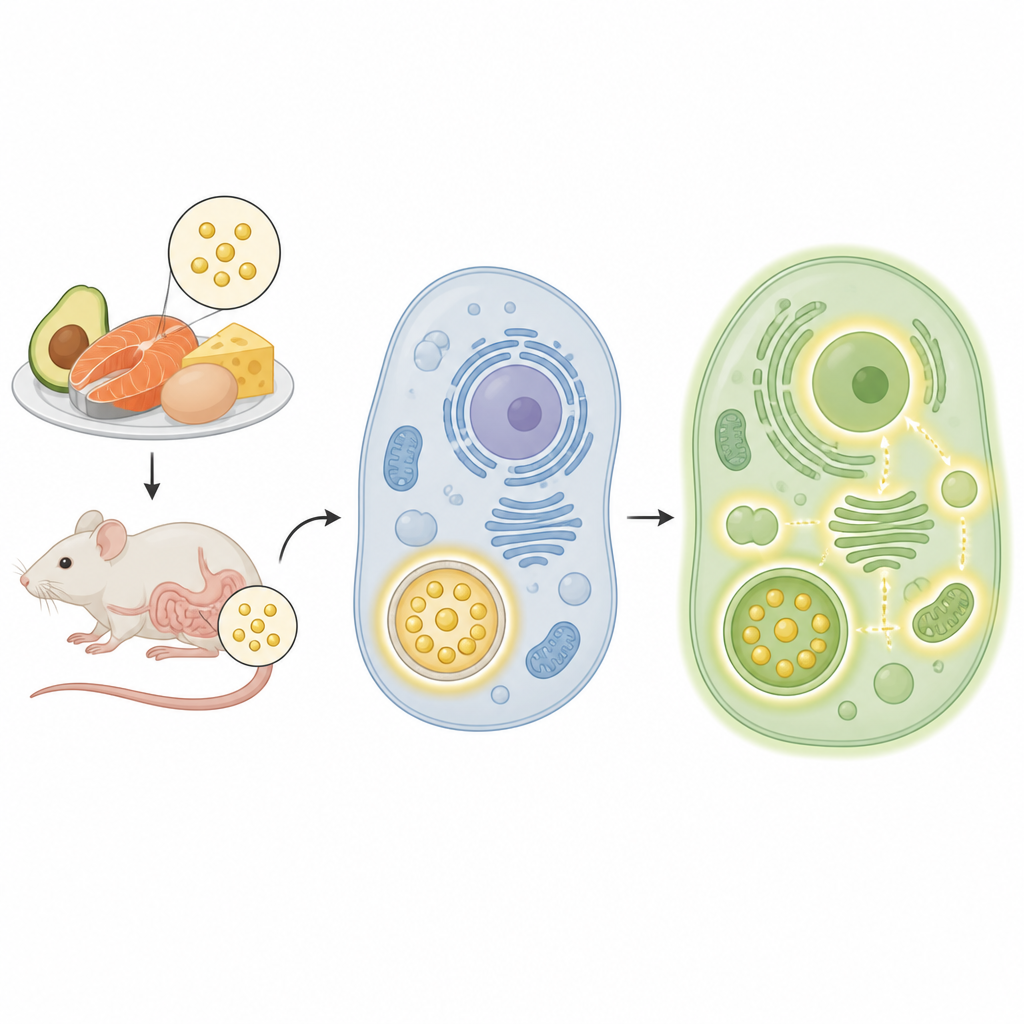
Cholesterol is often discussed in the context of heart health, but inside our cells it also acts as a key signal that helps decide when to grow and divide. This study reveals how cells in fruit flies and humans detect cholesterol and translate that information into growth commands, using a molecular switch that ties cholesterol levels to a major growth control system. Understanding this link helps explain how diet, metabolism, and diseases such as cancer can be connected through shared cellular machinery.
A Growth Switch Deep Inside the Cell
Cells use a master growth controller called the TOR pathway to integrate signals about nutrients, stress, and hormones. The researchers show that cholesterol can rapidly turn on this pathway in growing tissues of the fruit fly. When flies were given food with increasing amounts of cholesterol, cells in their energy-storing tissue, called the fat body, showed a quick rise in activity of TOR, as measured by chemical tags on a protein named S6. This activation occurred within minutes to hours after cholesterol was reintroduced following a period of deprivation, indicating that cells can sense and respond to cholesterol levels on short timescales.
A Special Receptor that Binds Cholesterol
The team focused on a protein called HR3 in flies, which is a close counterpart of the human protein RORα. These proteins belong to a family of sensors that usually live in the cell nucleus and respond to fatty molecules. Using computer modeling, biochemical tests, and a clever fluorescent reporter, the researchers showed that HR3 physically binds cholesterol. When they purified HR3 and examined it by mass spectrometry, they found that each HR3 molecule carried one molecule of cholesterol. In living embryos and larvae engineered with an HR3-based sensor, adding cholesterol triggered a bright fluorescent signal, confirming that HR3 acts as a cholesterol-responsive receptor inside the organism.
From Cholesterol Signal to Growth Pathway
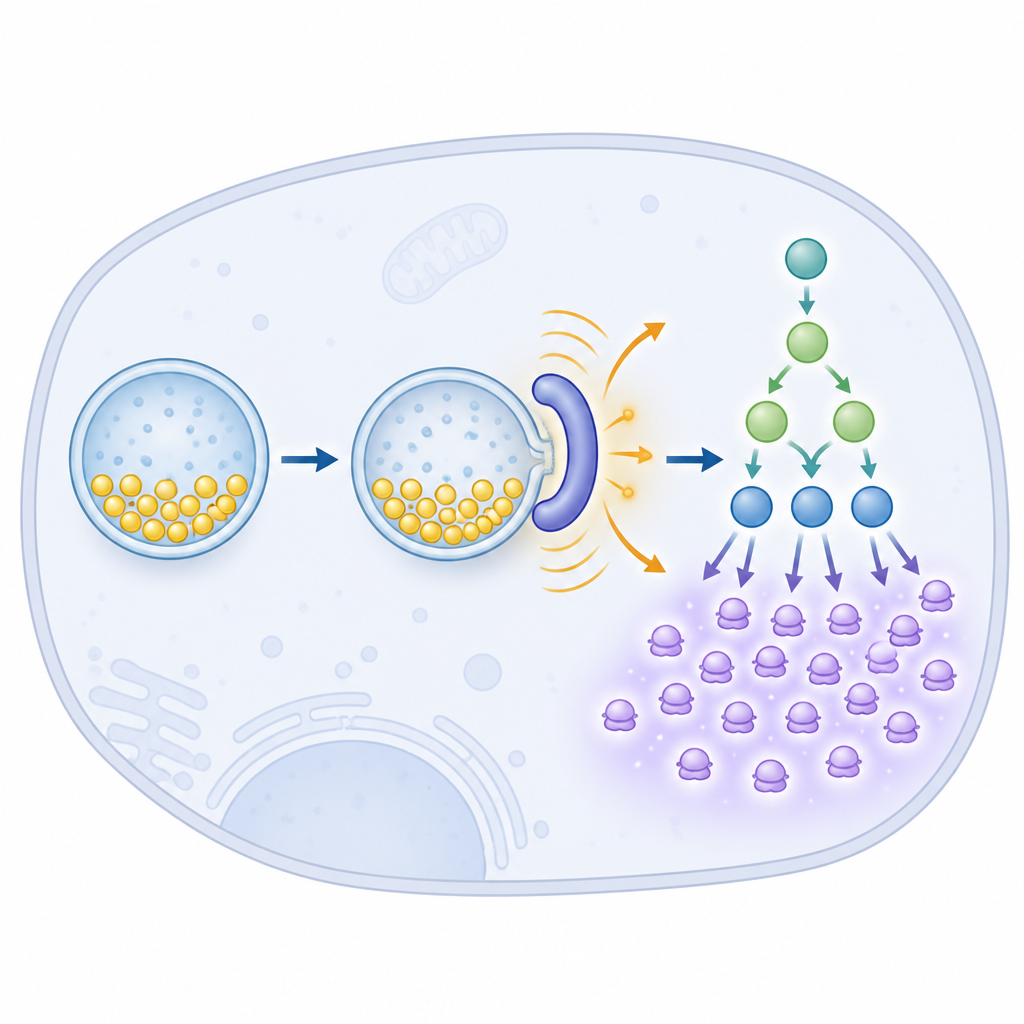
Binding cholesterol is only the first step; the key question is how this leads to stronger TOR signaling. By lowering HR3 levels in fly tissues, the investigators found that cholesterol could no longer efficiently activate TOR, even though other nutrient signals, like amino acids, still did. Detailed protein-mapping experiments revealed that HR3 is required for cholesterol-driven changes in many components of the TOR pathway, including proteins that position TOR at the surface of cellular compartments where it is switched on. The work also showed that a shorter form of HR3, which lacks its DNA-binding portion, can by itself boost TOR activity and body growth, suggesting that HR3 can act not only through slow changes in gene expression but also through rapid, direct signaling within the cell.
Fast Signals and Long-Term Restraints
The study further uncovered that HR3 plays a dual role: it helps turn TOR on in response to cholesterol, and it also prevents this response from spiraling out of control. When HR3 was missing, some proteins became excessively modified after cholesterol exposure, indicating a loss of braking mechanisms. Conversely, when certain versions of HR3 were overproduced, they dampened TOR activity and growth. Experiments blocking new protein synthesis showed that part of the cholesterol response does not require making fresh proteins, supporting the idea that HR3 can act through quick, non-genetic routes as well as slower, gene-based adjustments. Together, these findings portray HR3 as both an accelerator and a governor that keeps cholesterol-driven growth within safe bounds.
A Shared Mechanism in Humans and Disease Links
To test whether this cholesterol-sensing strategy is conserved in humans, the researchers turned to a human cancer cell line that naturally produces RORα. When they stripped cholesterol from the culture medium, TOR activity dropped; adding cholesterol back restored it. However, if RORα was reduced using small interfering RNA, the cholesterol boost to TOR was blunted. Large-scale protein analyses showed that, as in flies, many growth and metabolism proteins, including those connected to insulin-like signaling and cancer pathways, depended on RORα to respond properly to cholesterol. This suggests that HR3 in flies and RORα in humans form a conserved module that couples cholesterol availability to the cell’s central growth engine.
Why This Matters for Health and Disease
By uncovering how HR3 and RORα sense cholesterol and tune the TOR pathway, this work connects a common dietary lipid to a central regulator of cell growth. In simple terms, cells use these receptors as cholesterol gauges that tell the growth machinery when fuel is abundant and when to hold back. Because excessive TOR activity and high cholesterol are both associated with cancer and other disorders, understanding this built-in cholesterol sensor may help explain why elevated cholesterol often accompanies uncontrolled cell growth. It also highlights potential molecular targets for future therapies that seek to modulate growth without shutting down essential metabolic functions.
Citation: Lassen, M., Pardee, K., Bradic, I. et al. HR3/RORα-mediated cholesterol sensing regulates TOR signaling. Nat Commun 17, 4609 (2026). https://doi.org/10.1038/s41467-026-71059-x
Keywords: cholesterol sensing, TOR signaling, nuclear receptors, cell growth, cancer metabolism