Clear Sky Science · en
Targeting phenol-soluble modulin α3-driven M1 macrophage polarization and necroptosis mitigates MRSA infection in mice
Why this matters for superbug infections
Antibiotic resistant “superbugs” such as MRSA are a growing concern, because standard drugs are losing their power and many patients still die even when treated. This study explores a different tactic: instead of trying to kill the bacteria directly, it shows how dialing down a toxic bacterial signal and the body’s overreaction to it can help mice survive serious MRSA infections.
A harmful signal sent by MRSA
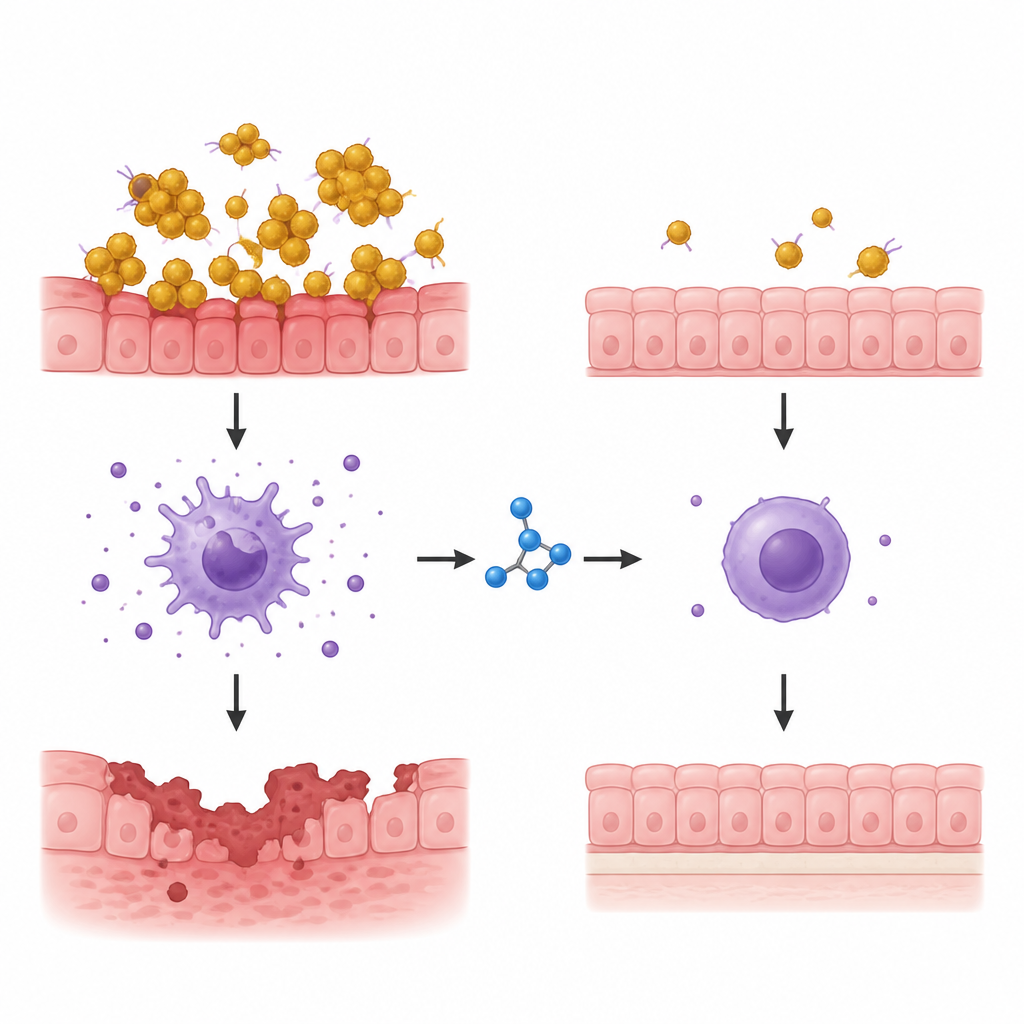
MRSA produces a small protein called PSMα3 that acts like a weapon against our defenses. The authors show that PSMα3 strongly pushes certain immune cells called macrophages into an aggressive, inflammatory state known as M1. These fired up cells release large amounts of inflammatory molecules and reactive chemicals meant to kill microbes. In both human cell lines and mouse immune cells, PSMα3 boosted many genes and proteins typical of this attack mode, and MRSA strains lacking PSMα3 triggered far weaker inflammatory responses.
When defenders self destruct
Macrophages exposed to PSMα3 did not just become more inflammatory; many of them died in a particularly damaging way. The team found signs of necroptosis, a form of programmed cell death that bursts cells open and spills their contents, fueling further inflammation. Drugs that block key necroptosis proteins, and genetic removal of one such protein, protected macrophages from PSMα3’s toxic effects. Compared with other related MRSA peptides, PSMα3 was the most potent at driving this self destruction, and MRSA strains missing PSMα3 were much less deadly to macrophages.
A molecular chain of events inside immune cells
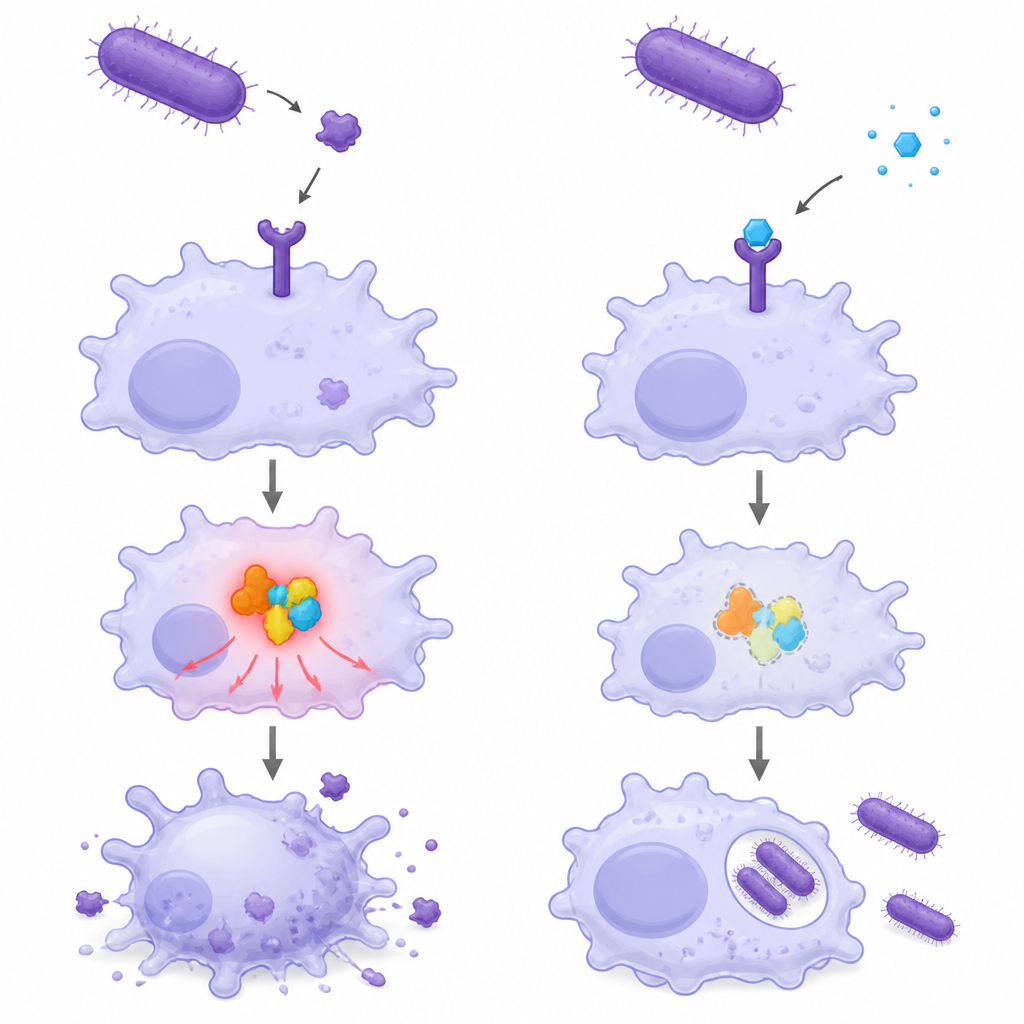
To understand how one small bacterial peptide could control both inflammation and cell death, the researchers mapped changes in thousands of proteins in macrophages exposed to PSMα3. They saw strong activation of a signaling route known as the JAK STAT pathway, which is involved in responses to interferons, along with proteins linked to necroptosis. Two hubs stood out: a complex of three proteins called ISGF3, which controls many inflammatory genes, and another complex called the necrosome, which executes necroptosis. PSMα3 increased the activation of ISGF3 components and of necrosome proteins, and an adaptor protein called p62 helped bring necroptosis components together. When the scientists reduced levels of ISGF3 members, both inflammatory signaling and necroptosis dropped, showing that this complex sits at a key junction.
The receptor that senses the toxin
The team next asked how PSMα3 first speaks to macrophages. They focused on a surface receptor called FPR2, previously known to react to PSMα3. Knocking down FPR2 in human macrophage like cells sharply reduced the inflammatory molecules and chemokines released after PSMα3 exposure, and it also cut back activation of necroptosis proteins and cell death. In primary human macrophages, a small molecule that blocks FPR2 had very similar protective effects. These findings suggest that PSMα3 binds FPR2, which then switches on ISGF3 and the necrosome, driving both the inflammatory state and the destructive death of macrophages.
Repurposing a cancer drug to disarm MRSA
Because STAT1, part of the ISGF3 complex, emerged as a central controller, the authors tested fludarabine, a cancer drug known to inhibit STAT1. Fludarabine did not stop MRSA from growing in laboratory dishes, but in mice with MRSA sepsis or pneumonia it greatly improved survival, reduced bacterial counts in organs, and lessened tissue damage. These benefits were far weaker when the infecting strain lacked PSMα3, indicating that the drug mainly works by blocking this virulence pathway. Fludarabine also reduced inflammatory cytokine levels in mouse blood and lowered necroptosis markers in lung macrophages, helping preserve these crucial defender cells.
What this could mean for future treatments
This work shows that a single MRSA toxin can both overstimulate and kill key immune cells, creating a vicious cycle that helps the bacteria thrive. By identifying the receptor and signaling complexes involved, and by showing that an existing STAT1 blocking drug can interrupt this chain in mice, the study supports an “anti virulence” strategy: weaken the pathogen’s tools and calm the host response rather than focusing only on killing the microbe. While fludarabine itself would need careful safety testing before use against infections, the pathway it targets may offer new options to help patients survive serious MRSA disease alongside traditional antibiotics.
Citation: Ma, B., Li, Z., Xu, H. et al. Targeting phenol-soluble modulin α3-driven M1 macrophage polarization and necroptosis mitigates MRSA infection in mice. Nat Commun 17, 4497 (2026). https://doi.org/10.1038/s41467-026-71029-3
Keywords: MRSA, macrophages, necroptosis, virulence factor, fludarabine