Clear Sky Science · en
Concurrent chemoradiotherapy plus nimotuzumab versus chemoradiotherapy alone for locoregionally advanced nasopharyngeal carcinoma with a suboptimal response to induction chemotherapy: a randomized phase 2 trial
Why this cancer study matters
For people and families touched by cancer, one of the biggest questions is whether adding new medicines to already intense treatment really helps. This study looks at a cancer common in parts of East and Southeast Asia, called nasopharyngeal carcinoma, and tests whether including a targeted antibody drug on top of standard chemo and radiation can improve outcomes for patients who are not responding well to their first rounds of treatment.
The cancer and its usual treatment
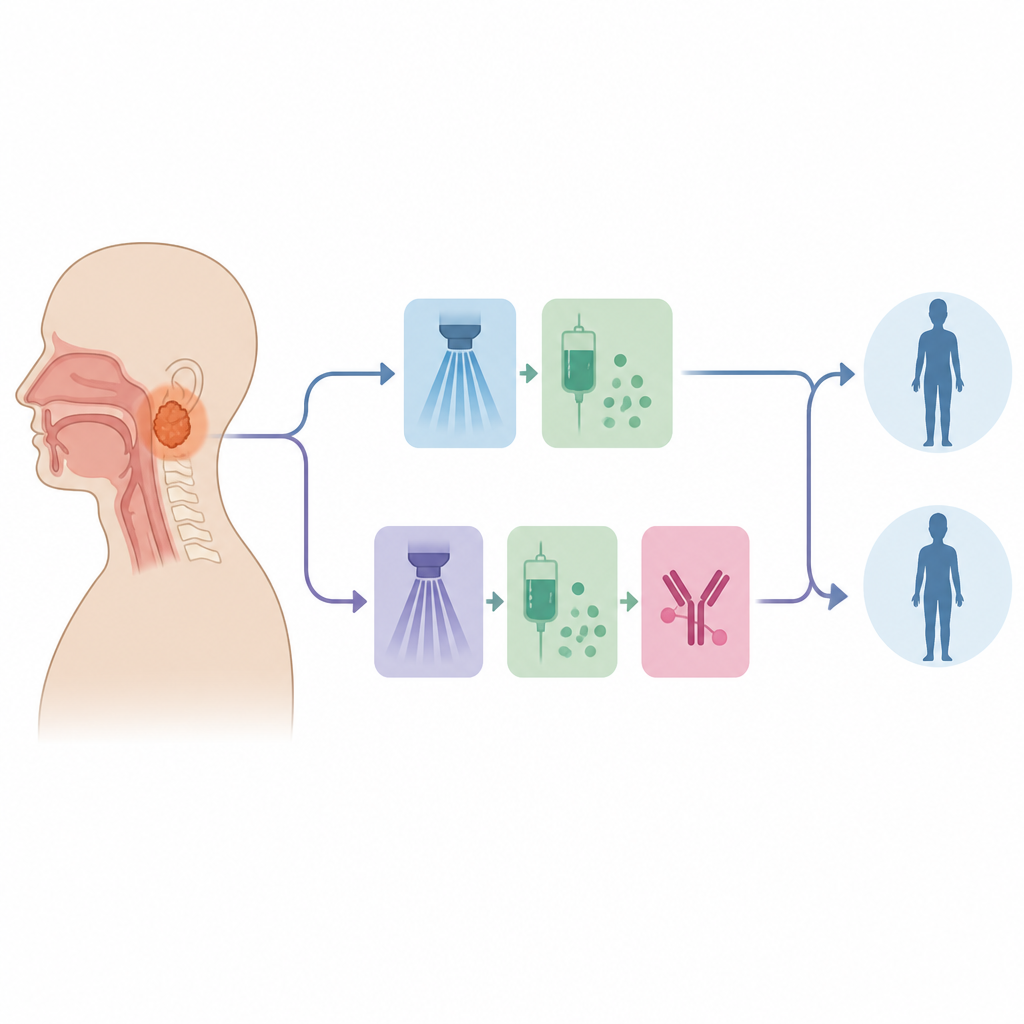
Nasopharyngeal carcinoma grows in the hidden space behind the nose and above the throat. It is often linked to infection with Epstein–Barr virus and is usually treated with a strong one–two punch. First, patients receive induction chemotherapy, a few cycles of powerful drugs given through the bloodstream to shrink or weaken the tumor. Then they move on to concurrent chemoradiotherapy, in which chemotherapy and precisely shaped radiation are delivered at the same time to kill remaining cancer cells. This combined approach has become the standard of care, yet up to a third of patients still see their cancer return locally or spread to distant organs.
A high risk group with fewer good options
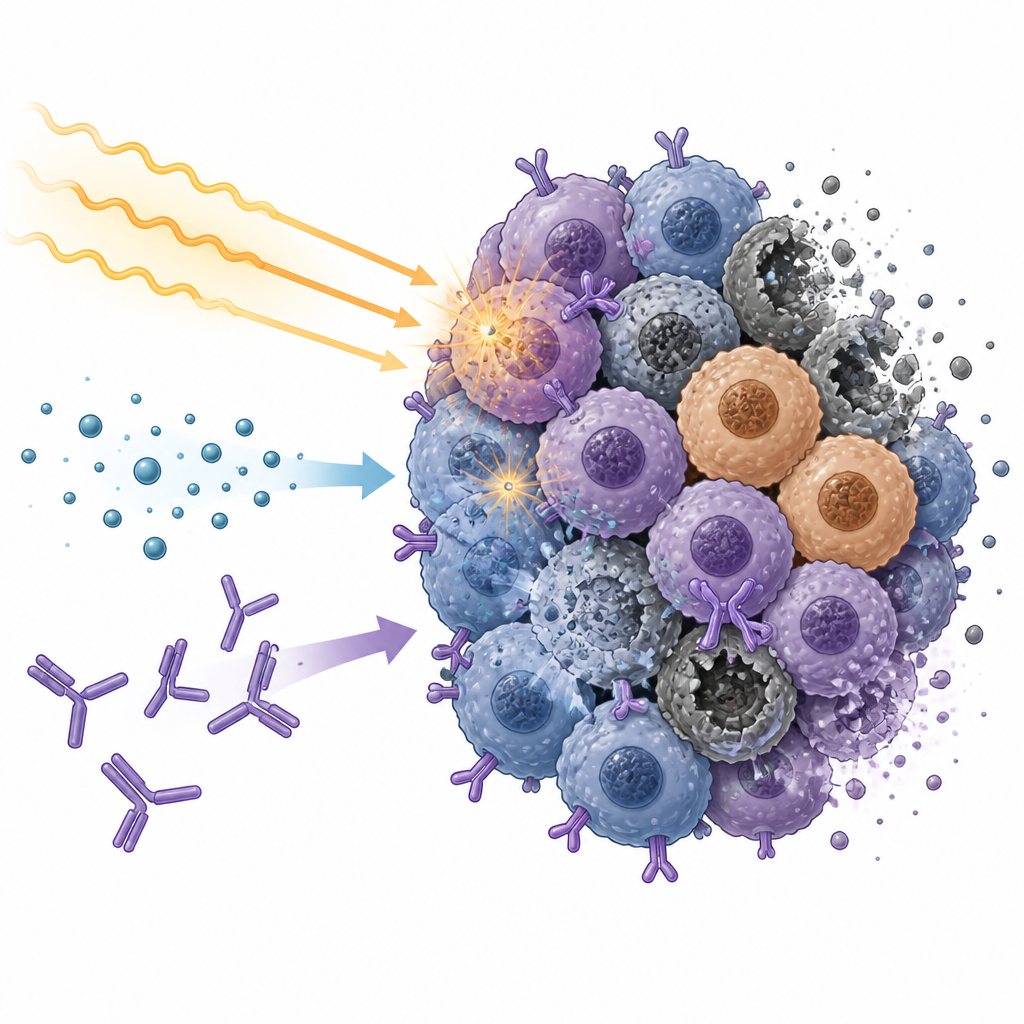
Doctors have noticed that patients who finish induction chemotherapy but still have detectable virus DNA in their blood, or whose scans show their tumors have not shrunk, face a much higher risk of relapse. These “suboptimal responders” appear to have cancers that are naturally tougher to treat. The hope has been that intensifying treatment during the radiation phase, for example by adding targeted drugs, might overcome this resistance. Many tumors in this disease show high levels of a molecule called EGFR on their surface, which has inspired the use of antibody drugs that lock onto this target and can make cancer cells more sensitive to radiation and chemotherapy.
Testing an added antibody drug
The researchers ran a randomized phase 2 clinical trial at a major cancer center in China. More than 500 people with advanced nasopharyngeal carcinoma were screened, and 246 whose tumors had not responded well to two cycles of induction chemotherapy were enrolled. Half were randomly assigned to receive standard concurrent chemoradiotherapy alone. The other half received the same chemoradiotherapy plus nimotuzumab, a humanized antibody that binds EGFR and can recruit the immune system to attack tumor cells. Everyone was followed regularly with scans, blood tests, and clinical exams for nearly four years on average.
What the trial actually found
When the team compared how long people lived without their cancer getting worse, the two groups looked almost identical. At two years after randomization, about four out of five patients in each group were still free of progression, and overall survival was similarly high. Rates of cancer returning nearby or spreading to distant organs did not differ in a meaningful way. The extra antibody did not disrupt chemotherapy dosing or radiation schedules, and there were no treatment–related deaths. However, it did bring more low–grade skin rash and other mild side effects. Careful subgroup analyses hinted that certain patients, such as women or those whose tumors had stronger EGFR staining, might benefit slightly, but the numbers were small and the statistical uncertainty wide.
What this means for patients and future research
For patients with this type of hard–to–treat nasopharyngeal cancer, the study sends a clear message: simply layering nimotuzumab on top of already intensive chemo and radiation does not, by itself, improve survival, even though it adds some extra side effects and cost. The results suggest that the real challenge lies in the biology of tumors that shrug off early chemotherapy, and that new strategies will need to look beyond more of the same drugs. Future work will focus on finding better markers in blood and tumor tissue to flag who is truly at highest risk, and on testing combinations that use different mechanisms, such as new targeted agents or immunotherapy, in smarter ways rather than just intensifying existing regimens.
Citation: Liu, LT., Sun, XS., Quan, TT. et al. Concurrent chemoradiotherapy plus nimotuzumab versus chemoradiotherapy alone for locoregionally advanced nasopharyngeal carcinoma with a suboptimal response to induction chemotherapy: a randomized phase 2 trial. Nat Commun 17, 4631 (2026). https://doi.org/10.1038/s41467-026-71019-5
Keywords: nasopharyngeal carcinoma, chemoradiotherapy, nimotuzumab, EGFR antibody, clinical trial