Clear Sky Science · en
In vivo metabolic tagging and targeting of circulating red blood cells
Turning Blood Cells into Tiny Delivery Trucks
Red blood cells quietly haul oxygen through our bodies every second of every day. This study shows that they can also be turned into long-lasting “delivery trucks” for medical dyes and drugs, simply by feeding animals modified sugar molecules. For a lay reader, the work is intriguing because it hints at future scans that need only one contrast injection, and treatments that stay in the bloodstream much longer without repeated dosing.
Why Red Blood Cells Are an Attractive Target
Red blood cells make up the vast majority of cells in our blood and can circulate for weeks to months, reaching nearly every tissue. Because of this, researchers have long dreamed of using them to ferry medicines and imaging agents. Existing methods usually require taking blood out of the body, modifying the cells in the lab, and then putting them back. That process is slow, expensive, and can damage the cells. The team behind this paper set out to find a simple way to “decorate” red blood cells while they are still moving through the bloodstream.
Tagging Blood Cells with a Simple Sugar Trick
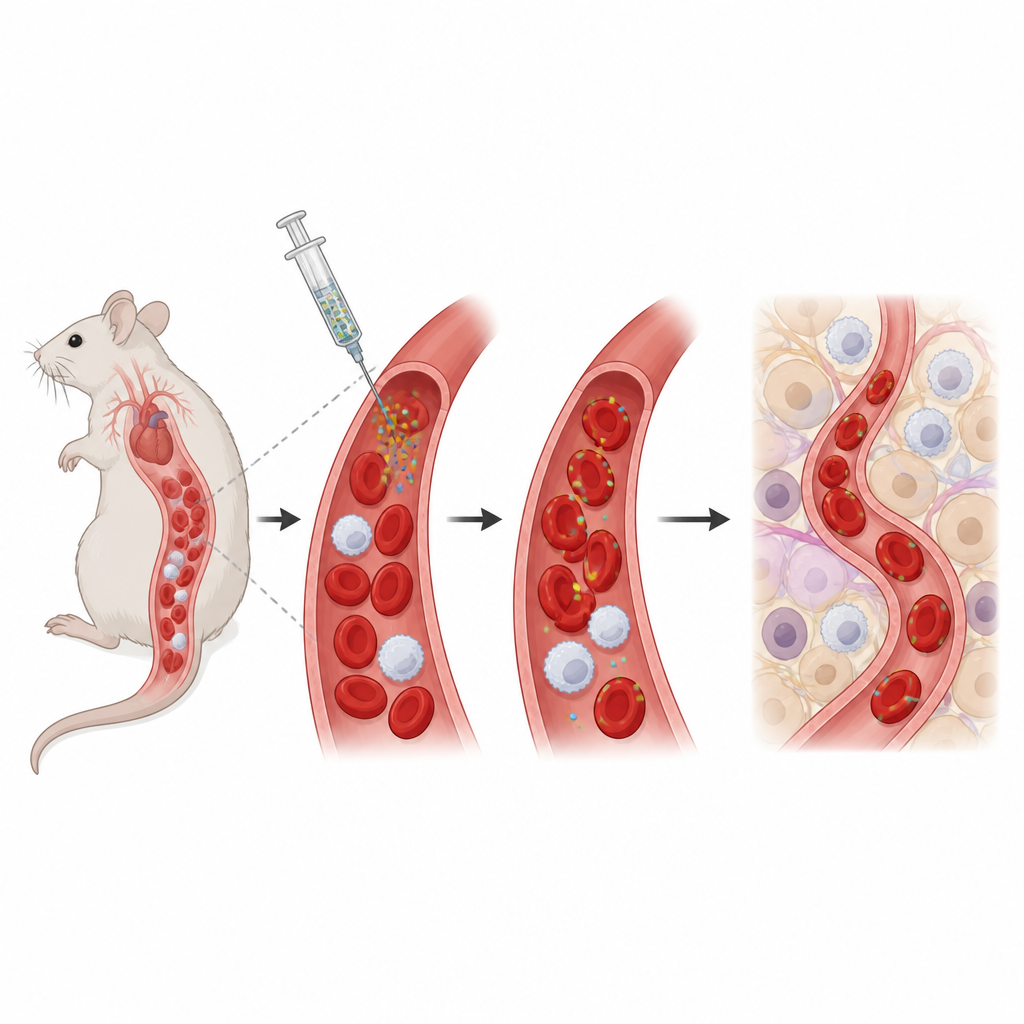
The researchers used a chemical strategy called metabolic labeling, which takes advantage of the natural way cells build sugars on their surfaces. They gave mice specially designed sugars, such as a compound abbreviated AAM, by injection. The animals’ red blood cells and their precursors in the bone marrow used these sugars to build tiny chemical “handles” on their outer coating. These handles, azido groups in scientific terms, did not change cell shape, energy levels, or counts of red and white cells, and tissue samples from major organs looked normal weeks later. In mice, about 10 to 15 percent of circulating red blood cells carried the new tags, and those tags stayed on the cells for more than 40 days, nearly the full mouse red cell lifespan, while similar tags on white blood cells and other tissues disappeared within a few days.
Clicking Cargo onto Tagged Cells
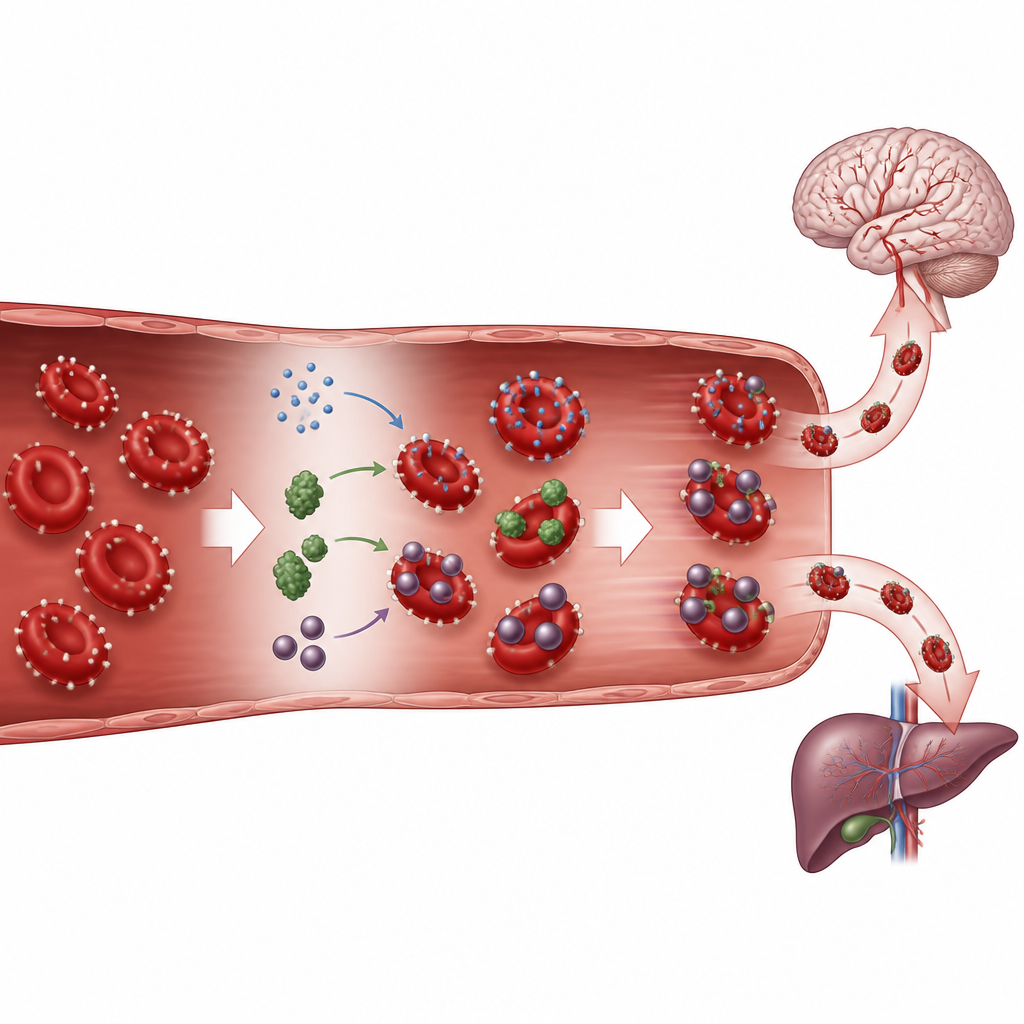
Once the red blood cells were tagged, the team injected molecules carrying a matching chemical partner known as DBCO. This partner “clicked” onto the azido handles in the bloodstream, forming a stable link without disturbing other structures. Fluorescent dyes attached in this way stayed on red cells for more than five weeks, far longer than free dye would circulate. Using this approach, the researchers produced bright, long-lasting images of blood vessels in tumors and normal organs with standard fluorescence cameras. They then attached a gadolinium-based agent used for MRI scans and showed that blood vessels in the mouse brain remained clearly visible for up to 11 days after a single dose, long after ordinary contrast would have been cleared.
Improving Drug Presence in the Blood
The same framework was tested with medicines. The scientists linked a chemotherapy drug and a large fluorescent protein to the tagged red cells and confirmed that the cargos bound successfully. To explore practical benefit, they focused on insulin in a mouse model of type 1 diabetes. When insulin was equipped with a breakable linker and the DBCO partner, it attached to tagged red cells in vivo and was then slowly released. Mice that received both the special sugar treatment and the linked insulin kept higher insulin levels in their blood over many hours, showed better control of blood sugar during a tolerance test, and recovered body weight more effectively than control groups.
What This Could Mean for Future Medicine
To a layperson, the main message is that the authors have found a way to mark a portion of red blood cells from the inside out, then clip useful cargos onto them later, all without taking the cells out of the body. In mice, these tagged cells circulate for weeks, carrying imaging agents that make vessels stand out on scans and drugs that linger in the blood longer than usual. While more work is needed to adapt the method to human red blood cells and to fine-tune how much cargo can be loaded and how fast it is released, the study suggests a versatile new platform where our own blood cells might one day serve as long-lived, built-in carriers for diagnostics and therapies.
Citation: Liu, Y., Wang, Y., Ko, K. et al. In vivo metabolic tagging and targeting of circulating red blood cells. Nat Commun 17, 4298 (2026). https://doi.org/10.1038/s41467-026-71013-x
Keywords: red blood cells, drug delivery, metabolic labeling, blood vessel imaging, insulin circulation