Clear Sky Science · en
AUXIN RESPONSE FACTOR thermostability
Why heat and plant shape matter
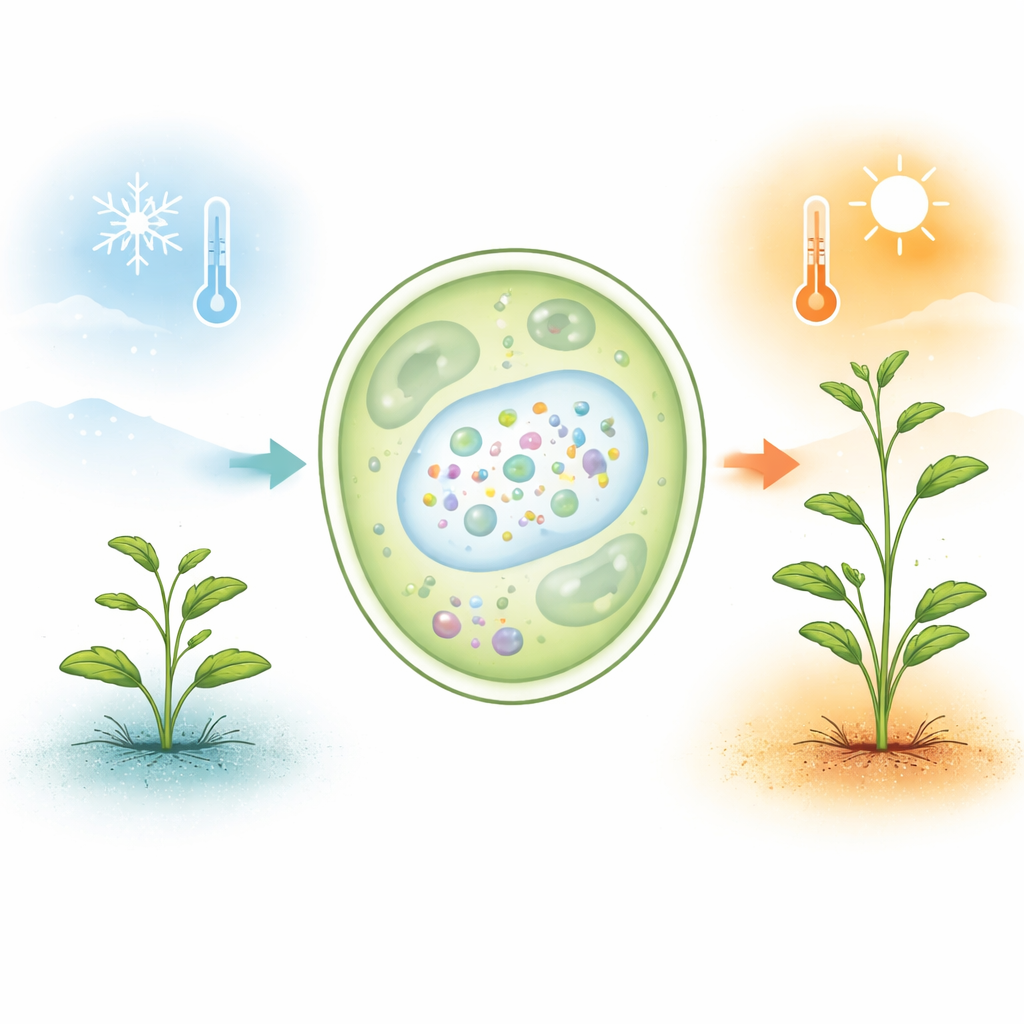
As the planet warms, crops and wild plants must constantly adjust their shape and growth to survive. One of the main internal signals plants use to do this is a hormone called auxin, which helps decide how tall stems grow and how roots branch. This study explores how a key set of auxin-linked proteins in plant cells act as tiny temperature dials, allowing plants to rapidly change their growth when the air gets warmer.
Hidden switches inside plant cells
Plants cannot move away from heat, so they rely on internal switches that sense temperature and modify growth, a process known as thermomorphogenesis. Auxin’s effects are carried out by a family of proteins called AUXIN RESPONSE FACTORS, or ARFs, which turn many growth-related genes on or off. The researchers focused mainly on two of these, ARF7 and ARF19, in the model plant Arabidopsis. They discovered that when seedlings are shifted to higher temperatures, the amounts of ARF7 and ARF19 proteins inside cells rise quickly, even though the genetic messages (mRNA) that code for these proteins do not change. This means the response happens after the genetic message is made, through changes in how long the proteins last or how they behave inside the cell.
Proteins that last longer and dissolve better in the heat
To find out why ARF proteins accumulate at higher temperature, the team built a sensitive fluorescent reporter system in isolated plant cells. This allowed them to track ARF19’s stability relative to a built-in reference protein. At warmer temperatures, ARF19 broke down more slowly, giving it a longer life inside cells. Classic breakdown routes, such as the cell’s protein-shredding machinery (the proteasome) or recycling via autophagy, turned out not to be responsible for this heat effect, and blocking a major helper protein, HSP90, also did not remove the response. This points to alternative ways that temperature can stabilize ARFs, possibly through subtle shifts in how the protein folds or interacts with other partners.
From clumps to a useful working form
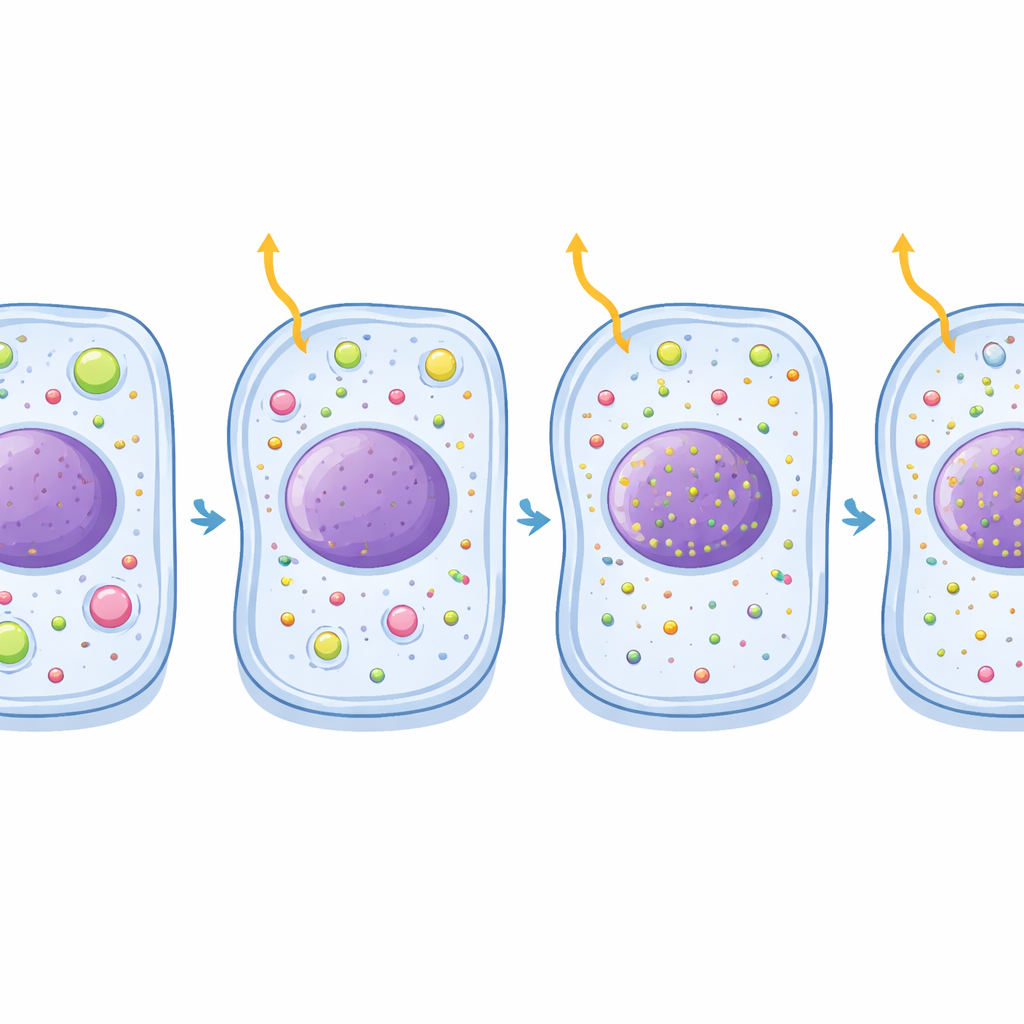
ARF7 and ARF19 can exist in two broad states: as diffuse molecules that move freely in the cell nucleus, where they control gene activity, or as dense droplets, or “condensates,” usually found in the surrounding cytoplasm where they are less active. The authors show that warming not only increases the total amount of ARF protein, it also increases the share that is dissolved and concentrated in the nucleus. Live imaging revealed that nuclear ARF levels rise within minutes after a temperature increase, before additional droplets appear in the cytoplasm. In carefully designed test systems, hotter conditions also boosted ARF-driven gene activity, consistent with more active protein in the nucleus. These behaviors match a type of phase change seen in many biological molecules, in which higher temperature allows more protein to stay in a soluble, working form.
Built-in temperature coding within the protein
The team next asked which parts of the ARF proteins make them so responsive to heat. By chopping ARF19 into its major regions and testing each one, they found that both the DNA-binding region and a flexible middle segment can each confer temperature-dependent accumulation on their own, meaning more than one structural feature supports this behavior. A large-scale mutagenesis screen then uncovered single amino acid changes in ARF19 that weaken its ability to build up at higher temperature. Plants engineered with these altered versions could grow normally at standard temperature but failed to elongate properly in the heat, showing that thermoresponsive ARF accumulation is not just a side effect—it is required for normal heat-induced growth.
Natural diversity and what it means for future crops
Finally, the researchers looked at 15 natural Arabidopsis strains from different parts of the world. Some showed only a small increase in ARF7/19 levels when warmed, while others showed a sharp jump. These differences were closely linked to how much each strain’s seedling stems elongated in response to heat, indicating that variation in ARF thermostability helps shape how plants from different environments respond to warming. Interestingly, the ARF response remained largely intact even when several well-known temperature signaling pathways were genetically disabled, hinting that ARFs may themselves act as direct or partly independent temperature sensors.
What this means for plants in a warming world
In everyday terms, this work reveals that certain auxin-linked proteins act like built-in thermostats inside plant cells. When temperatures rise, these proteins become more stable and more soluble in the cell nucleus, quickly boosting growth-related gene activity and changing plant shape. Because these responses are fast, tunable, and naturally variable among plant strains, they offer a promising route for breeding or engineering crops that can better adjust to heat waves and shifting climates.
Citation: Wilkinson, E.G., Sageman-Furnas, K., Pereyra, M.E. et al. AUXIN RESPONSE FACTOR thermostability. Nat Commun 17, 2883 (2026). https://doi.org/10.1038/s41467-026-71012-y
Keywords: plant thermomorphogenesis, auxin signaling, AUXIN RESPONSE FACTOR, protein phase separation, heat stress adaptation