Clear Sky Science · en
TFEB degradation is regulated by an IKK/β-TrCP2 phosphorylation-ubiquitination cascade
How Cells Decide When to Take Out the Trash
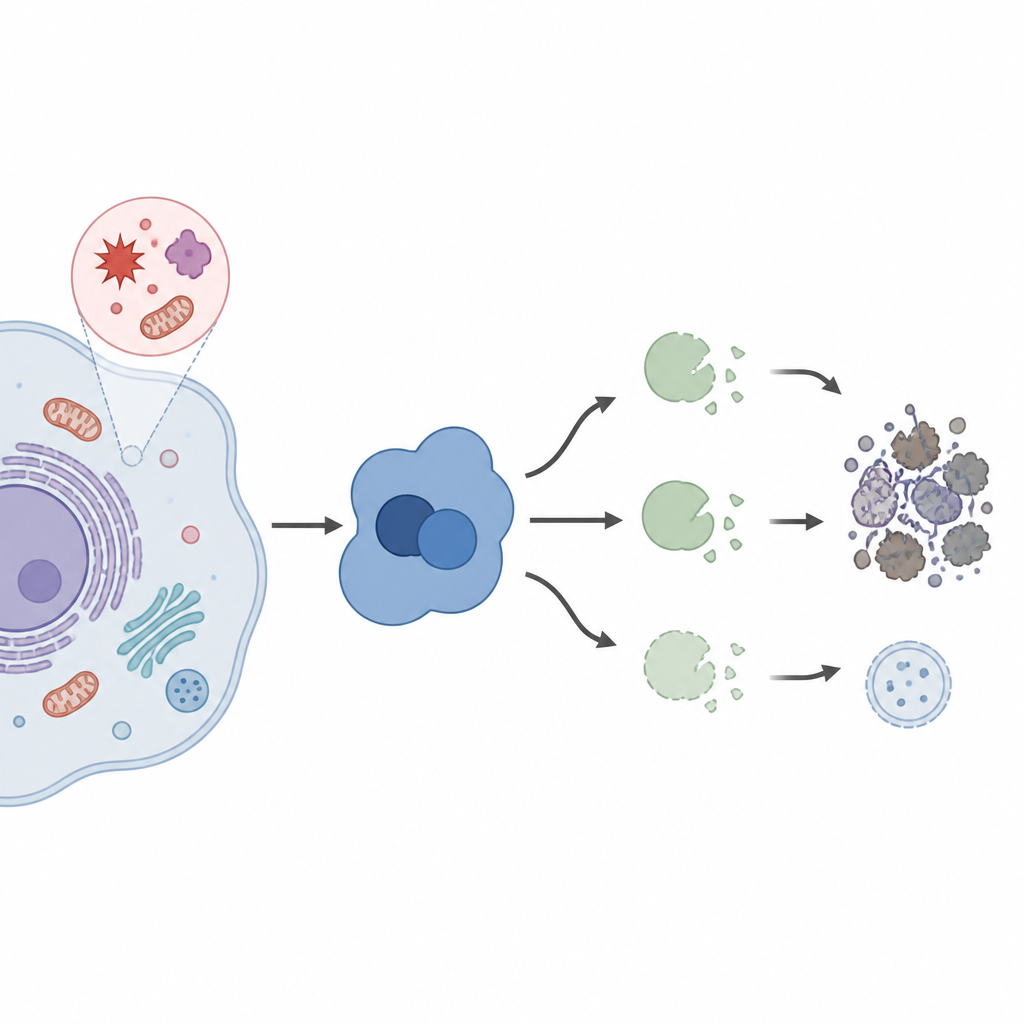
Our cells constantly clean themselves, breaking down worn-out parts and clumps of damaged proteins. This housekeeping is vital for brain health and for preventing age-related diseases. The protein TFEB acts like a master switch that turns on many of the genes needed for this cellular cleanup system. This study reveals how another cellular machine decides when to destroy TFEB itself, placing a powerful brake on the body’s internal waste management program.
The Cleanup Captain Inside Our Cells
TFEB is a protein that switches on genes responsible for building and maintaining lysosomes, the cell’s recycling centers. When TFEB is active and inside the nucleus, cells boost their ability to break down cellular garbage, including toxic protein aggregates linked to disorders such as Alzheimer’s disease. Because of this role, scientists see TFEB as a promising way to enhance cellular cleanup in the brain and other organs. Until now, however, it was unclear how cells controlled the amount of TFEB protein, especially how they decided when to break it down.
Finding the Cellular Off Switch
The researchers used a large drug screen to test hundreds of compounds that block different protein kinases, enzymes that attach small phosphate tags to other proteins. They engineered cells to produce a fluorescent version of TFEB so they could automatically measure its levels and location under a microscope. Most kinase blockers did little, but a small group made TFEB more abundant, with one key player standing out: the IKK complex, best known for controlling inflammatory responses. When any of the three main IKK components were removed in mouse cells, TFEB protein levels rose sharply, yet its gene activity did not, showing that IKK acts after TFEB is made rather than at the DNA level.
Tagging TFEB for Destruction
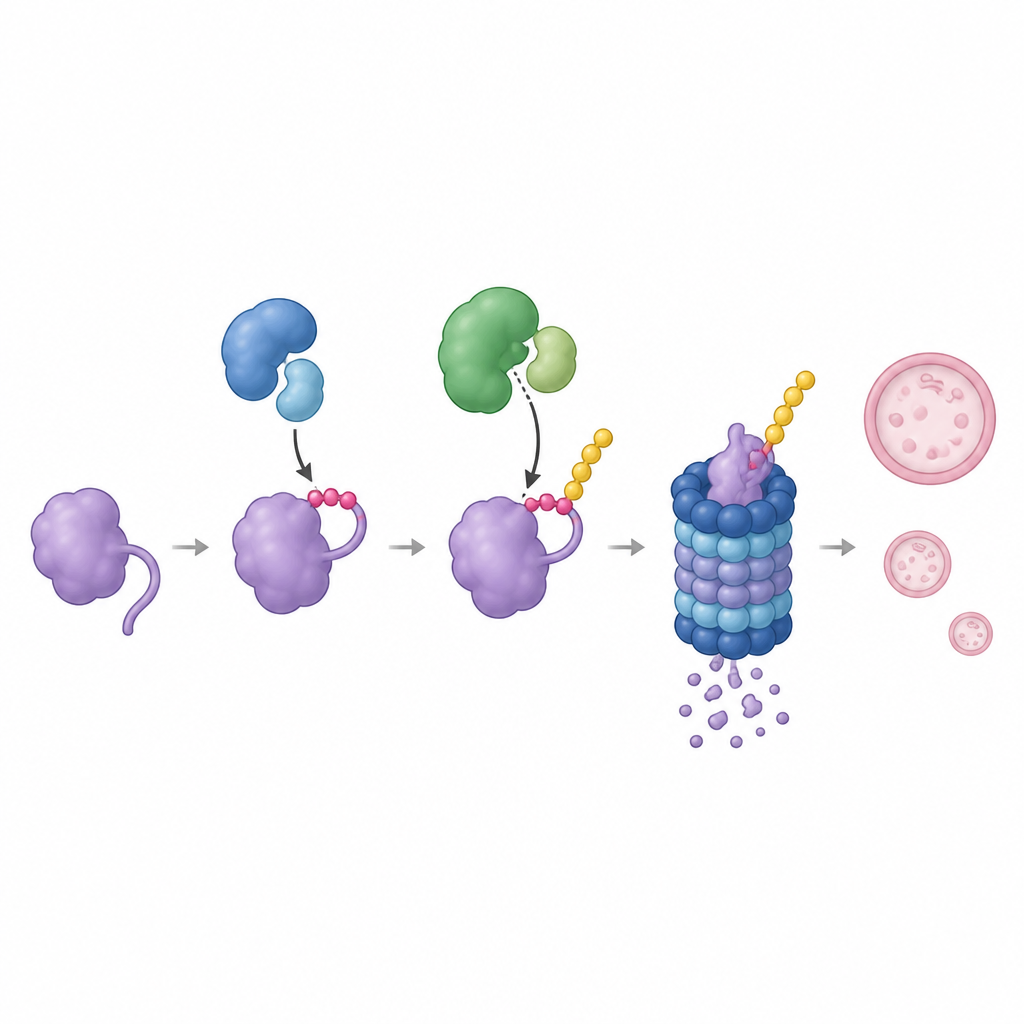
Diving deeper, the team discovered that IKK chemically marks TFEB at a specific cluster of sites, creating a signal patch on the protein’s tail. This patch is recognized by another protein, an E3 ligase called β-TrCP2, whose job is to attach chains of small ubiquitin molecules to nearby lysines on TFEB. These chains act as a flag that directs TFEB to the proteasome, the cell’s protein shredder. When the researchers mutated either the IKK tagging sites or the nearby lysines, TFEB no longer picked up these ubiquitin chains and became highly stable. Importantly, this extra-stable TFEB still moved into the nucleus when cells were starved or treated with other signals, and it still activated its target genes.
Boosting the Cell’s Recycling Power
By blocking IKK or β-TrCP2, or by using the stable TFEB mutants, the scientists observed larger and more numerous lysosomes with stronger breakdown activity. In cell models, the stabilized versions of TFEB were at least as effective as normal TFEB at helping cells clear abnormal tau protein, which forms tangles in neurodegenerative diseases. The study also showed that inflammatory signals, such as those triggered by bacterial components or immune messengers, rapidly lowered TFEB levels in normal cells, but not in cells missing IKK or carrying TFEB mutants that cannot be tagged. This means inflammation can dial down cellular cleanup by driving TFEB to destruction through this newly defined cascade.
What This Means for Health and Disease
To a non-specialist, the key message is that cells use a dedicated signaling chain to decide how much of the cleanup switch TFEB they will allow to exist. The IKK complex marks TFEB, β-TrCP2 attaches a molecular “trash” label, and the proteasome finishes the job. Disrupting this line of command leaves more TFEB available to turn on recycling pathways without disturbing how it moves into the nucleus or activates genes. Because problems with cellular waste clearance and chronic inflammation both contribute to brain diseases, this work points to a way of simultaneously easing inflammation’s brake on cleanup and enhancing the cell’s natural ability to dispose of harmful protein buildup.
Citation: Xiong, Y., Sharma, J., Young, M.N. et al. TFEB degradation is regulated by an IKK/β-TrCP2 phosphorylation-ubiquitination cascade. Nat Commun 17, 4679 (2026). https://doi.org/10.1038/s41467-026-71001-1
Keywords: TFEB, lysosomes, autophagy, protein degradation, neurodegeneration