Clear Sky Science · en
Proton transfer regulated photocured robust room-temperature phosphorescence from naphthalimide
Glow in the Dark Without the Cold
Glow in the dark toys and safety signs usually rely on materials that either contain heavy metals or only shine well at low temperatures. This study shows how chemists can make a new kind of plastic that glows for seconds at room temperature after a quick flash of ultraviolet light, while staying strong in water and common solvents. The work points toward safer, tougher afterglow materials for uses like 3D printing, anti-counterfeiting labels, and hidden information patterns.
From Liquid Ink to Solid Afterglow
The researchers start with a liquid mixture containing a small organic molecule called naphthalimide and two simple building blocks used to make plastics, acrylic acid and acrylamide. Under ultraviolet light, naphthalimide plays two roles at once. It first creates reactive species that link the building blocks together, turning the liquid into a solid plastic network through a fast curing step. At the same time, naphthalimide molecules become trapped in this new rigid network, setting the stage for a long-lived glow at room temperature. The result is a clear plastic that, after brief UV exposure, shows a bright yellow afterglow lasting about three seconds, with both a long lifetime and relatively high efficiency compared with similar organic systems. 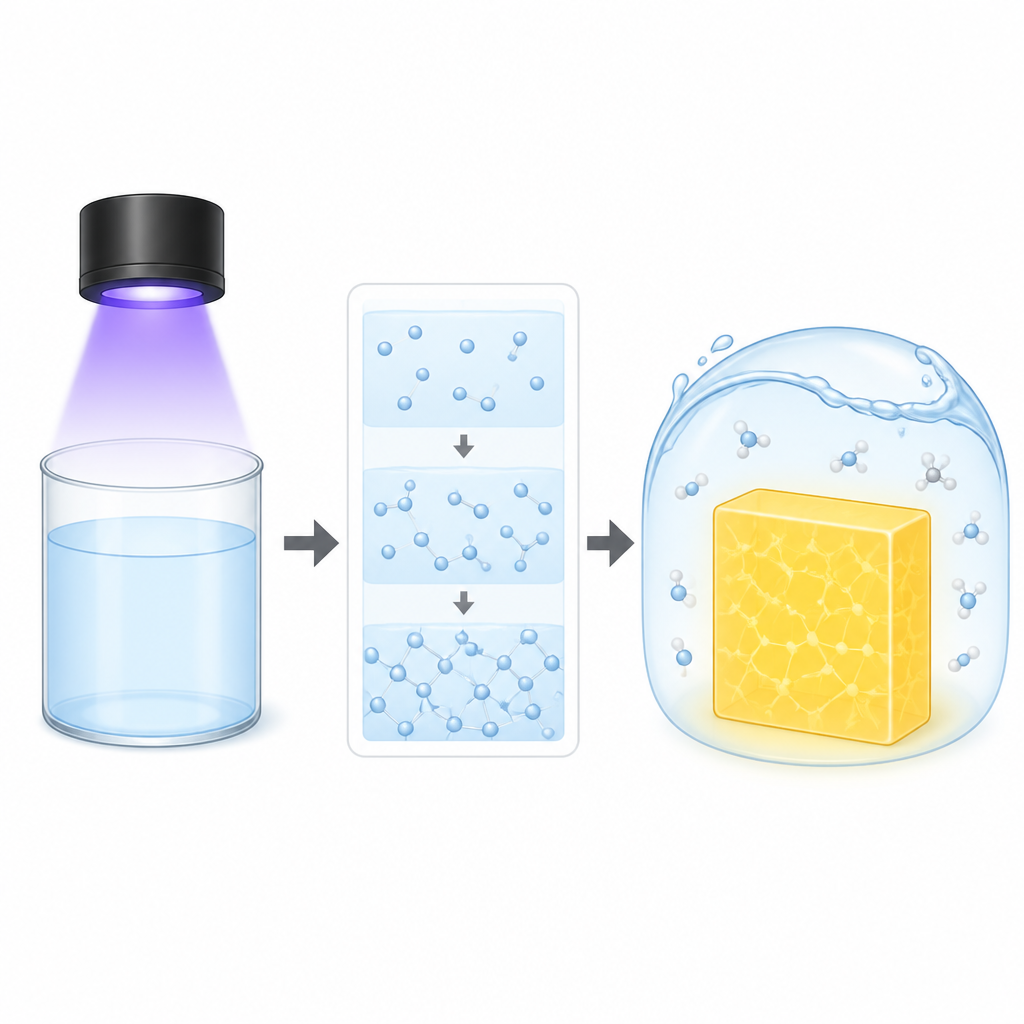
Special Bonds That Lock in Light
A key discovery is that tiny chemical attractions called hydrogen bonds between parts of the plastic and the naphthalimide molecule control how well the material glows. Acrylic acid contributes a “carboxyl” group that can share a proton with the basic “amine” portion of naphthalimide, forming so-called proton transfer hydrogen bonds. These interactions reduce energy losses that would otherwise waste the excited state as heat, help more excited molecules switch into a long-lived state, and stiffen the local environment around them. Together with many ordinary hydrogen bonds in the polymer, this creates a tight microcage that protects the excited states needed for the visible afterglow.
Comparing Building Blocks to Find What Works
To prove that these proton-sharing bonds are crucial, the team tested several other common plastic building blocks that lack strong acid-like groups. When naphthalimide cured these alternatives, the resulting solids showed only weak or short-lived glow, even though the overall curing worked. In contrast, plastics made from acrylic acid produced much brighter and longer afterglow. Mixing acrylic acid with other monomers also boosted performance, confirming that even a fraction of these acidic groups can greatly extend glow lifetime and intensity. Additional experiments with polyvinyl alcohol films and small added acids showed the same trend, strengthening the case that acid–amine bonding is the main switch that turns robust room-temperature afterglow on.
Color Tuning and Real-World Uses
Beyond simply glowing yellow, the new plastic can pass some of its stored energy to a common red dye, RhB, through a non-contact energy transfer process. By varying the amount of dye, the researchers gradually shift the afterglow color from yellow to deep red while keeping it visible for hundreds of milliseconds. They then exploit the liquid precursors like an ink: pouring them into molds for 3D-printed shapes, soaking cotton yarns that act as glowing threads, and coating films that can be patterned with masks and UV light. These patterns include flexible butterfly motifs, school badges, and QR-code-like images that shine under UV and keep glowing briefly after the light is removed, making them attractive for anti-counterfeiting and information storage. 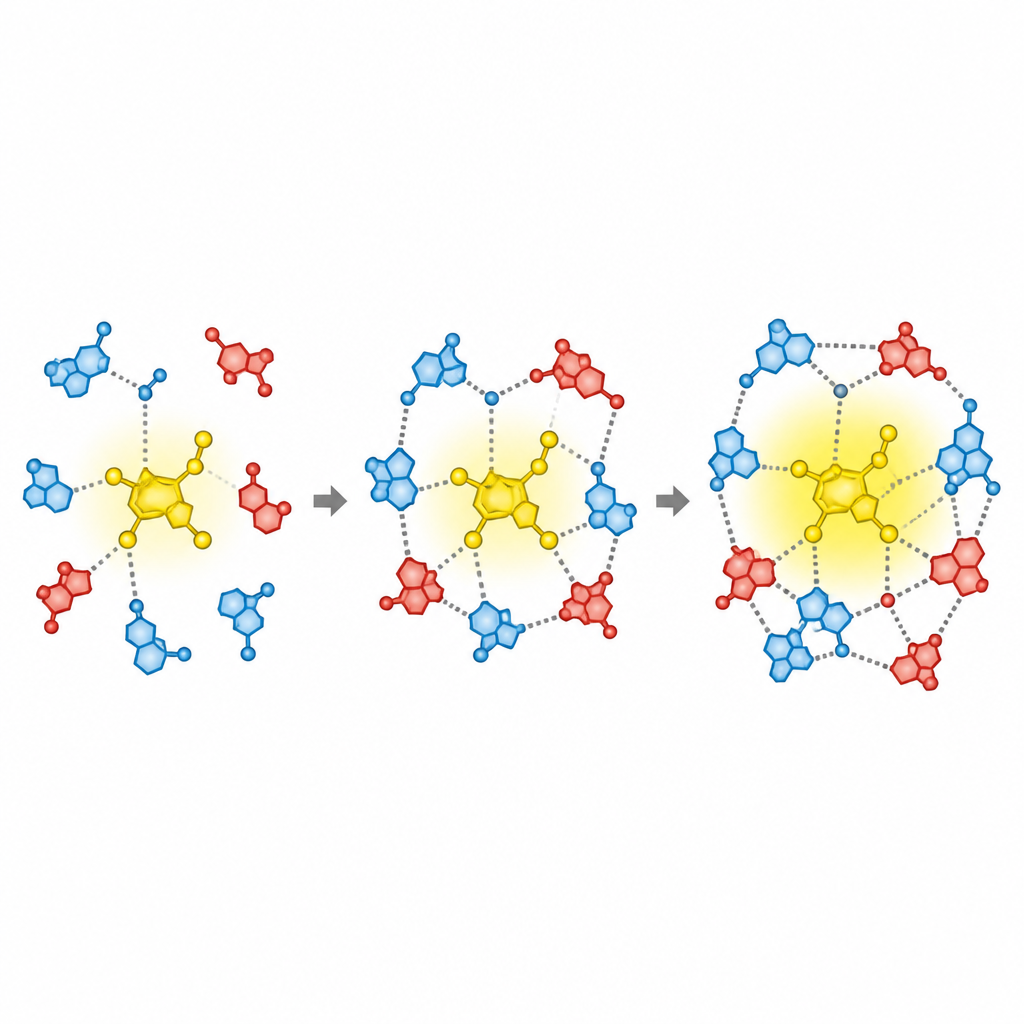
Why This New Glow Matters
In summary, the study introduces a simple recipe for turning a flowing liquid into a sturdy plastic that glows strongly at room temperature, using a single small molecule that both cures the plastic and provides the glow. By carefully designing proton-sharing and hydrogen-bond networks around the glowing sites, the researchers show how to hold fragile excited states in place long enough to be useful, without resorting to heavy metals or complicated processing. This approach could help bring safer, customizable glow-in-the-dark plastics into everyday technologies, from secure labels and smart textiles to printed devices that store and reveal hidden visual information.
Citation: Wang, A., Wei, H., Lin, K. et al. Proton transfer regulated photocured robust room-temperature phosphorescence from naphthalimide. Nat Commun 17, 4287 (2026). https://doi.org/10.1038/s41467-026-70999-8
Keywords: room temperature phosphorescence, photocured polymers, afterglow materials, hydrogen bonding, anti-counterfeiting