Clear Sky Science · en
LSD1 inhibitor, TAS1440, disrupts INSM1-LSD1 complex activating tumor-suppressive pathways via transcriptional reprogramming in neuroendocrine SCLC
Why this research matters for lung cancer
Small cell lung cancer is one of the deadliest forms of lung cancer, often returning quickly after chemotherapy and leaving patients with few options. This study describes a new experimental drug, TAS1440, that aims to flip cancer cells from a fast‑growing, nerve‑like state into a more restrained one by reawakening the cell’s own “brakes.” Understanding how this drug works could open the door to more precise treatments for a cancer type that badly needs better therapies. 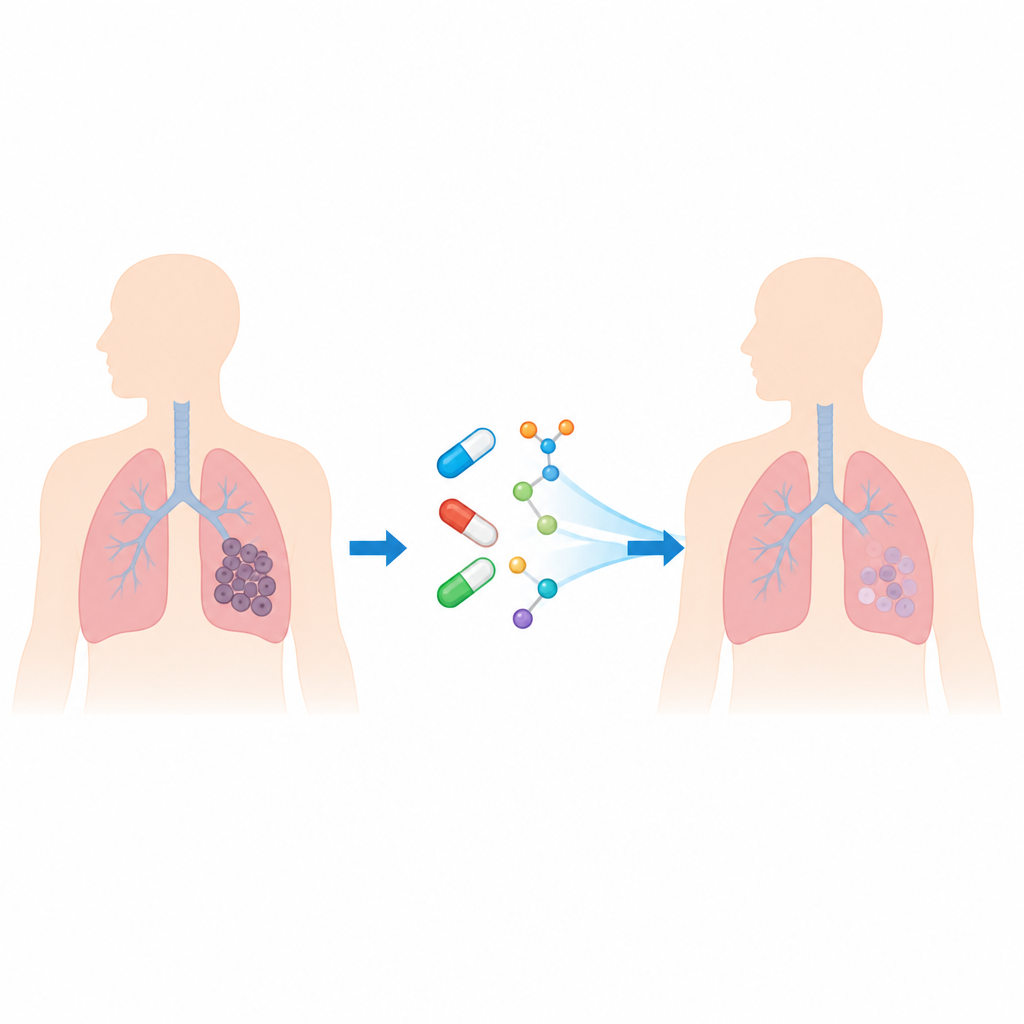
A hard‑to‑treat cancer with hidden subtypes
Small cell lung cancer behaves aggressively and usually responds only briefly to standard chemotherapy. In recent years, researchers have learned that it is not a single disease but a family of related states, each driven by different control proteins. One major state, called SCLC‑A, has strong “neuroendocrine” features, meaning its cells resemble hormone‑producing nerve cells and rely on a protein called INSM1. These SCLC‑A tumors make up a large share of cases and seem especially dependent on a molecular switch, the enzyme LSD1, that keeps growth‑limiting signals turned off.
A new kind of switch‑targeting drug
The team designed TAS1440 to block LSD1 in a more controlled way than earlier drugs. Previous LSD1 blockers latched onto a helper molecule inside the enzyme and did so permanently, raising safety concerns and off‑target effects. TAS1440 instead nestles into the groove where a histone protein normally sits, competing for that spot without forming a permanent bond. In lab tests, TAS1440 was far more selective for LSD1 than for related enzymes and was especially potent in SCLC‑A cell lines that had high INSM1 and another marker called ASCL1. In mice carrying human SCLC‑A tumors, daily TAS1440 dosing shrank or even regressed tumors, showing that its activity extended beyond the dish. 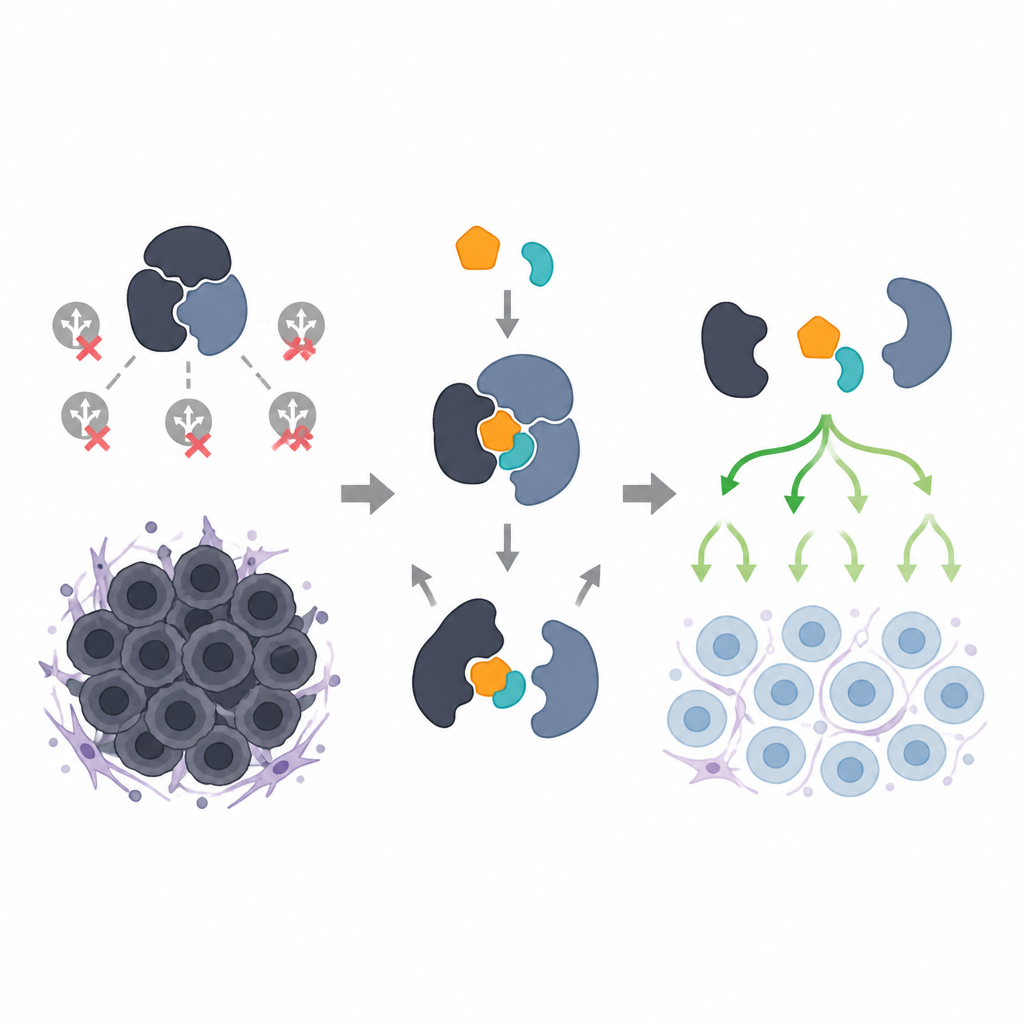
Releasing the cell’s built‑in brakes
Cancer cells grow in part by silencing pathways that normally tell cells to slow down, mature, or die. In SCLC‑A, LSD1 helps shut down two such pathways: NOTCH and TGF‑β. By blocking LSD1, TAS1440 gradually rewired gene activity over several days. The drug turned down neuroendocrine identity genes, including INSM1 and ASCL1, and turned up many genes linked to NOTCH and TGF‑β signaling. Protein‑level tests showed quick activation of SMAD2, a messenger for TGF‑β, followed later by increased NOTCH1 inside the nucleus. When the researchers chemically blocked NOTCH, TGF‑β, or both, the growth‑inhibiting effect of TAS1440 weakened or almost disappeared, confirming that reawakened “brake” signals are central to how the drug slows cancer growth.
Breaking up harmful protein partnerships
The study also reveals that TAS1440 does more than simply turn off an enzyme. LSD1 operates within large protein teams that clamp down on specific sets of genes. Using protein‑interaction mapping, the authors found that TAS1440 selectively disrupted complexes where LSD1 was bound to INSM1 and to SMAD2, along with several chromatin‑shaping partners. Structural work showed TAS1440 occupying the same channel used by histone proteins and overlapping the binding footprint of INSM1, physically prying these partners apart. This disruption loosened the grip of repressor complexes at key gene switches for NOTCH and TGF‑β, making those regions more chemically active and easier to turn on.
Why some tumors resist and who might benefit
Not all small cell lung cancer cells responded equally. Tumor models with very high LSD1 levels often resisted TAS1440, perhaps because there was simply more target than the drug could effectively block. When the team completely removed LSD1, TAS1440 lost its effects, showing that the drug is highly target‑dependent. Strikingly, knocking out INSM1 also blunted the response: TAS1440 could no longer strongly boost NOTCH and TGF‑β signals, and tumor growth was no longer curbed in cell cultures or mouse models. Conversely, adding extra INSM1 to normally resistant cells made them more sensitive. Together, these findings suggest that tumors with the right combination of LSD1 and INSM1 activity are most likely to benefit, and that loss of INSM1 could be a route to drug resistance.
What this could mean for future treatment
In simple terms, TAS1440 is designed to slip into a control hub inside certain small cell lung cancers, shut off a growth‑promoting enzyme, and break up protein teams that hold key brakes in check. This dual action reactivates built‑in safety pathways and weakens the cancer’s nerve‑like identity, leading to slower growth and tumor shrinkage in animal models. While much remains to be tested in people, the work points to TAS1440 as a promising example of “epigenetic” therapy and suggests that measuring INSM1 and LSD1 in tumors could help identify patients most likely to respond.
Citation: Machida, T., Gong, Y., Tsukioka, S. et al. LSD1 inhibitor, TAS1440, disrupts INSM1-LSD1 complex activating tumor-suppressive pathways via transcriptional reprogramming in neuroendocrine SCLC. Nat Commun 17, 4390 (2026). https://doi.org/10.1038/s41467-026-70984-1
Keywords: small cell lung cancer, LSD1 inhibitor, epigenetic therapy, NOTCH signaling, INSM1