Clear Sky Science · en
Host macrophages/monocytes promote malaria transmission by modulating mosquito microbiota via SR-A-mediated phagocytosis
Why this matters for mosquito bites and malaria
Malaria spreads when a mosquito bites someone who is infected and then passes the parasite to the next person. This study reveals a surprising helper in that process: instead of always defending us, some of our own white blood cells actually make it easier for malaria parasites to survive inside mosquitoes, by clearing out helpful bacteria in the insect gut that would otherwise attack the parasite.
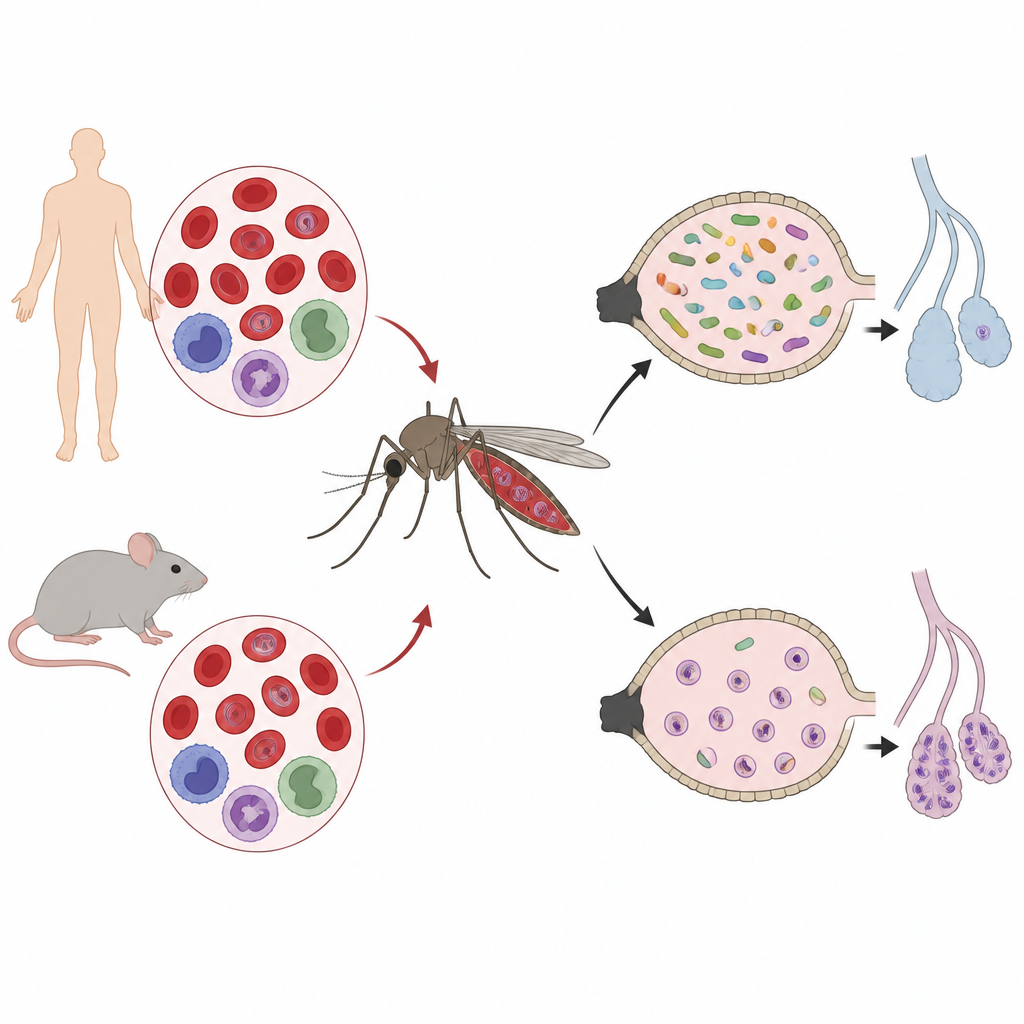
Friends, foes, and the busy mosquito gut
When a mosquito takes a blood meal from an infected mouse or person, it does not just swallow red blood cells and malaria parasites. It also takes in many immune cells that circulate in the blood. The researchers first showed that malaria infection greatly boosts several types of immune cells in mice, especially a group called macrophages and monocytes. These cells are normally front-line defenders against germs. Using both rodent malaria and the human parasite Plasmodium falciparum, the team found that mosquitoes which fed on blood rich in these cells ended up with more developing parasites in their guts and were more likely to become infectious.
A closer look at which cells matter
Not all immune cells had the same effect. By selectively removing different cell types in mice before mosquitoes fed, the scientists showed that neutrophils and natural killer cells did not noticeably change malaria infection in the insects. In contrast, depleting macrophages and monocytes sharply cut the number of parasite stages in the mosquito gut, reduced parasite numbers in the salivary glands, and made it much less likely that a mosquito bite would infect another mouse. Adding human monocytes to cultured human malaria parasites also boosted infection of mosquitoes, suggesting the same pattern can occur with the human disease.
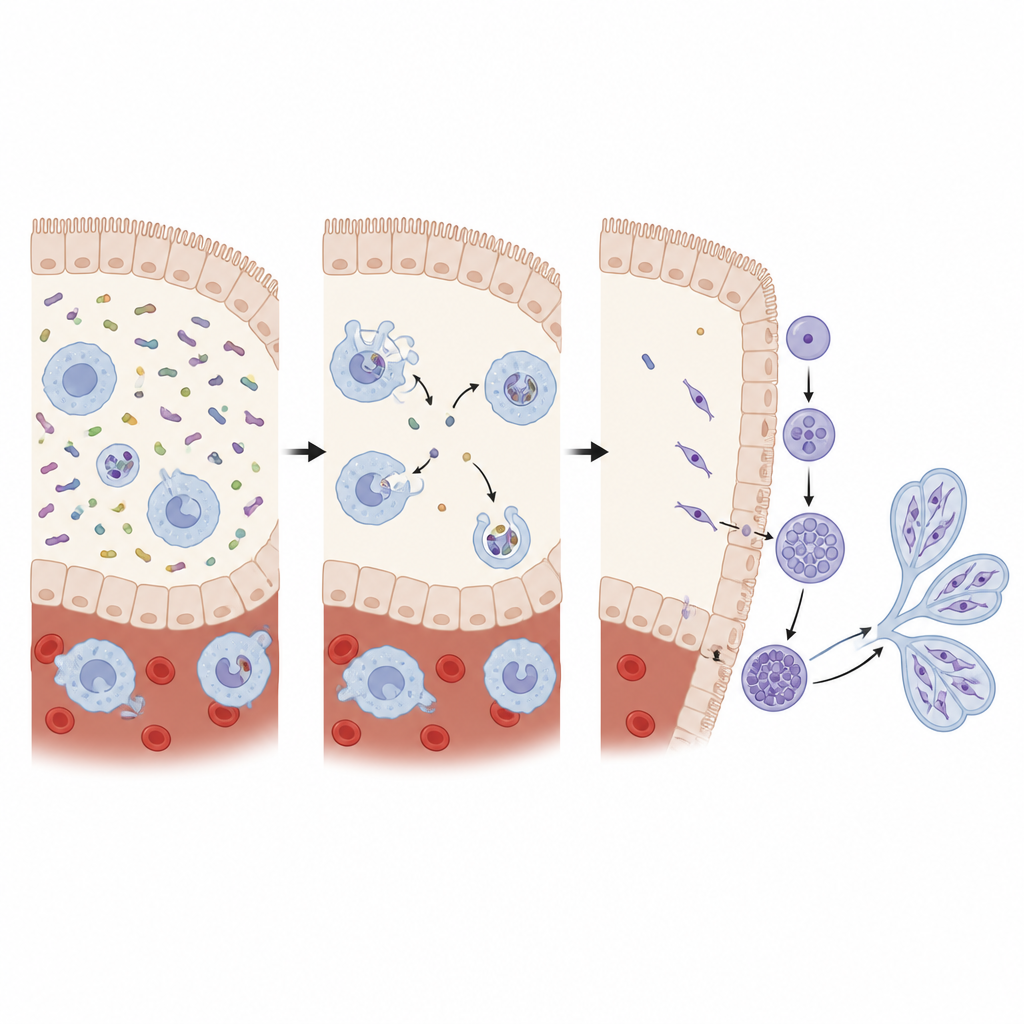
Helpful bacteria that block malaria
The team then asked why losing macrophages and monocytes would harm the parasite. They focused on the mosquito’s gut bacteria, which are known to attack malaria in several ways. Mosquitoes that drank blood from mice lacking these immune cells had many more bacteria in their guts, and they died sooner, consistent with heavy bacterial growth. Genetic surveys showed that three bacterial species in particular, including Elizabethkingia anophelis, became more abundant. When the researchers deliberately added these bacteria back into mosquitoes whose native microbes had been cleared, the insects became much more resistant to malaria infection. Similar protection was seen with another anti-malarial gut bacterium that occurs naturally in wild mosquitoes.
How white blood cells tip the balance
To see how host immune cells change the gut community, the scientists tracked fluorescently tagged bacteria inside the mosquito. They showed that macrophages and monocytes, which survive only for a few hours in the mosquito gut, actively engulf and digest these bacteria. This happens mainly through a surface molecule called scavenger receptor A, which allows the cells to grab bacteria without the usual antibody tags. Blocking this receptor with specific antibodies, or removing the cells altogether, left more helpful bacteria in place and lowered malaria infection in mosquitoes. The effect did not depend on one arm of the complement system, another branch of immunity, pointing to a direct, receptor-driven eating of bacteria by the white blood cells.
Boosting future vaccines that block transmission
The findings have direct relevance for vaccines designed to stop malaria spread rather than to cure illness. One leading approach raises antibodies against a parasite protein called Pfs25, which acts in the mosquito gut. In this study, Pfs25 antibodies alone reduced but did not fully stop parasite transmission. Strikingly, when the researchers combined these antibodies with either depletion of macrophages and monocytes or blocking of scavenger receptor A, the transmission of a Pfs25-tagged parasite strain to mosquitoes was completely halted. This total block went hand in hand with a surge of the bacteria that naturally suppress malaria in the mosquito gut.
What this means for fighting malaria
For a general reader, the key message is that our own immune cells can sometimes help malaria parasites jump from person to person. By eating up bacteria in the mosquito gut that would otherwise attack the parasite, host macrophages and monocytes clear a safe path for malaria to develop. Targeting the receptor these cells use to swallow bacteria, or otherwise preserving the mosquito’s protective gut microbes, could become a new way to reduce malaria transmission and to make future transmission-blocking vaccines work much better.
Citation: He, B., Li, M., Guo, S. et al. Host macrophages/monocytes promote malaria transmission by modulating mosquito microbiota via SR-A-mediated phagocytosis. Nat Commun 17, 4385 (2026). https://doi.org/10.1038/s41467-026-70966-3
Keywords: malaria transmission, mosquito microbiota, macrophages, Pfs25 vaccine, vector biology