Clear Sky Science · en
Regulation of physical activity and energy expenditure through Phf6 in the medial preoptic area
Why moving more matters for body weight
Most conversations about obesity focus on how much we eat. But how much energy our bodies burn through everyday movement is just as important. This study explores a small but powerful region of the brain that helps decide whether we feel like being active or staying still, and how a single gene in this region can tilt the balance toward weight gain, even when food intake does not change.
A tiny brain hub that talks to our muscles
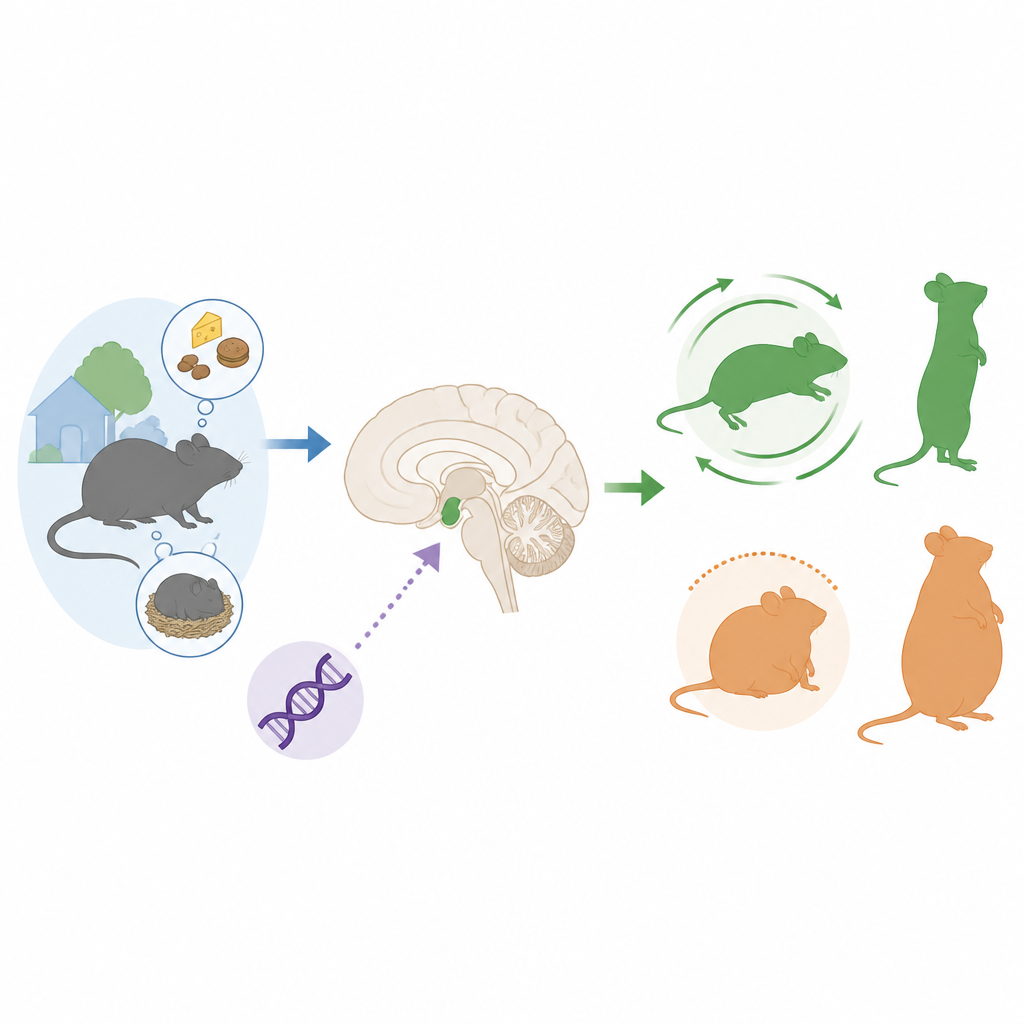
Deep in the brain lies the medial preoptic area, a zone long known for roles in body temperature and reproductive behavior. The researchers found that this region also houses a special group of nerve cells that strongly influence physical activity and energy use. These cells carry a gene called Phf6, which helps control how other genes are switched on and off. Mutations in PHF6 in people cause Börjeson-Forssman-Lehmann syndrome, a rare condition that often includes obesity, hinting that this gene might be linked to how the brain manages body weight.
How a single gene shifts the drive to move
Working in mice, the team showed that Phf6 is active in a specific subset of nerve cells that also respond to the hormone estrogen. When they selectively removed Phf6 from this small cell population, female mice gradually became obese. Detailed measurements revealed that these animals did not eat more food, nor did their core body temperature or key reproductive hormones change. Instead, what dropped sharply was how much they chose to move, especially during their usual active nighttime phase, and the amount of energy they burned while moving.
Turning the activity switch on and off
To test whether these Phf6-bearing cells truly act as a switch for physical activity, the scientists used light and drug-based tools to nudge the cells’ activity up or down. When they artificially activated the cells, mice walked and ran more in open arenas and showed higher energy expenditure, all without signs of increased anxiety. When they silenced the same cells, the animals moved less and burned fewer calories. Recordings from individual nerve cells revealed why: without Phf6, these neurons fired fewer electrical impulses and responded less strongly to estrogen, meaning they were less able to drive movement when the body signaled that it was time to be active.
A brain circuit that couples movement to fat storage
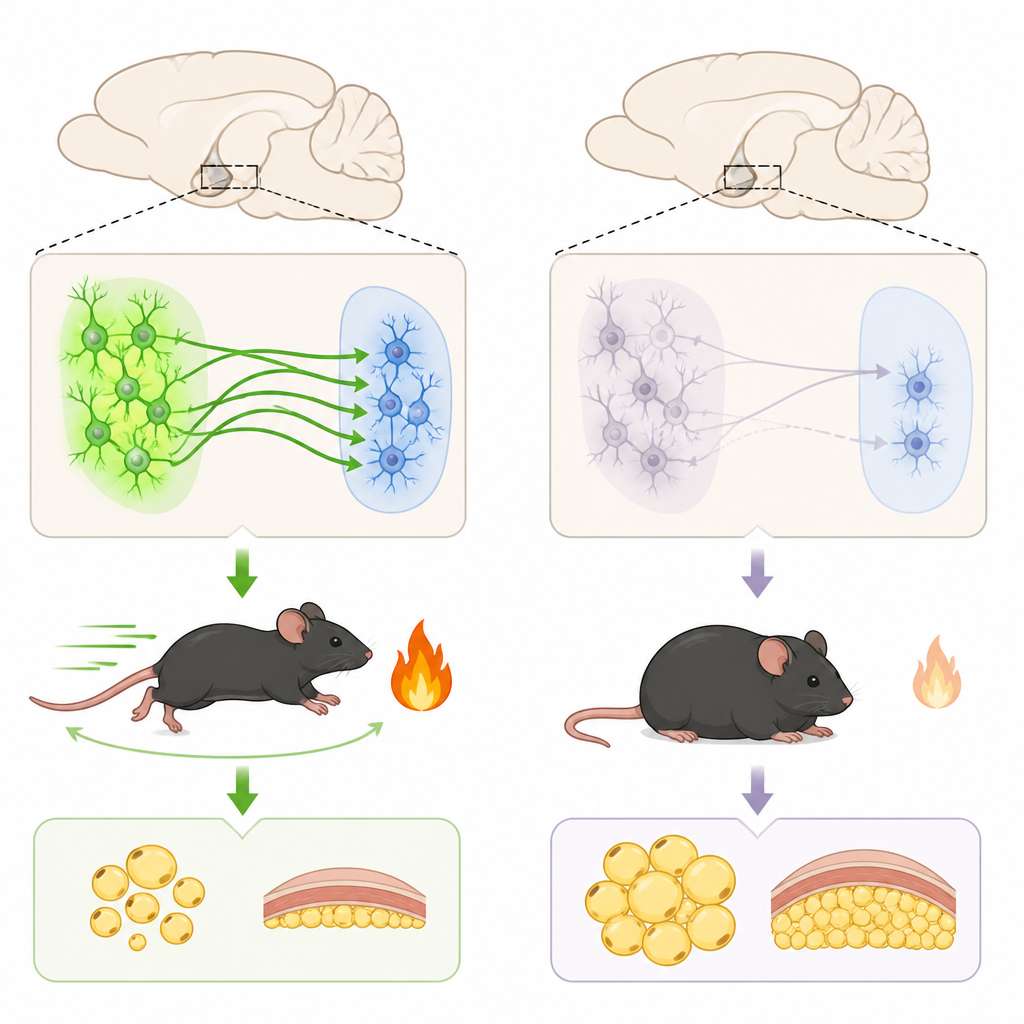
The study also traced where these key neurons send their messages. The strongest pathway ran to another small region called the ventrolateral ventromedial hypothalamus, previously linked to female physical activity. Activating the fibers from the medial preoptic area to this target boosted movement, while blocking the target region largely erased the effect of activating the upstream cells. Further experiments showed that this pathway uses both excitatory and disinhibitory connections, forming a feedback loop that can amplify the drive to move. When Phf6 is missing, this circuit becomes sluggish, daily physical activity drops, and fat gradually accumulates.
What this means for understanding obesity
To a non-specialist, the main message is that obesity is not only about willpower or appetite. A tiny gene in a tiny cluster of brain cells can quietly lower the body’s natural urge to move, reducing how many calories are burned even when eating habits stay the same. By revealing a specific brain circuit and genetic control point that links activity to energy expenditure, this work helps explain why some people with PHF6 mutations, and perhaps others with related brain changes, are especially prone to obesity. In the long run, targeting similar circuits could inspire new strategies that work with the brain’s own movement-control systems to help manage body weight.
Citation: Wang, J., Liu, B., Wu, X. et al. Regulation of physical activity and energy expenditure through Phf6 in the medial preoptic area. Nat Commun 17, 4468 (2026). https://doi.org/10.1038/s41467-026-70962-7
Keywords: obesity, physical activity, hypothalamus, Phf6, energy expenditure