Clear Sky Science · en
Atom-economy upcycling of commodity thermoset polyurethane into photocuring 3D printing resins based on selective cleavage—crosslink strategy
Turning Old Foam into New Tools
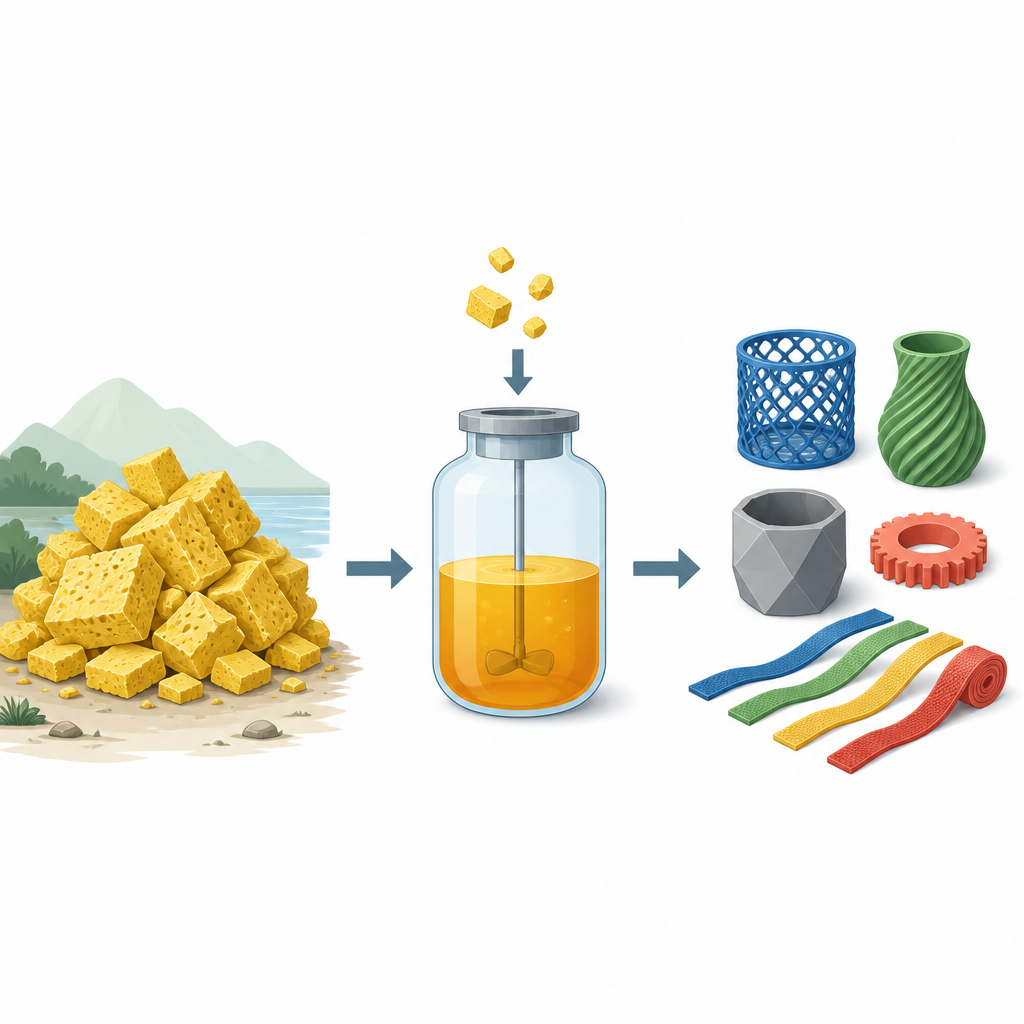
From sofas and car seats to building insulation, soft foam made from polyurethane quietly fills our lives. But when these products wear out, the bulky foam is hard to recycle and often ends up in landfills or incinerators. This study presents a way to turn that stubborn waste into useful liquid resins for 3D printing and other products, using a simple food-grade ingredient and very little extra material.
Why Foam Waste Is a Growing Problem
Polyurethane foams are popular because they are light, strong, and easy to shape, which explains their massive global use. Their structure, however, is locked together in a way that prevents them from being melted down and remolded like many other plastics. Traditional recycling methods either grind the foam into low-value fillers or break it down chemically using large amounts of harsh reagents. These older approaches often waste most of the original material, generate unwanted byproducts, and produce recycled products that are not worth much. As a result, most foam still goes to landfills or is burned, bringing added environmental and health concerns.
A Gentle Way to Unlock the Foam
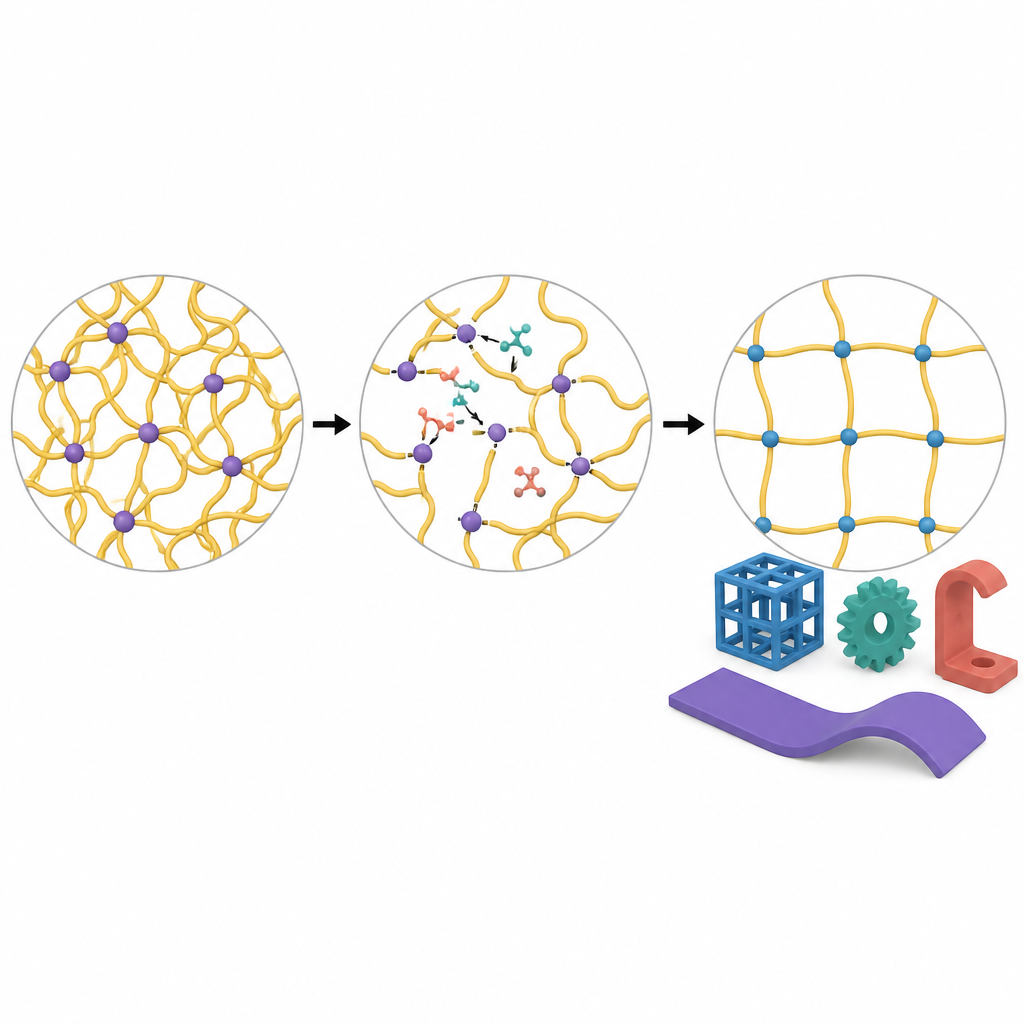
The researchers designed a new approach that focuses on the key “locks” that make the foam rigid, instead of breaking every chemical link in the material. In common polyurethane foams, only certain bridge-like bonds create the tight network that cannot be remelted, while many other bonds form the main chains that give the foam its toughness and flexibility. The team found that ethyl acetoacetate, a low-cost compound already approved as a food additive, can selectively open these bridge bonds under heat while leaving most of the main chains untouched. When ground foam is heated with this agent, the solid network dissolves into a thick liquid polymer rich in “active sites” that are ready for further modification, with minimal cutting of the original chains.
From Waste Foam to 3D Printing Resin
Once the foam network is opened, the resulting liquid still contains much of the original polyurethane backbone, plus a small number of new reactive end groups. The researchers then attach light-sensitive units to these sites using a common isocyanate-based linker. This simple step transforms the liquid into a resin that hardens when exposed to light in a 3D printer. Remarkably, the final printed materials can contain up to about 90 percent by weight of the original foam waste. By adjusting how much linker is added, the team can fine-tune the mechanical behavior of the printed parts, ranging from tougher, stronger pieces to very stretchy, rubber-like objects that can extend to more than five times their original length before breaking.
Strong, Flexible, and Reconfigurable Parts
The printed objects retain much of the flexibility and toughness of the starting foam while gaining new features. Tests show that the materials combine high stretchability with good strength and resilience, comparing favorably with commercial flexible 3D printing resins that are far more expensive. The parts also show stable behavior over a wide temperature range and can work as flexible elastomers. Because certain bonds within the material can still rearrange at elevated temperatures, the solid pieces can be reshaped without grinding or remelting: heating under gentle force allows the network to relax into a new permanent form. This adds a second layer of reusability beyond the initial recycling step.
Beyond 3D Printing: More Ways to Reuse Foam
Importantly, the liquid produced after the selective opening step is useful even before it is turned into a light-sensitive resin. Thanks to its flexible segments and sticky nature, it can act as a pressure-sensitive adhesive that bonds well to metals, paper, and even low-stick surfaces, and can be peeled and reattached multiple times. The same liquid can also serve as a starting ingredient to make new polyurethane materials, or as an additive to toughen epoxy resins, which are widely used in coatings and composites. Because the process relies on inexpensive, widely available chemicals and recovers most of the added agent, it keeps extra material use very low while extracting high value from what was once considered nearly worthless waste.
A Practical Path to Cleaner Foam Recycling
In simple terms, this work shows how targeted “unlocking” of the right bonds in waste foam can turn a disposal headache into a useful resource. By using a food-grade helper molecule to gently open only the critical crosslinks, the method preserves most of the original material, avoids troublesome byproducts, and converts discarded cushions and insulation into high-value 3D printing resins, adhesives, and other ingredients. Because the chemistry fits with existing foam products and infrastructure, it offers a realistic route toward more sustainable handling of polyurethane waste.
Citation: Huang, Y., Guo, X., Deng, Y. et al. Atom-economy upcycling of commodity thermoset polyurethane into photocuring 3D printing resins based on selective cleavage—crosslink strategy. Nat Commun 17, 4151 (2026). https://doi.org/10.1038/s41467-026-70951-w
Keywords: polyurethane foam recycling, 3D printing resin, plastic upcycling, sustainable materials, thermoset plastics