Clear Sky Science · en
Negative CO2 emissions for long-term mitigation of extremes in land hydrological cycle
Why future rain patterns matter
As the world works to cut carbon pollution, many people assume our climate will simply drift back toward normal. This study challenges that idea by asking a simple question with big consequences: if humanity not only stops emitting carbon dioxide but actually pulls it out of the air, how will rainfall, floods, and droughts over land respond in the very long run?
Two paths for our carbon choices
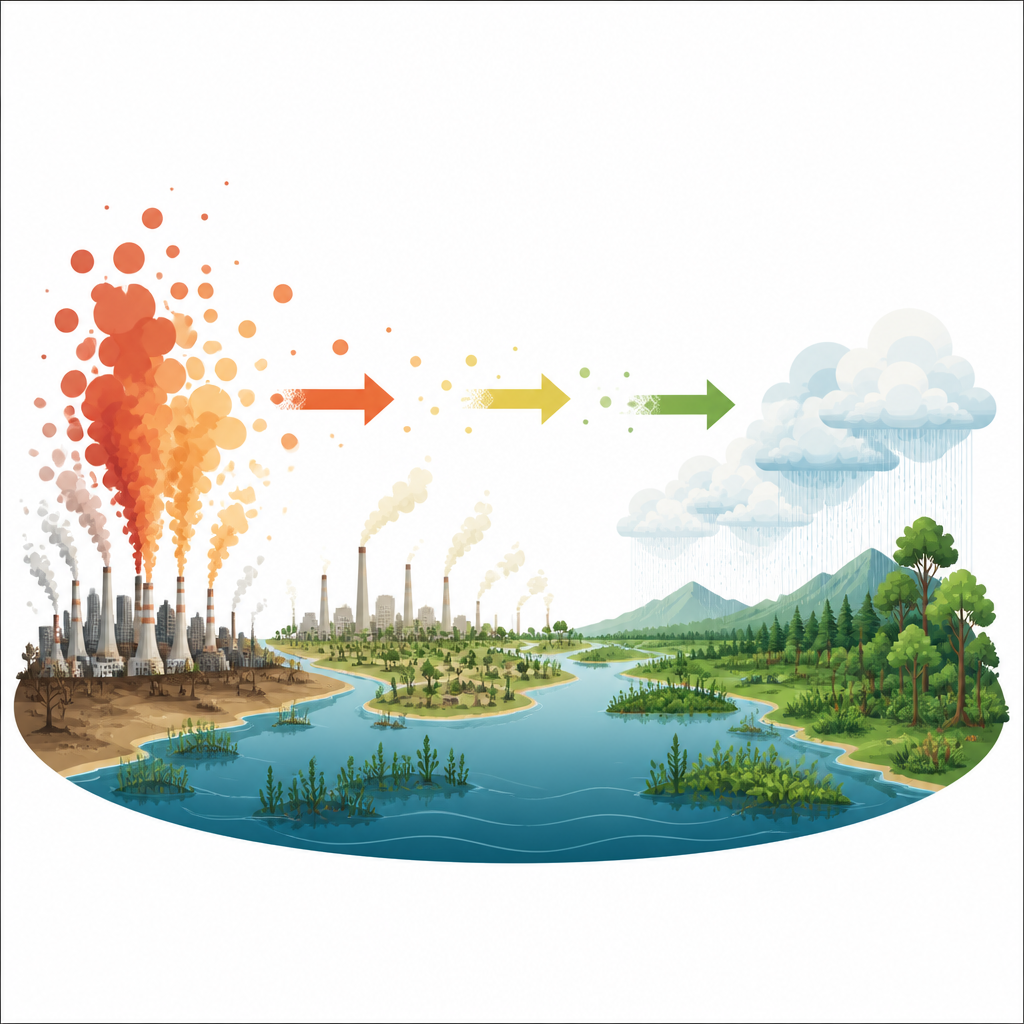
The researchers used a state-of-the-art Earth system model to explore two idealized futures. In the first, called the zero emissions path, global carbon dioxide emissions rise until the middle of this century and then steadily fall to zero, after which they stay there. In the second, the negative emissions path, emissions follow the same early rise and fall, but then go below zero so that more carbon is removed from the air than released, eventually bringing carbon dioxide back to roughly today’s level. These experiments let the authors watch how temperature and rainfall evolve over several centuries, as the climate system slowly adjusts.
More rain over land after carbon removal
The simulations show that land areas get wetter overall not only when carbon dioxide peaks, but even more so long after emissions have dropped. At the time of highest carbon dioxide, land precipitation increases modestly compared to the early 2000s. Yet under both zero and negative emissions, average land rainfall later overshoots this peak, rising considerably even though atmospheric carbon dioxide and global temperatures are lower than before. Over the oceans, rainfall roughly tracks surface warming, but over continents it behaves differently, hinting that something beyond simple warming-driven moisture is at work.
Plants as hidden climate players
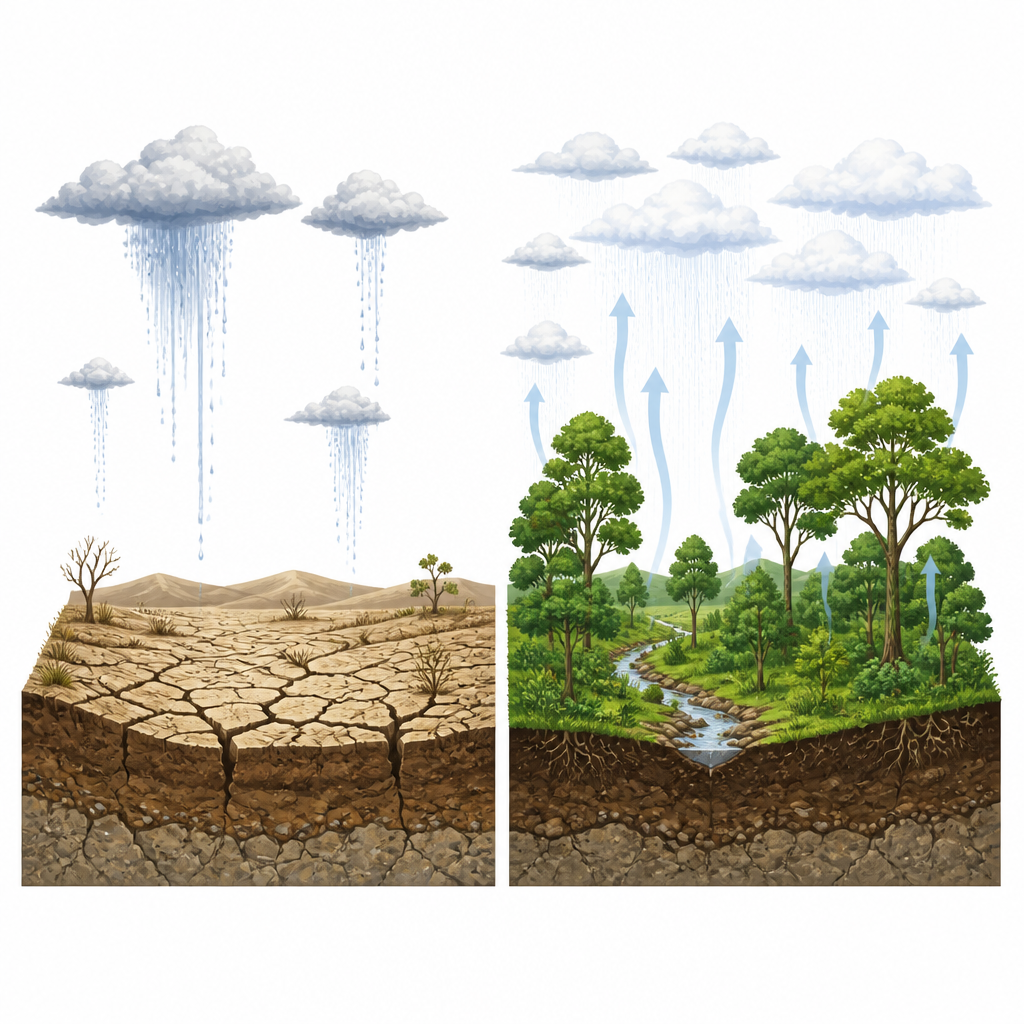
The key lies in how plants breathe and move water. Plants take up carbon dioxide through tiny pores in their leaves that also allow water to escape. At high carbon dioxide levels, these pores partially close, which saves water but reduces the flow of moisture from leaves to the air. As emissions are cut and especially when carbon is actively removed, temperatures over many land regions stay warm enough and vegetation remains lush, but the air’s carbon dioxide content falls. That combination allows plant pores to reopen and leaf area to stay large or even expand in some regions. The result is a strong rise in transpiration, the release of water vapor from plants, which feeds clouds and boosts rainfall over land.
Softer extremes with steadier rain
An obvious worry is that more rain might simply mean more damaging downpours. The model suggests a different outcome under sustained negative emissions. When the authors examined intense one-day rain events and soil moisture deficits, they found that heavy downpours become less widespread in the negative emissions world than they are at the time of peak carbon dioxide, and even less than under the zero emissions path. At the same time, dry spells ease in many regions, and the number of days with measurable rainfall increases. In effect, plant-driven moisture recycling spreads rainfall more evenly through time, reducing both cloudbursts and deep drought in many populated areas.
What this means for our choices
In plain terms, the study suggests that actively pulling carbon dioxide out of the air could, over centuries, help smooth out the land water cycle: more total rain, but fewer extremes of floods and droughts in many regions. The climate does not simply bounce back to its old state once carbon dioxide falls; instead, slow ocean adjustments and the living skin of the planet, its vegetation, reshape future rainfall. While the exact numbers come from one model and an idealized scenario, the message is clear for non-specialists: aiming beyond net-zero toward sustained negative emissions could bring long-term benefits for water availability and reduce some of the harshest hydrological impacts of climate change.
Citation: Shin, J., Kug, JS., Park, SW. et al. Negative CO2 emissions for long-term mitigation of extremes in land hydrological cycle. Nat Commun 17, 4347 (2026). https://doi.org/10.1038/s41467-026-70945-8
Keywords: negative emissions, land precipitation, hydrological extremes, vegetation feedback, climate mitigation