Clear Sky Science · en
Mitochondrial metabolic imbalance drives diploidization in mouse haploid embryonic stem cells via NADPH overload
Why tiny cells and their powerhouses matter
Every cell carries its genes in copies, and in mammals that usually means two sets. Yet scientists can grow rare stem cells with only one set, a state called haploid. These cells are powerful tools for genetics, but in culture they quickly double their DNA and revert to the usual two-copy, or diploid, state. This study uncovers why that switch happens in mouse embryonic stem cells and shows that the root cause lies not in the genes themselves, but in how the cells manage energy and electrons inside their mitochondria, the tiny power stations of the cell.
Small cells with crowded power plants
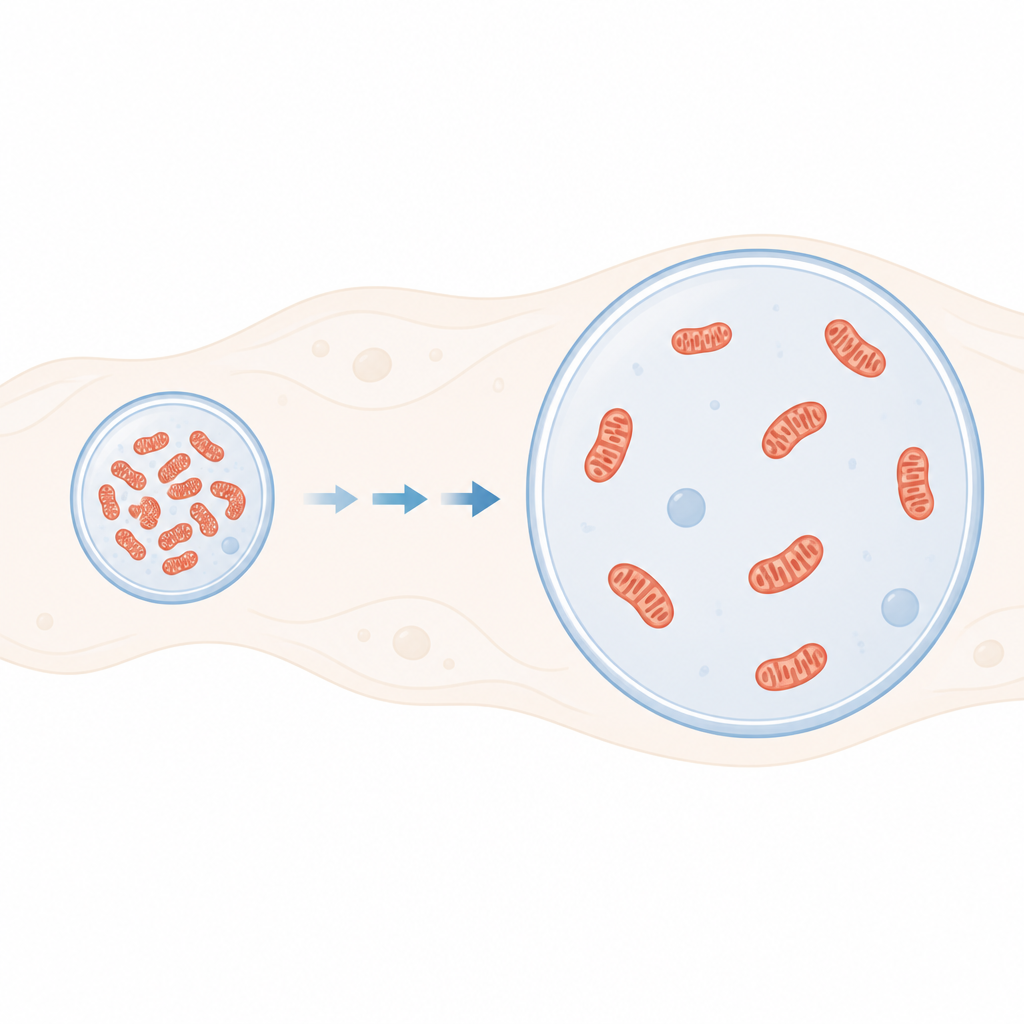
Haploid stem cells are noticeably smaller than their diploid counterparts, but they carry about the same total amount of mitochondrial material. Because the cell body is smaller, their mitochondria are packed more tightly and have a higher membrane potential, a kind of stored electrical energy. Measurements of oxygen use and energy production showed that, despite this strong potential, haploid cells make less ATP, the cell’s energy currency, than diploid cells. This mismatch between high mitochondrial charge and relatively low energy output hints at a traffic jam in the energy system of haploid cells.
A hidden imbalance in cellular chemistry
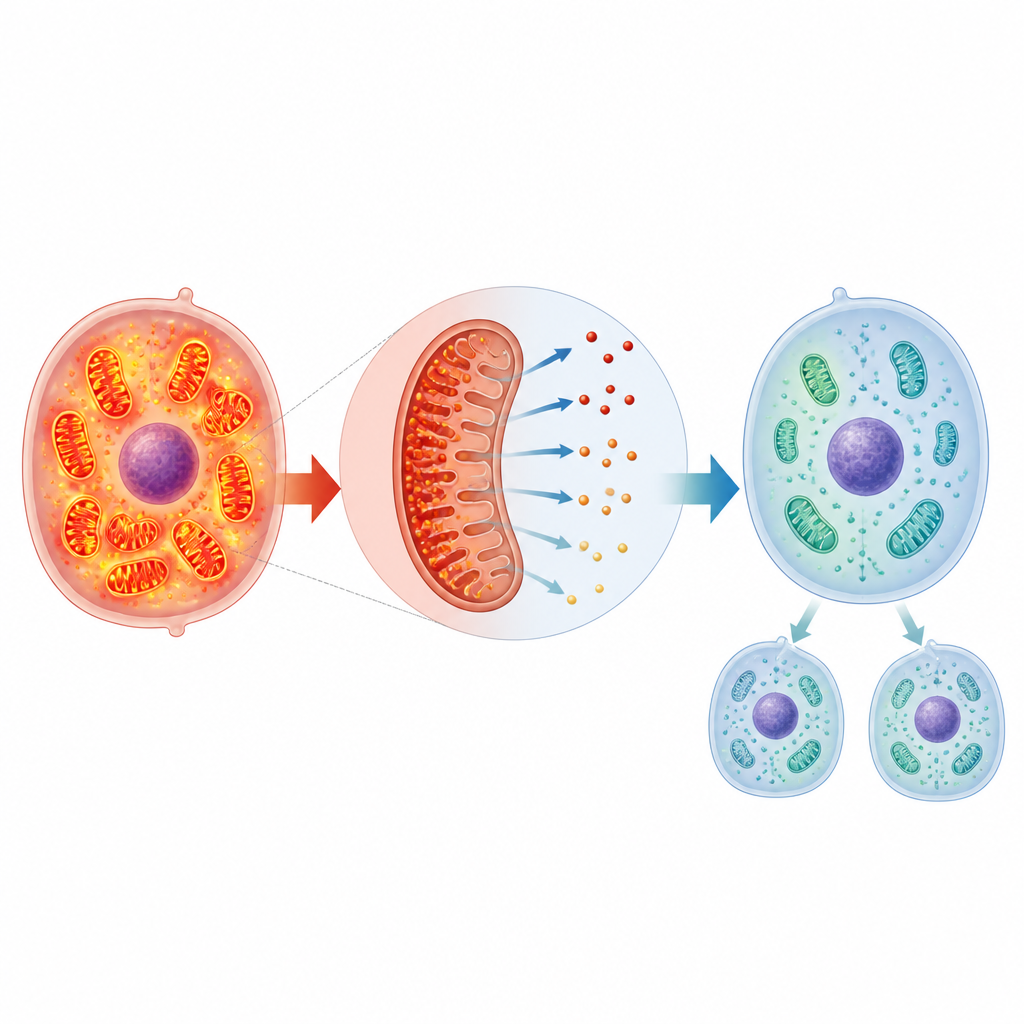
To understand the consequences of this energy mismatch, the researchers profiled hundreds of small molecules in haploid and diploid stem cells. Haploid cells had depleted levels of several key ingredients from the citric acid, or TCA, cycle, which normally feeds the mitochondria. At the same time, they accumulated reduced forms of electron-carrying molecules, especially NADPH. These molecules shuttle electrons during metabolism and help control the cell’s redox state, the balance between oxidized and reduced chemicals. In haploid cells, that balance was shifted toward the reduced side, and this excess seemed to be tied to their unusually dense mitochondria and altered respiration, rather than to large shifts in gene activity.
Draining the overload to keep cells haploid
The team then asked whether correcting this redox imbalance could prevent the jump from haploid to diploid. They engineered haploid cells to produce enzymes that specifically burn off extra NADH or NADPH, and targeted these enzymes either to the general cell fluid or directly into mitochondria. Lowering NADPH inside mitochondria was especially effective: engineered cells kept their single set of chromosomes over many generations in culture and even during differentiation into early tissue types and neural precursor cells, conditions that normally speed up diploidization. A similar effect was seen when the researchers disrupted a mitochondrial enzyme, NNT, that normally converts NADH into NADPH, or when they treated cells with compounds that ease mitochondrial stress and support redox balance.
Linking cell power to chromosome separation
How does excess NADPH push cells toward doubling their DNA? The authors traced the connection to AURORA kinases, enzymes that help organize chromosomes and the division machinery during mitosis. In haploid cells, phosphorylation, a chemical switch that activates these kinases, was reduced on chromosomes and centromeres. Weakening AURORA B activity with a drug caused haploid cells to become diploid more quickly, while restoring redox balance increased AURORA phosphorylation. These findings suggest that overloaded mitochondrial redox chemistry dulls the signals that ensure accurate chromosome segregation, favoring failed division events that duplicate the genome without splitting the cell.
What this means for biology and future research
This work shows that the tendency of mammalian haploid stem cells to revert to the standard diploid state is driven by a specific metabolic imbalance, centered on NADPH overload in crowded mitochondria, rather than by an inherent incompatibility of the genome itself. By carefully tuning how electrons flow through mitochondrial pathways, the researchers could maintain stable haploid cells and their derivatives. This insight not only opens practical routes to more reliable haploid stem cell cultures for genetic studies, but also raises broader questions about how mitochondrial organization and redox balance shape the limits of genome copy number in animals and contribute to chromosomal instability in diseases such as cancer.
Citation: Di Minin, G., Rüegg, A.B., Halter, K. et al. Mitochondrial metabolic imbalance drives diploidization in mouse haploid embryonic stem cells via NADPH overload. Nat Commun 17, 4359 (2026). https://doi.org/10.1038/s41467-026-70939-6
Keywords: haploid stem cells, mitochondria, cell metabolism, redox balance, genome stability