Clear Sky Science · en
CRISPR tiling deletion screens reveal functional enhancers and allelic compensation effects (ACE) on SIN3A transcription
How Cells Keep Gene Activity in Balance
Our brains rely on careful control of gene activity, especially for genes linked to learning, memory, and behavior. When this control goes wrong, it can contribute to conditions such as autism, Alzheimer’s disease, and other neurodevelopmental disorders. This study explores how brain cells keep the activity of certain delicate genes within a narrow safe range, even when pieces of their DNA control system are damaged.
Genes That Cannot Afford Big Swings
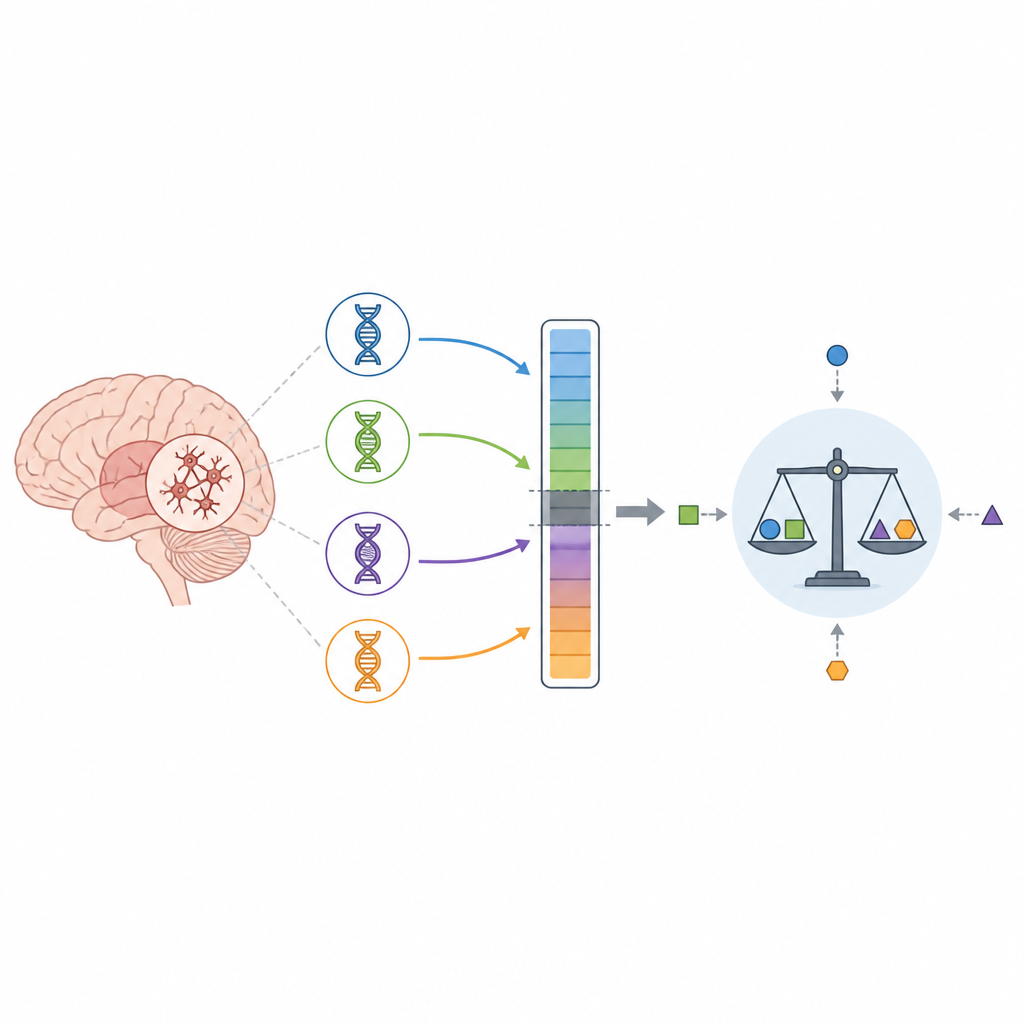
Some genes are dosage sensitive, meaning that too much or too little of their product can lead to disease. The researchers focused on four such genes tied to brain disorders: APP, FMR1, MECP2, and SIN3A. Changes in copies or activity of these genes have been linked to Alzheimer’s disease, fragile X-related syndromes, Rett syndrome, and specific intellectual disability syndromes. Because of this, scientists suspect that the DNA switches controlling these genes must be especially important for brain health.
Scanning the Genome’s Control Switches
To find those switches, the team used human stem cells that can be turned into excitatory neurons, a major class of brain cells. They applied a CRISPR-based approach that systematically deletes small chunks of DNA surrounding each gene, then checked how each deletion affected gene activity using fluorescent tags. Through this large-scale screen, they identified 39 enhancer regions that boost the activity of the four genes, many located far away from the genes themselves. Interestingly, more than a quarter of these enhancers lacked the usual chemical flags that scientists often use to spot active control elements, revealing a hidden layer of gene regulation that conventional methods can miss.
A Surprising Backup System for a Key Brain Gene
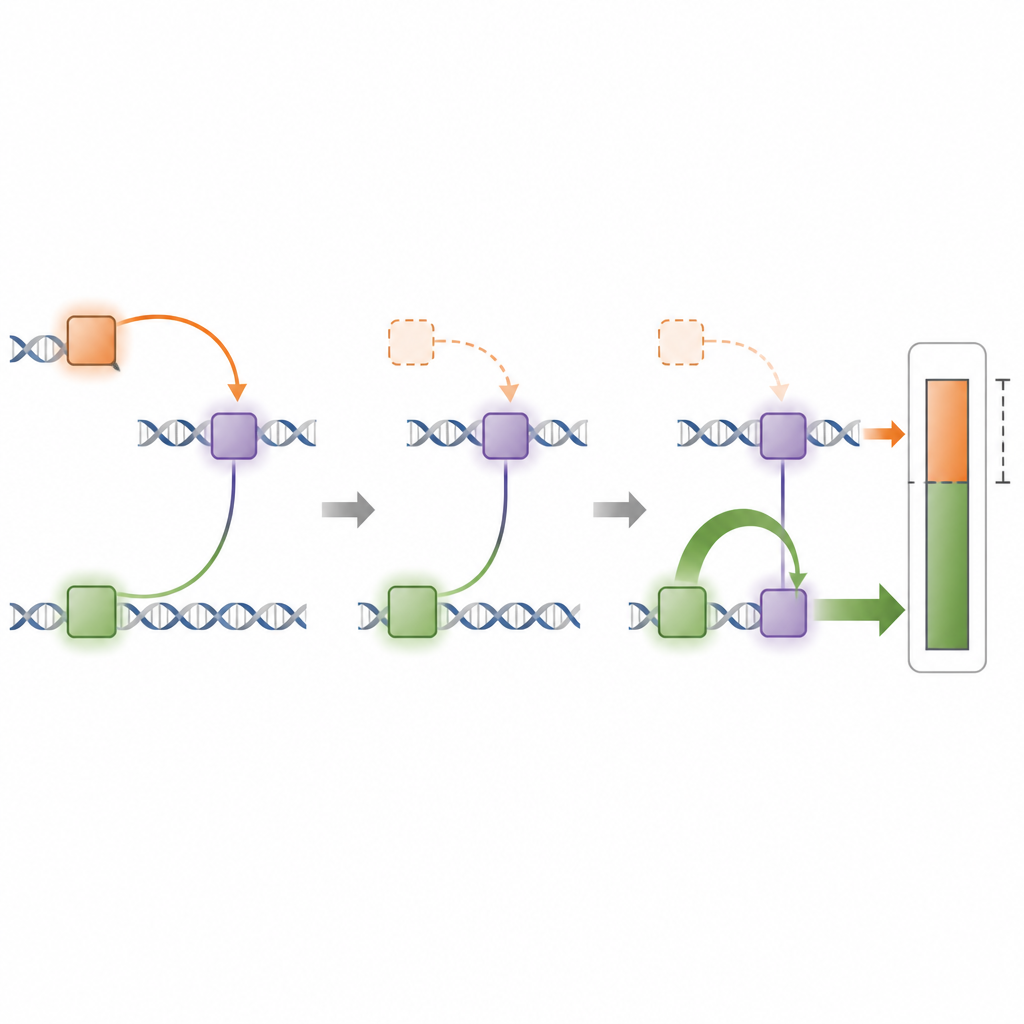
The most striking discovery came from studying SIN3A, a gene whose reduced activity is known to cause a developmental syndrome. When the researchers deleted enhancers on just one copy of the SIN3A gene, the tagged reporter on that copy dimmed, as expected. But at the same time, the reporter on the other intact copy became brighter. In other words, when one allele’s enhancer was damaged, the other allele stepped up its activity, keeping overall SIN3A levels nearly unchanged. This behavior, called allelic compensation, appeared consistently across multiple enhancer deletions and persisted as the cells matured from stem cells into neurons.
How the Gene Senses and Corrects Imbalance
To understand how this compensation occurs, the team zoomed in on the SIN3A promoter, the DNA region where the cell’s transcription machinery starts reading the gene. SIN3A protein itself can bind to its own promoter, forming a feedback loop. Experiments with engineered promoter reporters showed that when overall SIN3A levels were reduced, promoter activity increased, as though the promoter were acting as a dosage sensor. When an enhancer on one allele was deleted, the drop in local SIN3A activity lessened binding at both promoters, which in turn allowed the intact allele’s promoter to drive more transcription. By contrast, deleting parts of the promoter itself did not trigger this strong compensatory boost, highlighting the promoter’s role in sensing and correcting enhancer damage.
What This Means for Brain Disorders and Beyond
The authors propose that this compensation mechanism helps protect dosage-sensitive genes like SIN3A from harmful mutations in their enhancers, acting as a genetic safety net. They also identify hundreds of other human genes whose promoters carry their own binding sites, suggesting that similar compensation could be widespread, especially among transcription factors and other genes where dosage matters. For people carrying certain DNA changes near such genes, this built-in buffering might explain why some potentially risky variants have little or no effect. Overall, the study reveals how cells can sense a local drop in gene activity and automatically restore balance, helping to keep brain development and function on an even keel.
Citation: Ren, X., Zheng, L., Liu, Y. et al. CRISPR tiling deletion screens reveal functional enhancers and allelic compensation effects (ACE) on SIN3A transcription. Nat Commun 17, 4396 (2026). https://doi.org/10.1038/s41467-026-70933-y
Keywords: gene regulation, enhancers, CRISPR, neurons, dosage-sensitive genes