Clear Sky Science · en
Copper single-atom nanozyme with intelligent capture and photo-enhanced activity for controlling plant bacterial diseases
Why this new plant protector matters
Tomatoes and other crops are constantly under attack from bacterial diseases that can wipe out harvests and threaten food supplies. Farmers often rely on copper-based sprays, but these chemicals can lose power as bacteria evolve resistance and can also stress the environment. This study introduces a new kind of smart material that behaves like a tiny artificial enzyme and uses gentle light to hunt down and destroy harmful bacteria on plants more efficiently and with fewer side effects.
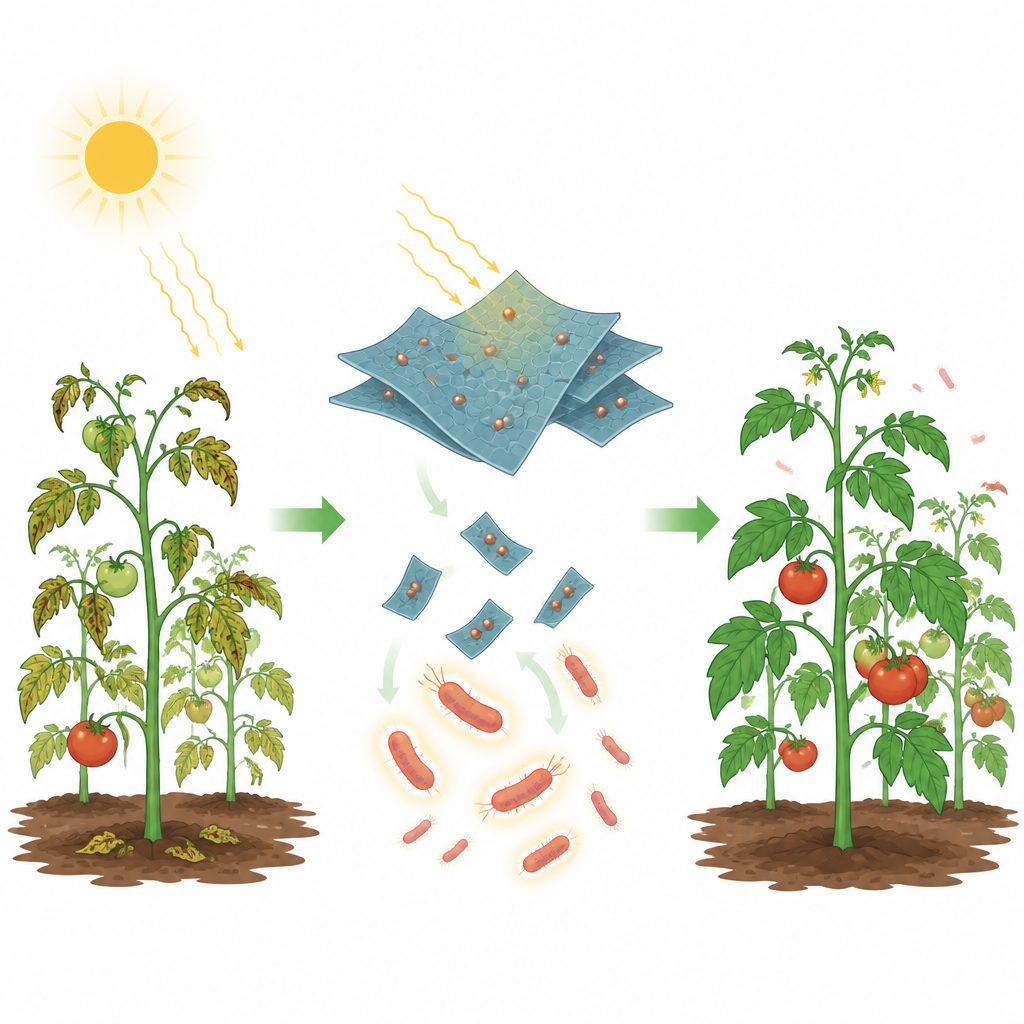
Tiny helpers that act like natural cleaners
The researchers built a nano sized material called a nanozyme, which means it imitates the work of natural enzymes. Their design places single copper atoms onto a layered structure made of zinc sulfide and molybdenum sulfide. In simple terms, each copper atom acts like a tiny active spot that helps turn hydrogen peroxide, a mild compound already produced by plants during infection, into highly reactive molecules that can damage bacteria. Careful tests showed that the copper atoms are spread out one by one rather than forming clumps, which makes the material more efficient and predictable.
Using light and heat to boost killing power
Sunlight is rich in near infrared light, which we cannot see but can feel as warmth. The team found that when they shined near infrared light on the nanozyme, it gently warmed up without overheating the plant. This modest rise in temperature made the enzyme like activity faster, helping the material convert hydrogen peroxide into strong oxidants more quickly. Measurements showed that the nanozyme produced more of these destructive radicals than many earlier artificial enzymes, and that light exposure further strengthened this effect without harming plant tissues.
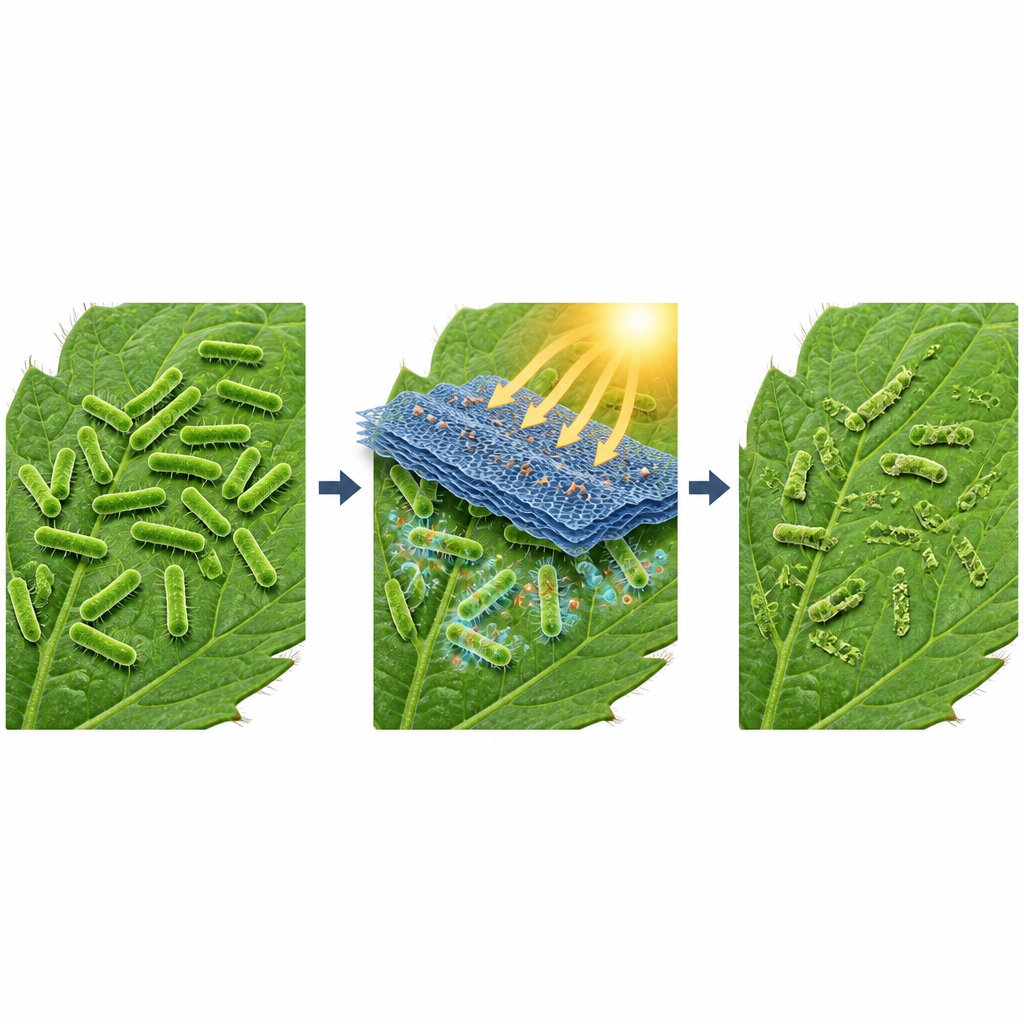
Grabbing bacteria before they can escape
A major challenge in using reactive molecules is that they are short lived and can disappear before reaching their targets. The layered base of this nanozyme acts like a flexible sheet that wraps closely around bacterial cells on the plant surface. Computer simulations and binding tests suggest that the material forms bonds with phosphate groups in the outer layers of bacterial membranes, allowing it to cling tightly to the microbes. This close contact keeps the reactive molecules right where they are needed, reducing waste and making it easier to punch holes in bacterial walls and disturb key defenses such as protective films and antioxidant enzymes.
Stronger disease control with less collateral damage
In lab tests, the nanozyme outperformed a widely used copper pesticide and several simpler metal particles against two serious tomato pathogens that cause speck and wilt. When combined with the levels of hydrogen peroxide that naturally build up in infected plants, and with near infrared light, it greatly reduced bacterial growth and visibly damaged bacterial cells while leaving plant cells intact. In greenhouse like trials, spraying leaves or watering roots with the nanozyme cut disease levels more than the commercial copper product, and the protection lasted for weeks.
Safety and future use in the field
Because any new treatment must be safe for crops, people, and helpful organisms, the researchers tested the nanozyme on tomato and tobacco plants, human gut cells, fish, earthworms, and soil and leaf microbes. At the doses needed for disease control, it did not stunt growth, did not trigger harmful stress responses, and caused little change in beneficial microbial communities. Over time, natural acids and enzymes in soil and around infection sites slowly broke the material down, while the metals it contains mainly became bound to organic matter. Together, these findings suggest that a smart copper single atom nanozyme, powered by mild light and the plant’s own chemistry, could become a more precise and durable tool for managing bacterial plant diseases and helping to secure crop yields.
Citation: Jiang, H., Xing, Y., Ma, Z. et al. Copper single-atom nanozyme with intelligent capture and photo-enhanced activity for controlling plant bacterial diseases. Nat Commun 17, 4261 (2026). https://doi.org/10.1038/s41467-026-70930-1
Keywords: plant bacterial disease, nanozyme, copper single atom, tomato speck and wilt, near infrared light