Clear Sky Science · en
Spatiotemporally engineered tumor-derived extracellular vesicle-based scaffold vaccine for personalized cancer immunotherapy
Why turning surgery into a cancer vaccine matters
Many people with cancer undergo surgery only to face the fear that their tumor might return or spread. This study explores a way to turn a patient’s own removed tumor into a personalized shot that quietly sits under the skin, trains the immune system over time, and helps the body hunt down any remaining cancer cells. The work offers a glimpse of how future cancer care could pair surgery with custom-made immune boosters tailored to each patient.
From short-lived shots to lasting protection
Cancer vaccines are designed to teach the immune system to recognize and attack tumor cells, but most current versions fade quickly or fail to reach the right immune cells in large enough amounts. They are also slow and costly to make, because scientists must sift through each patient’s tumor to predict which mutated fragments might best alert the immune system. The authors highlight how these hurdles have limited the impact of existing personalized vaccines, even as interest in this approach has grown.
Borrowing messages from the tumor itself
Instead of guessing which tumor pieces to use, the researchers turned to tiny bubbles naturally shed by cancer cells, called extracellular vesicles. These vesicles carry many of the same surface markers as the original tumor, including unique patient-specific signals. By collecting vesicles from tumor tissue, the team could capture a broad and ready-made package of cancer clues in one step. This sidesteps complex computer prediction pipelines and offers a faster path to building a personal vaccine that reflects the true makeup of an individual’s disease. 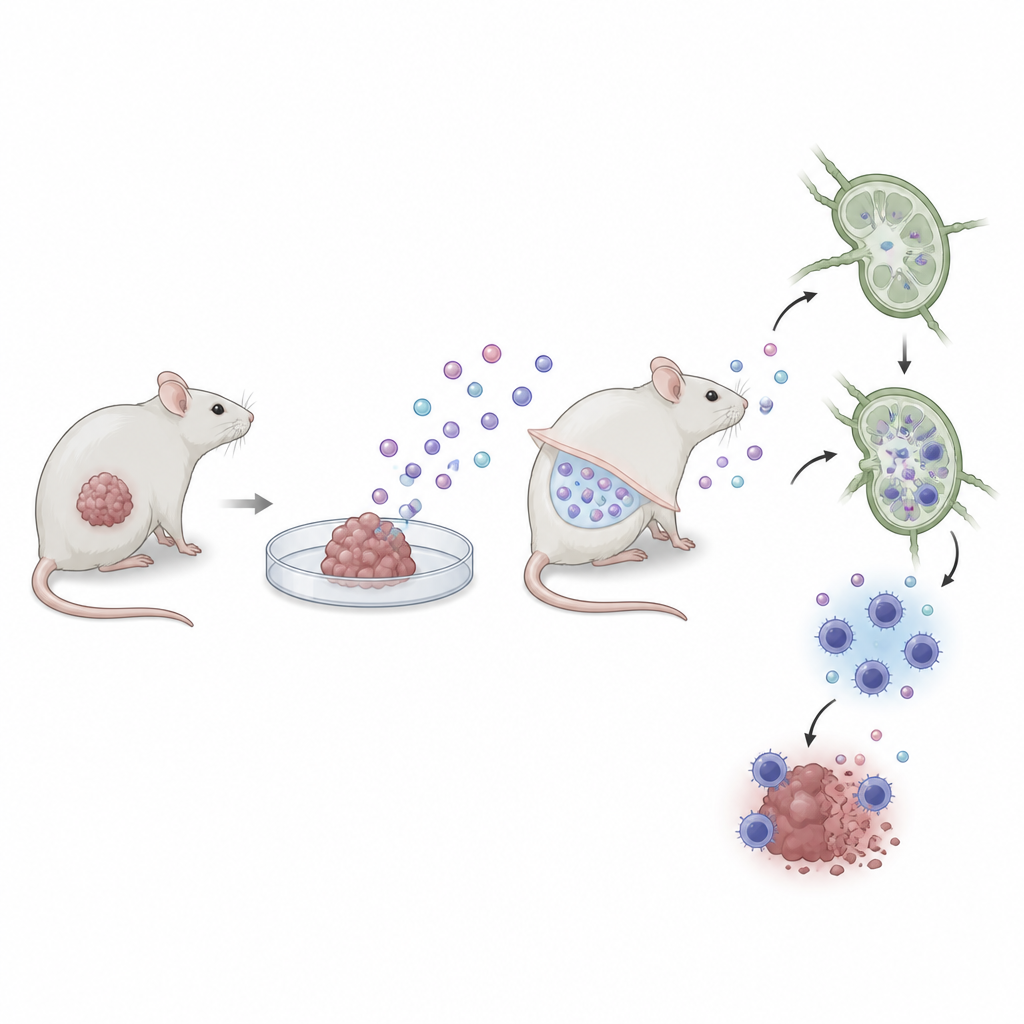
Building a gel that acts like an immune training camp
On their own, vesicles injected into the body get cleared too fast to do much good. To solve this, the scientists designed a soft, injectable gel made from short peptides that naturally assemble into a fibrous mesh under the skin. They loaded this gel with three ingredients: tumor vesicles as the source of cancer markers, an immune-boosting small molecule, and a signal that attracts key immune cells called dendritic cells. After injection in mice, the liquid quickly turned into a gel that stayed in place for weeks, slowly releasing its contents while drawing in dendritic cells and holding them in close contact with the tumor clues.
Training immune scouts to launch a focused attack
Within this gel, incoming dendritic cells soaked up the tumor vesicles and matured into highly active “scout” cells. These scouts then traveled to nearby lymph nodes, where immune cells are organized and activated. There, they presented tumor markers to T cells, especially killer T cells that can recognize and destroy cancerous targets. The mice developed strong and lasting tumor-specific T-cell responses, with large numbers of active killer cells appearing in tumors, lymph nodes, blood, and memory cell pools. When combined with a checkpoint-blocking antibody that lifts brakes on exhausted T cells, the gel-based vaccine further slowed tumor growth and extended survival.
Keeping cancer from returning or spreading
The team tested the vaccine in several mouse models of prostate and breast cancers, including hard-to-treat “cold” tumors and widespread metastatic disease. In these settings, the gel vaccine shrank existing tumors, reduced the number and size of metastases, and greatly improved survival. Importantly, the researchers mimicked surgery by removing most of a tumor, using the excised tissue to prepare vesicles, and then vaccinating the same animal. This personalized strategy strongly cut the rate of tumor regrowth after surgery and, in many mice, prevented tumors from returning at all. The treated tumors showed high levels of killer T cells and immune-related genes, suggesting that the local environment had been reshaped into one more hostile to cancer. 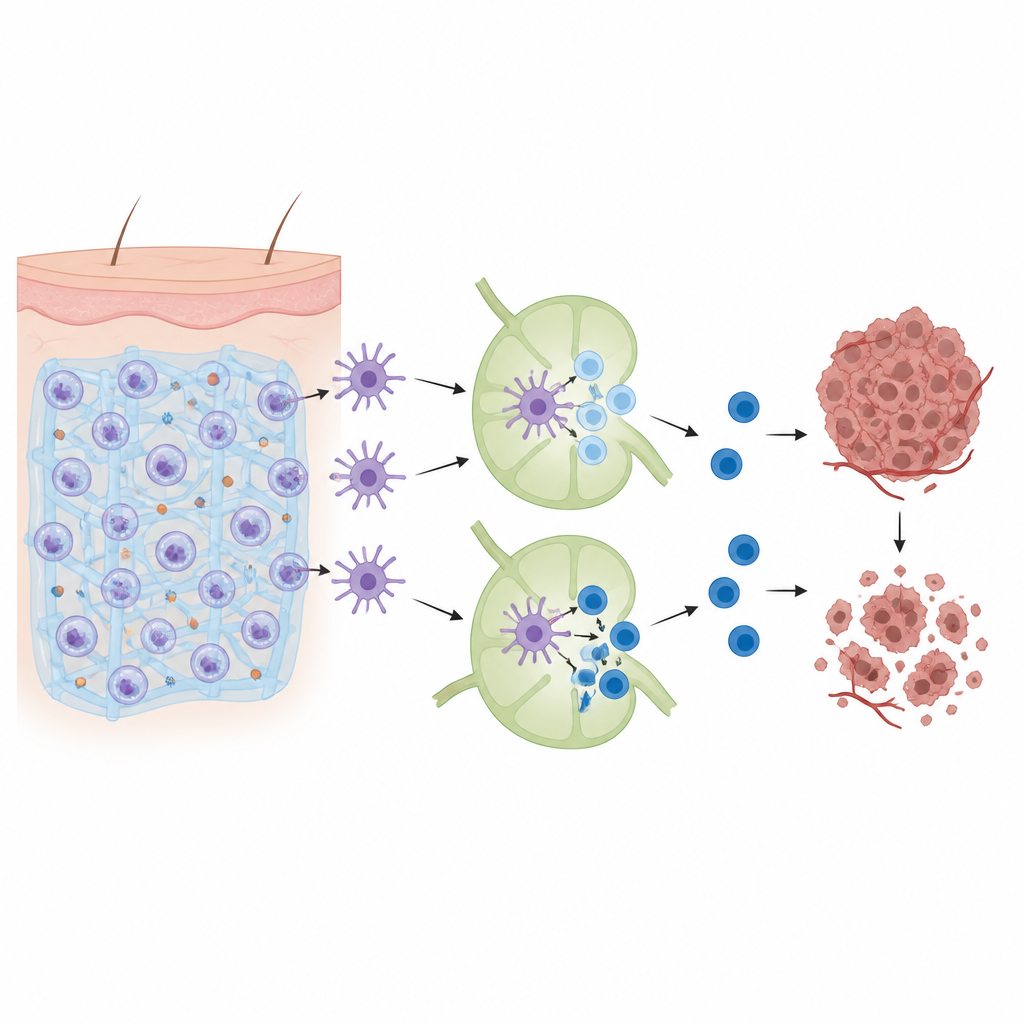
What this could mean for future cancer care
To a lay observer, this work suggests a future where a patient’s own tumor can be turned into a slow-release shot given soon after surgery, quietly coaching the immune system to recognize and wipe out any remaining cancer cells. While much testing and safety work in humans still lies ahead, the study shows in animals that a simple gel depot loaded with tumor-derived vesicles can spark strong, long-lived, and highly specific immune responses. In plain terms, it is a way to turn what was removed in the operating room into a personalized shield against the cancer coming back.
Citation: Chen, Q., Jiang, C., Du, X. et al. Spatiotemporally engineered tumor-derived extracellular vesicle-based scaffold vaccine for personalized cancer immunotherapy. Nat Commun 17, 4310 (2026). https://doi.org/10.1038/s41467-026-70924-z
Keywords: cancer vaccine, personalized immunotherapy, tumor-derived vesicles, hydrogel scaffold, T cell response