Clear Sky Science · en
Post-synthetically modified crown ether-based supramolecular framework for efficient radium sequestration
Why cleaning hidden radiation in water matters
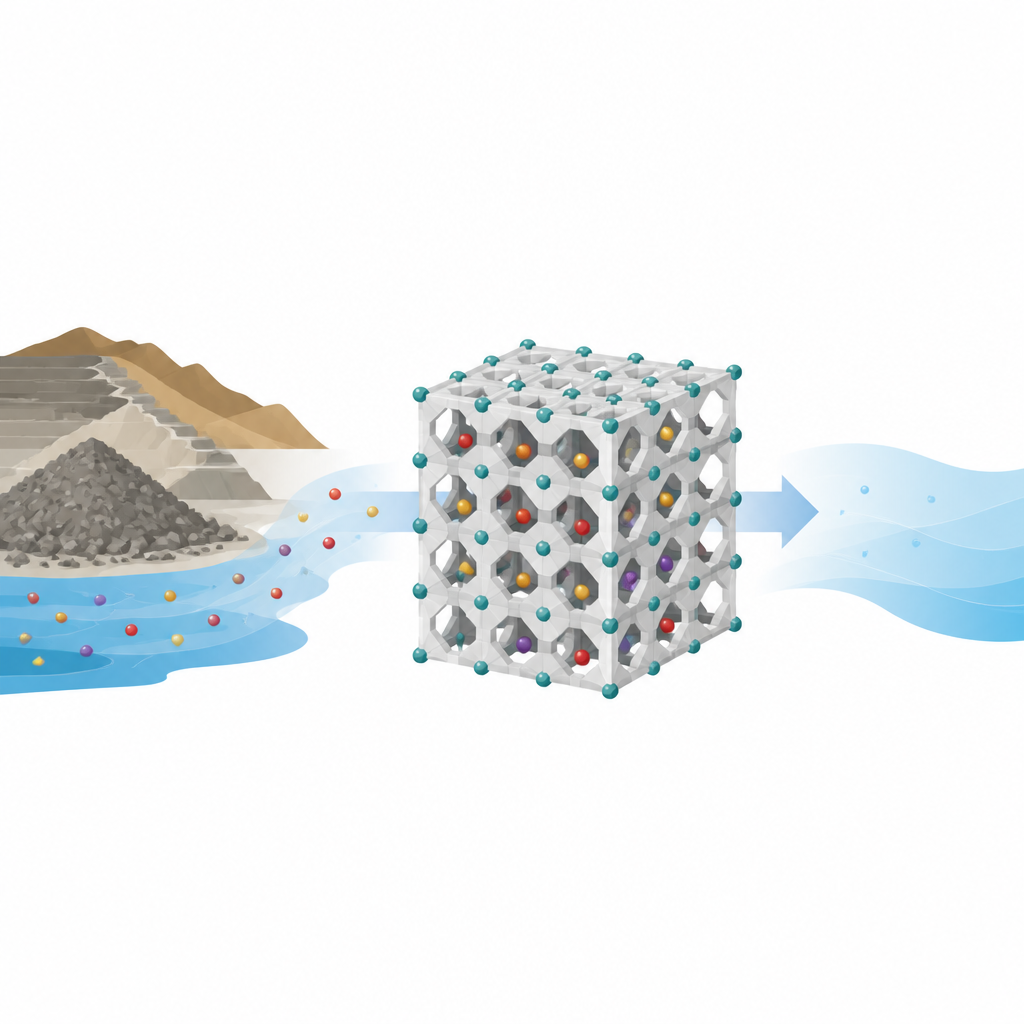
As nuclear power and uranium mining expand, a largely invisible threat can linger in the environment for thousands of years: radium dissolved in water. This radioactive metal can travel through groundwater, rise through food chains, and settle in human bones, raising the risk of cancer and other health problems. The paper behind this article describes a new porous material that acts like a finely tuned sponge for radium, capable of working quickly and reliably even in harsh, highly contaminated conditions that defeat many existing filters.
A long‑lived troublemaker in mine waste
Radium‑226 is a decay product of uranium with a half‑life of about 1,600 years, meaning it persists in tailings piles and waste rock long after mining stops. It behaves chemically like calcium, so living organisms can mistake it for an essential nutrient. In people, it can accumulate in bones and eyes, where its radiation slowly damages tissues over time. Many current treatment methods can remove radium from relatively mild waste streams, such as the slightly contaminated brines that may leak during oil and gas production. But they struggle when confronted with the intense levels expected near uranium tailings or in accident scenarios, where both radiation and competing dissolved salts are abundant.
Designing a smart sponge for radium
The research team built a new kind of sorbent, or capturing material, based on a metal–organic framework, a crystalline scaffold made of metal clusters linked by organic molecules. Their starting framework, called ZJU‑X100, contains “crown” rings that are especially good at grabbing large, calcium‑like metal ions such as barium and radium. The scientists then soaked this framework in diluted sulfuric acid, which swapped some smaller formate groups on the metal clusters for sulfate groups, yielding a modified material named ZJU‑X100‑SO4. This subtle makeover reshaped the pores, increased negative charge in key regions, and connected the rings more tightly to the rigid backbone, making the whole structure sturdier and better suited to lure positively charged ions.
How the multi‑site trap works
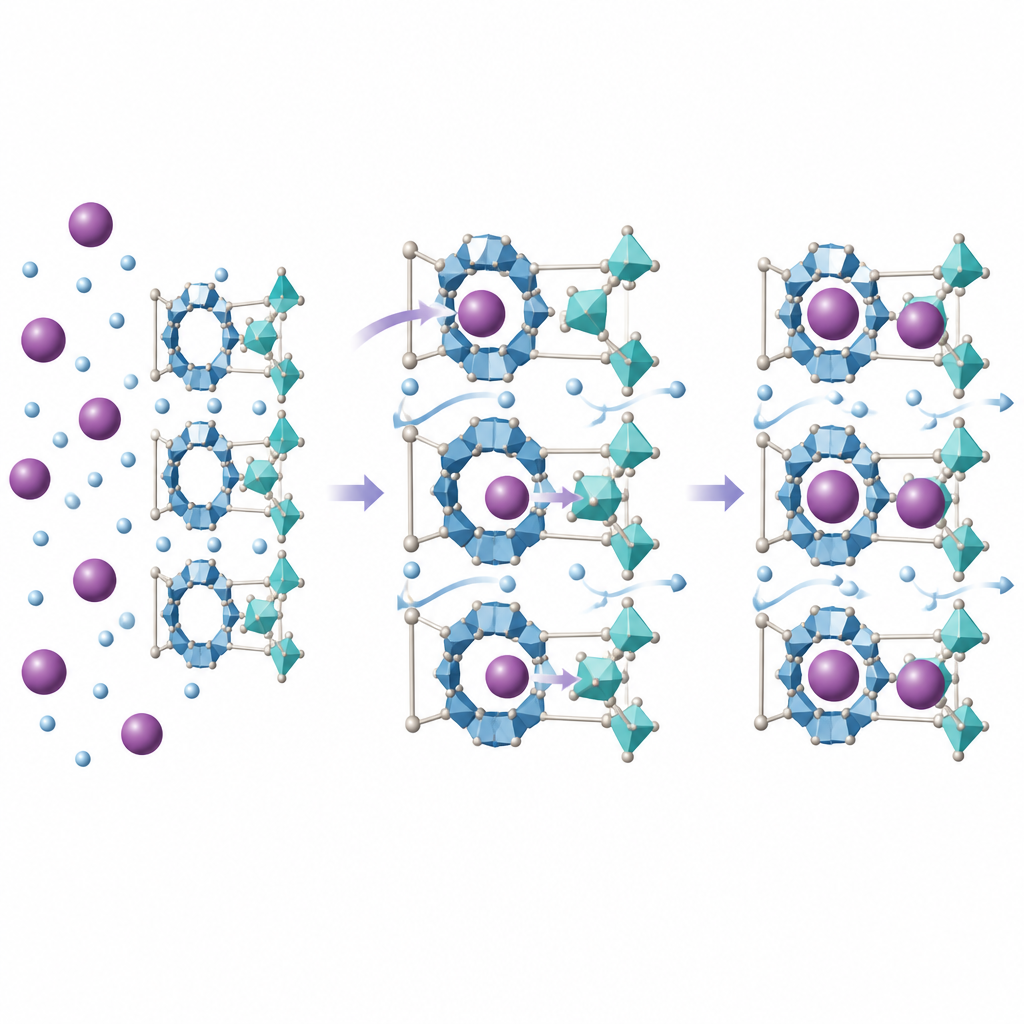
Detailed measurements and computer simulations show that the new material captures radium and its stand‑in, barium, through a multi‑step embrace. First, the overall electrostatic landscape of the framework forms a “trap” region where large ions are drawn into the center of the crown rings. There, the size of the ring cavity closely matches the size of radium‑like ions, making them sit more comfortably than smaller rivals such as calcium. After the sulfate groups are introduced, they create extra high‑affinity spots nearby; the incoming ion can interact at once with the crown ring, with the surrounding metal cluster, and with these sulfate groups. Together, these interactions hold the target ion more firmly than most competing ions, explaining the material’s exceptional selectivity.
Putting the material to the test
In laboratory trials, the modified framework removed over 90 percent of barium from water in seconds and achieved very high overall capacity, outperforming a range of clays, zeolites, and other advanced materials. When tested with real radioactive radium solutions at activity levels far higher than typical environmental readings, it still removed about 83 percent of radium in just 10 minutes. The material maintained strong performance even when faced with huge excesses of harmless salts like sodium and calcium, and it stayed stable in highly acidic water and under intense radiation doses. These traits suggest it could survive the corrosive, high‑radiation conditions found in uranium mine drainage or in emergency cleanup efforts.
What this means for nuclear waste safety
To a non‑specialist, the key message is that the researchers have built a porous solid whose internal architecture is tailored to recognize and hold on to radium, even in very dirty and demanding water. By combining a shape‑matched cavity with extra binding groups and a robust skeleton, the material acts like a selective sponge that works quickly, holds a lot, and keeps working in strong acid and heavy radiation. While further engineering is needed before field deployment, this study offers both a practical candidate for emergency radium containment and a design blueprint for future materials to make nuclear waste management safer over the long lifetimes of these pollutants.
Citation: Wang, W., Tai, W., Lou, J. et al. Post-synthetically modified crown ether-based supramolecular framework for efficient radium sequestration. Nat Commun 17, 4365 (2026). https://doi.org/10.1038/s41467-026-70874-6
Keywords: radium removal, nuclear wastewater, metal-organic framework, uranium tailings, radioactive contamination