Clear Sky Science · en
One-step fabrication of superhydrophobic fabrics with stable mechanical performance in harsh conditions
Why dry, comfortable clothes matter
Anyone who has been caught in a downpour or spilled hot coffee on their lap knows that wet clothes are more than just uncomfortable. For hikers, workers, athletes, and medical staff, staying dry can be a matter of safety as well as comfort. Yet many water‑repellent jackets and pants lose their power after a few washes or rough use, and some rely on chemicals that are now under scrutiny for health and environmental reasons.
A new way to keep fabrics dry
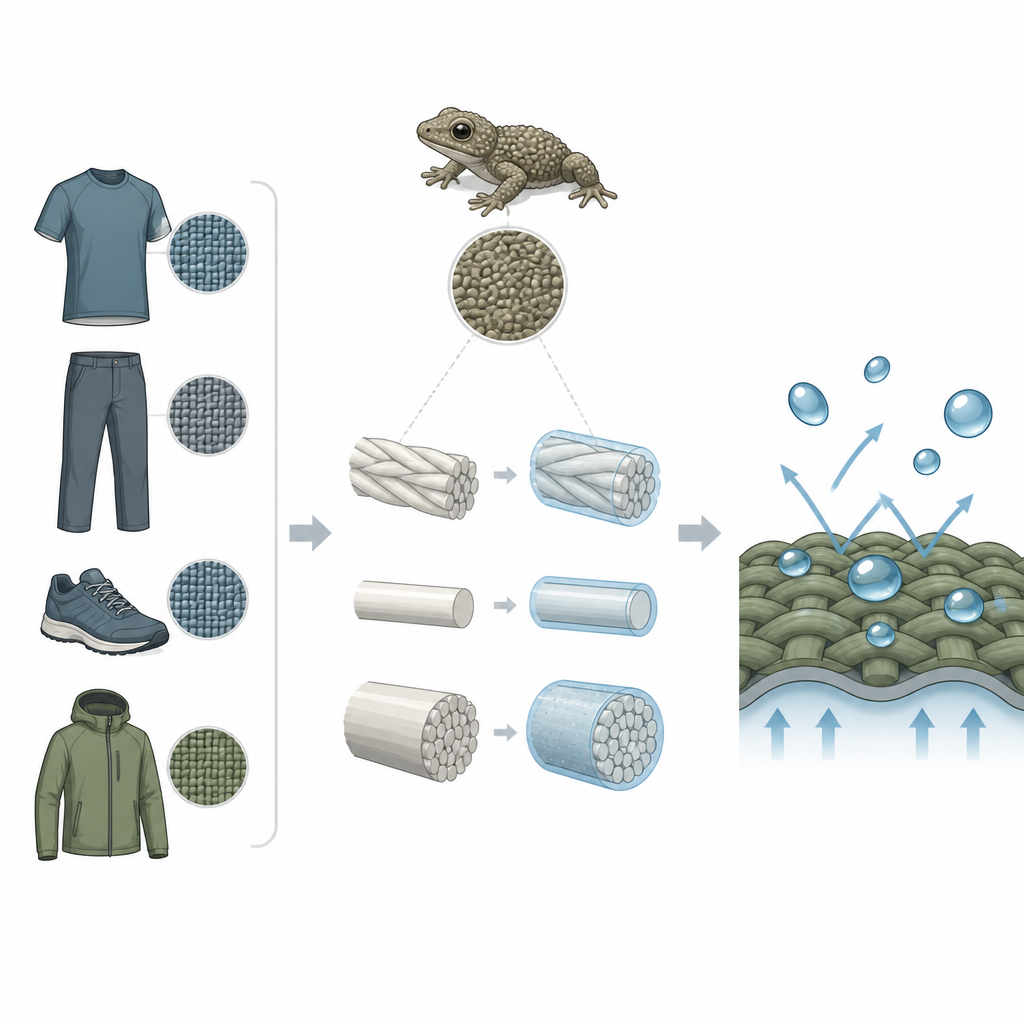
This study introduces a simple one‑step method to give many kinds of fabrics an extremely water‑repellent surface while keeping them light, breathable, and soft. The authors call the treatment a molecularly assembled robust superhydrophobic shell, or MARS. Instead of using loose particles or long‑lived fluorinated chemicals, the process grows a thin, tightly bonded shell of silica and wax‑like chains directly on each fiber. Because the shell is chemically attached, it resists rubbing and bending that would quickly damage ordinary coatings.
Learning from tiny soil creatures
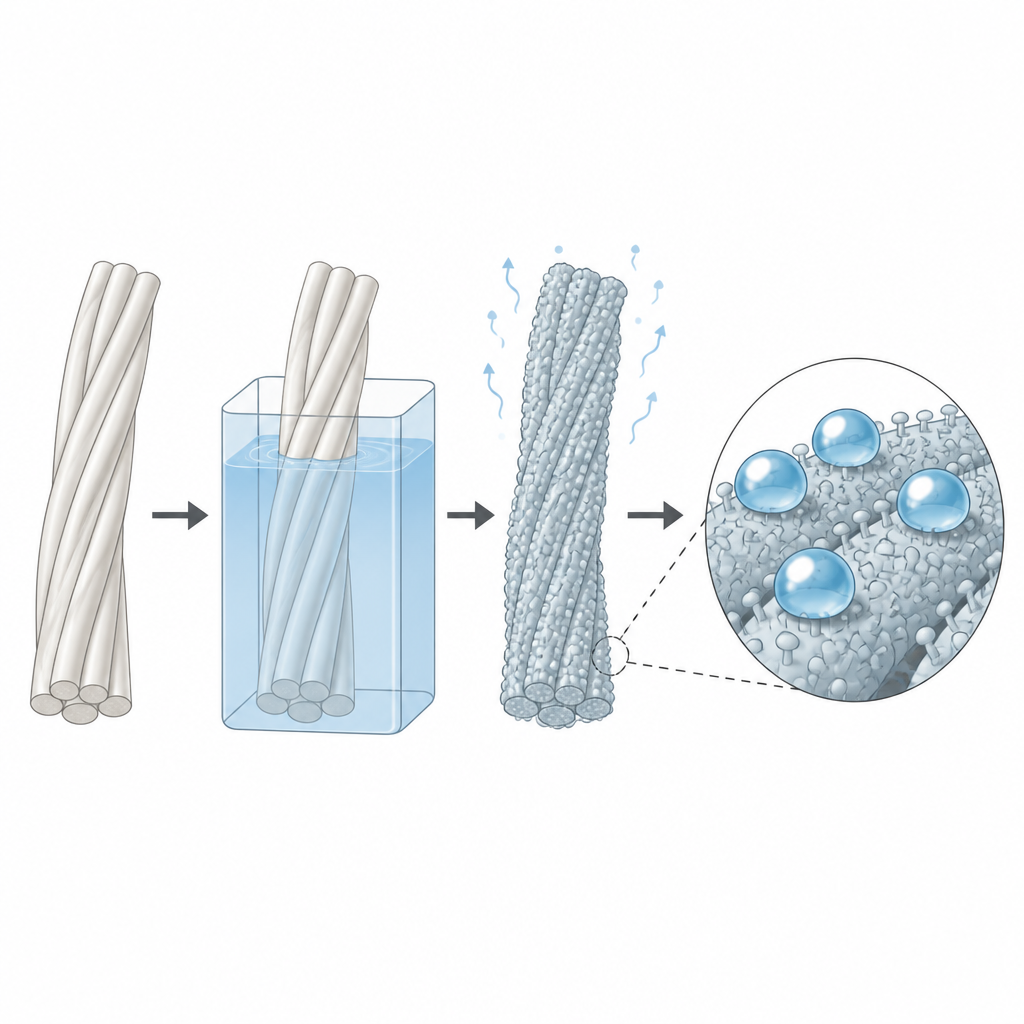
The idea is inspired by springtails, tiny animals that live in wet soil yet keep their skin dry. Their outer layer is covered with small mushroom‑shaped bumps and fine ridges that trap air and make it hard for water to cling. The researchers mimicked this by forming a similar mix of small bumps and nanoscopic roughness on yarns. They pull twisted yarn through a low‑cost solution that contains two silicone‑based ingredients. In humid air, one ingredient quickly reacts with the fiber surface to form a glass‑like skeleton, while the other adds long, oily chains that dislike water. Together they create a thin shell with mushroom‑like bumps and a rough outer skin around every fiber in the yarn.
From single fibers to finished clothes
Because the shell forms on individual fibers before weaving or knitting, the water‑repellent effect survives the stresses of textile manufacture. Single treated fibers of cotton, wool, polyester, and nylon all show extreme water repellency, even to microscopic droplets that normally stick easily. When these yarns are woven or knitted, the resulting fabrics show very high water contact angles and very low sliding angles: drops rest on the tips of the fabric texture with air trapped beneath. The team even embroidered colorful patterns with treated yarn onto untreated cloth, creating motifs that stayed dry while the surrounding fabric soaked up dyed water, all without noticeably changing the color or feel.
Putting the fabrics to the test
The authors then pushed these treated textiles far beyond everyday use. In spray tests, the fabrics stayed dry after volumes of water far above standard rating levels and shrugged off spills of drinks and sodas. In rain simulations and high‑speed jet impacts mimicking extreme storms, droplets bounced off instead of soaking in. Standard T‑shirts, leggings, shoes, socks, and canvas made with the treatment endured many kinds of wear: tens of thousands of abrasion cycles, long runs on a treadmill with backpack straps rubbing, repeated stretching, scrubbing, tape peeling, and falling sand. Even after machine washing up to twenty times, the fabrics remained strongly water‑repellent. Year‑long outdoor exposure through sun, storms, freezing weather, and heat showed only modest color fading and preserved performance.
Handling heat, steam, and safety
Many water‑repellent clothes fail when exposed to very hot water or steam, which can lead to scalding injuries. MARS‑treated textiles kept repelling 85–95 °C water, hot coffee under pressure, and 160 °C steam, even after rapid swings between boiling water and liquid nitrogen. Tests showed that the coating helps block steam from condensing inside the fabric while still allowing air to flow through, so the cloth stays breathable. Underwater, leggings made with the treatment held a shiny layer of trapped air and cut water drag by about 40 percent compared with normal fabric. Cell tests in the lab suggested that the materials used in the coating are much less harmful to cells than a common fluorinated water‑repellent finish.
What this could mean for future gear
In everyday terms, this work points to clothes, shoes, and technical textiles that can stay dry and comfortable through heavy rain, rough wear, hot liquids, and repeated washing without relying on long‑lasting fluorinated chemicals. By building a tough, springtail‑inspired shell on each fiber in a single low‑cost step, the MARS method offers a way to combine strong water repellency with softness, breathability, and environmental awareness. This could benefit outdoor gear, protective uniforms, sportswear, and even future smart fabrics that need both durability and gentle contact with skin.
Citation: Liu, Z., Zhao, K., Ma, J. et al. One-step fabrication of superhydrophobic fabrics with stable mechanical performance in harsh conditions. Nat Commun 17, 4264 (2026). https://doi.org/10.1038/s41467-026-70857-7
Keywords: superhydrophobic fabric, water repellent textiles, PFAS-free coating, durable clothing, bioinspired materials