Clear Sky Science · en
Sweat-pumping cooling fabric for enhanced power generation and comfort
Cooler clothes that power themselves
Imagine workout gear that keeps you dry and cool while quietly charging your wearable gadgets. This study introduces a new kind of fabric that does exactly that, turning your sweat into both comfort and electricity without bulky batteries or sticky plastic layers.
Why sweat is both a problem and a resource
As more people use fitness trackers, smart watches and health sensors, the need for reliable, body-friendly power sources is growing. Traditional energy harvesters, like tiny solar panels or motion-based generators, depend on light or movement and often trap heat and moisture against the skin. That makes them uncomfortable for long wear. At the same time, our skin constantly releases moisture in the form of sweat and humidity, which carries chemical energy that usually goes to waste. Previous devices that tried to tap this “moisture power” produced only weak electrical currents and often soaked up water without letting it escape, leaving the wearer damp and hot.
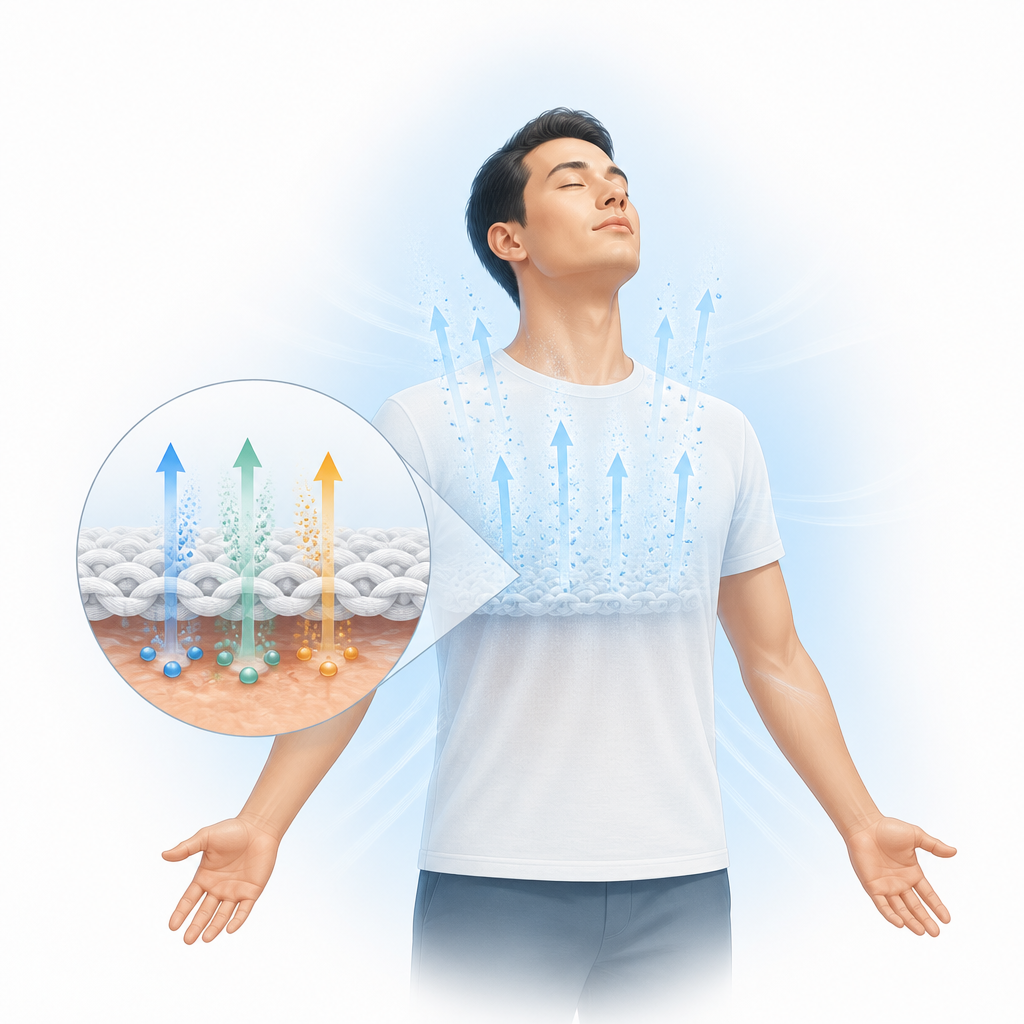
A fabric that pumps sweat in one direction
The researchers designed a “self-powered, self-cooling fabric” that behaves like a one-way valve for liquid water. They started with stretchy nylon knit material and coated only one side with water-repelling particles arranged in tiny gradient channels. This turns the cloth into a “liquid diode” that pulls sweat away from the skin side and pushes it toward the outer side, while blocking water from coming back in from the environment. As sweat moves through and spreads over a much larger surface area on the outside, it evaporates about twice as fast as it does from regular nylon. In tests, this design reduced skin temperature by about 6.3 degrees Celsius and dried a sweaty arm within a minute, while keeping the side touching the skin noticeably drier.
Turning moving moisture into electric current
On top of this water-pumping fabric, the team printed a thin, layered generator using common materials: an aluminum bottom layer, a gel-like middle layer made of a polymer (PVA) mixed with a salt (lithium chloride), and a graphene top layer. When sweat or water enters the gel from the skin side and moves upward, water molecules drag dissolved ions along. Negative and positive ions travel at different speeds, so charges separate between the top and bottom of the gel, creating an internal electric field. The directional flow enforced by the liquid diode keeps this separation going longer than in earlier moisture-powered devices, boosting the output. The fabric reached a current density of 0.40 milliamps per square centimeter, roughly twice that of similar devices without the liquid diode and far above many past moisture-based generators.
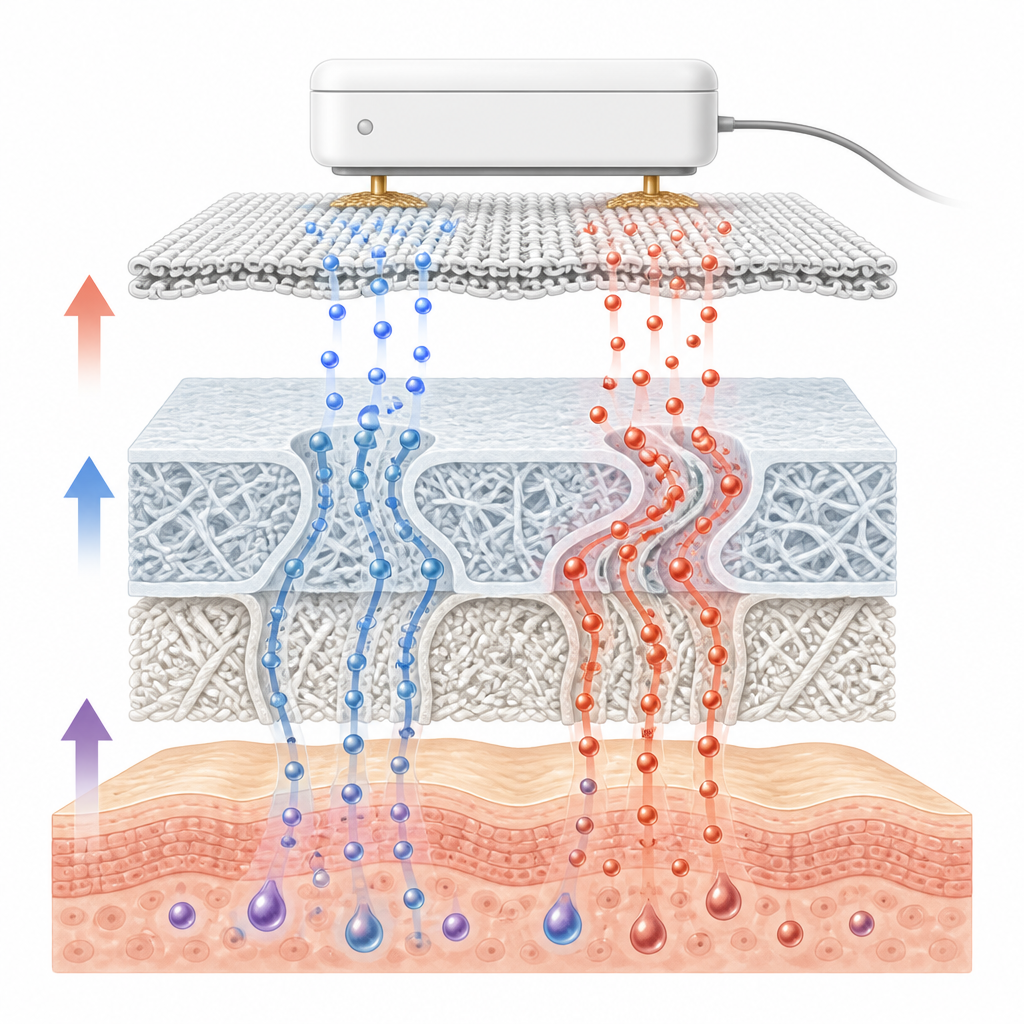
Balancing comfort, strength and power
To make the fabric practical, the authors carefully balanced the printed generator pattern and the open, unprinted areas that handle sweat and heat. More open area speeds evaporation and cooling but leaves less active surface to collect current. By using grid-shaped patterns, tuning pore size and adjusting the amount of salt in the gel, they found sweet spots that delivered strong cooling and useful power at the same time. The system worked across a wide range of temperatures and humidity levels and kept performing after many cycles of stretching, bending and drying. Multiple fabric units could be linked together to increase voltage or current, delivering enough power to light an LED strip and to charge small storage devices.
Everyday uses from shirts to smart diapers
The team showed that this sweat-pumping power fabric can be printed onto regular clothing, such as T shirts, shorts and caps, without making them stiff or heavy. A large patch on a shirt cooled sweaty skin over a broad area while generating electricity. In one demonstration, two fabric units powered a flexible light strip on clothing. In another, the fabric was integrated into a diaper along with a wireless sensor. Because the electrical output depends on how much liquid passes through, the system could detect the level of wetness and send alerts ranging from comfortable to immediate attention. The same approach was used to run a small health-monitoring setup that transmitted skin temperature and heart-rate signals.
What this could mean for future wearables
Overall, the work shows that clothing can act as both a personal cooling system and a gentle power plant by smartly guiding sweat and ions. Instead of just wicking moisture away, this fabric actively pumps sweat outward, cools the body and harvests part of that process as electricity. With further development toward washable designs and integrated power management, such sweat-pumping cooling fabrics could help support long-lasting, comfortable wearable electronics for health care, sports and everyday life.
Citation: Zhu, R., Zhang, Z., Luo, Y. et al. Sweat-pumping cooling fabric for enhanced power generation and comfort. Nat Commun 17, 4374 (2026). https://doi.org/10.1038/s41467-026-70856-8
Keywords: wearable electronics, cooling fabric, sweat energy harvesting, moisture powered generator, smart textiles