Clear Sky Science · en
NANP targeting radiosensitizes glioblastoma through TNFR1 sialylation-driven mesenchymal shift
Why this brain cancer study matters
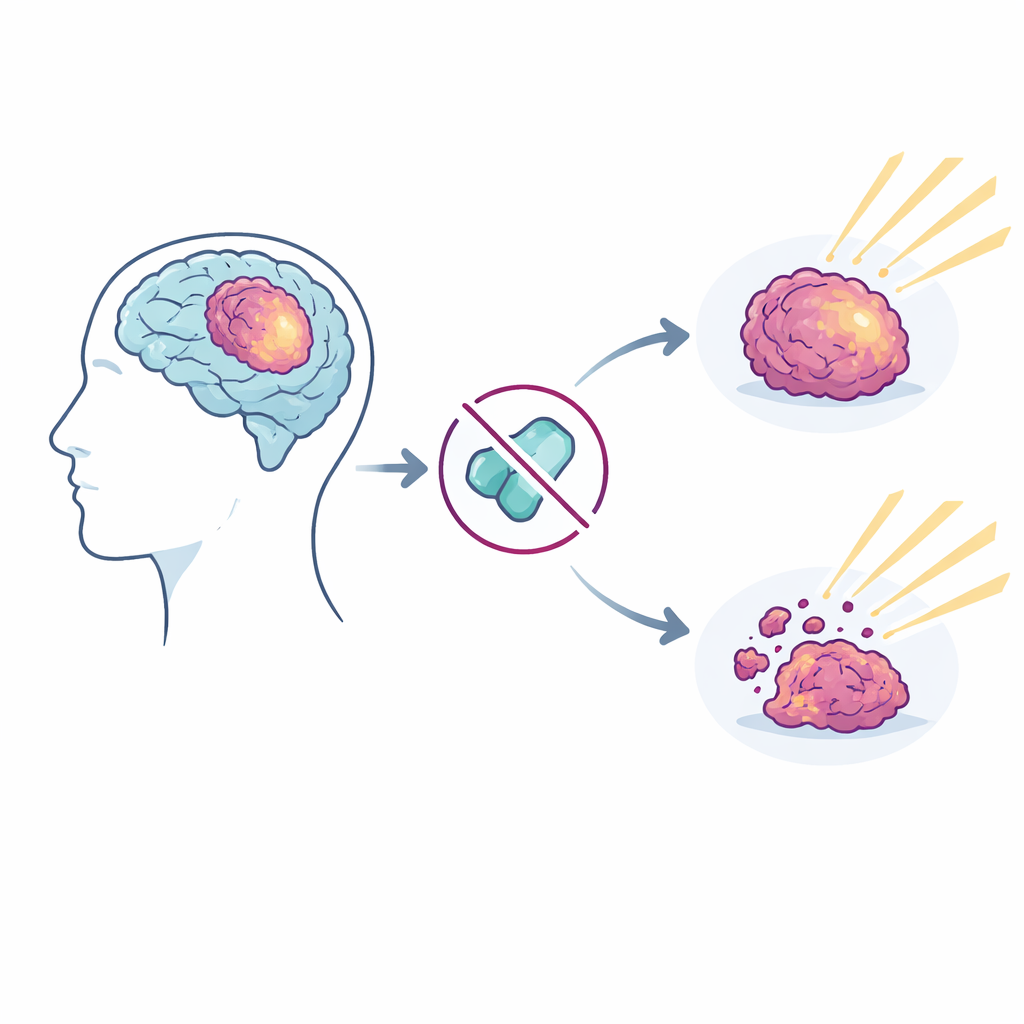
Glioblastoma is one of the deadliest brain cancers, in part because its cells are unusually good at surviving radiation therapy. This study uncovers a surprising weak point in those cells: a sugar-processing enzyme called NANP that helps tumors shrug off radiation. By blocking this enzyme in lab models, the researchers made tumors far more vulnerable to standard radiation doses, pointing to a potential way to boost current treatments without increasing harmful side effects.
How brain tumors resist radiation
Standard care for glioblastoma combines surgery, chemotherapy, and radiation, yet most patients see their tumors return within months. A major suspect is a small population of glioblastoma stem-like cells that can regenerate the tumor and are notably resistant to radiation. The team first asked whether this resistance came from a few especially tough cell clones that take over after treatment, as happens with some targeted cancer drugs. Using a barcoding strategy to track thousands of cell lineages through radiation, they found no dominant "super-resistant" clone. Instead, resistance appeared more random and widespread, suggesting that targeting single clones would not be enough; new strategies had to make the bulk of tumor stem-like cells more sensitive to radiation itself.
Searching the genome for a radiation weak spot
To find such weak spots, the researchers used a powerful gene-hunting method called a CRISPR screen. They systematically turned off almost every gene in radiation-resistant glioblastoma stem cells, then exposed the cells to fractionated radiation similar to what patients receive. Genes whose loss caused cells to disappear from the culture were flagged as potential radiosensitizers. Many of the top hits were expected players in DNA damage repair, confirming that the approach worked. But one of the strongest and most intriguing hits was NANP, an enzyme that acts in the final step of making sialic acids—sugar molecules that decorate cell surfaces and influence how cells communicate and respond to their environment.
A sugar enzyme that tips the balance
Digging deeper, the team showed that NANP levels are higher in patient glioblastoma samples than in normal brain tissue, rise with tumor grade, and are especially elevated in stem-like tumor cells. High NANP expression was linked to poorer patient survival in multiple datasets. When NANP was reduced or knocked out in glioblastoma models, cells became much more sensitive to radiation: they stalled in the cell cycle, accumulated DNA breaks, and underwent more cell death. Detailed assays revealed that these cells shifted away from precise DNA repair toward a more error-prone repair route, leaving lasting genetic damage after radiation.
From cell surface sugars to aggressive behavior
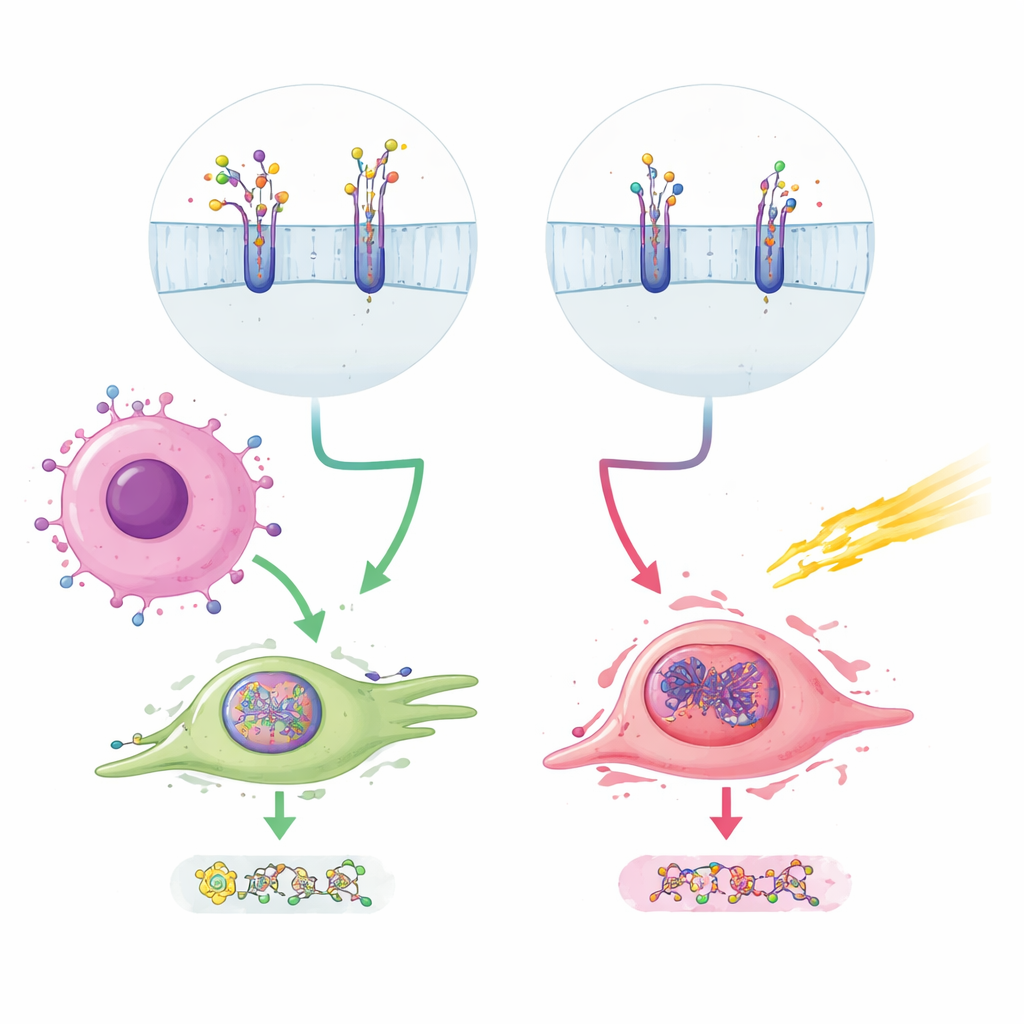
The researchers then asked how a sugar-processing enzyme could have such wide-ranging effects. Their data showed that NANP helps maintain a "mesenchymal" state—a more mobile, invasive, and therapy-resistant cell identity previously linked to poor outcomes in glioblastoma. When NANP was suppressed, cells shifted toward a less aggressive state, with reduced migration and changes in hallmark proteins on their surface. A key player in this switch was a cell-surface receptor called TNFR1, which sits upstream of the NF-κB signaling pathway that drives inflammation and survival. NANP boosted the addition of sialic-acid sugars to TNFR1, which limited the receptor’s internalization and favored strong, sustained NF-κB activity. Without enough NANP, TNFR1 carried fewer of these sugars, was pulled into the cell more readily, NF-κB signaling weakened, and the mesenchymal, radiation-resistant program was dampened.
Testing the strategy in living brains
To see whether this mechanism could matter in a living organism, the team implanted human glioblastoma stem cells into the brains of mice and treated them with clinically relevant courses of radiation. In tumors with normal NANP levels, radiation provided only modest benefit, especially in highly resistant cell models. But when NANP was silenced, the same radiation regimen significantly prolonged mouse survival in both resistant and more sensitive tumor models. Tumors with low NANP showed reduced activity of NF-κB–linked genes, confirming that the sugar-dependent signaling pathway was muted in vivo. Importantly, in a large patient dataset, high NANP expression predicted worse survival specifically among individuals who had received radiation, underscoring its relevance to therapy response.
What this means for future treatments
Taken together, the study identifies NANP as a central switch that links cell-surface sugars, survival signaling, aggressive cell identity, and DNA repair choices in glioblastoma. By dialing down NANP, tumors become less able to repair radiation-induced damage and less likely to adopt a hard-to-kill mesenchymal state, making standard radiation more effective without increasing the dose. While NANP inhibitors suitable for patients still need to be developed and tested, this work lays out a clear biological roadmap: targeting a single sugar-processing enzyme may one day help turn radiation back into a more powerful weapon against one of the most treatment-resistant brain cancers.
Citation: Ding, Y., Zhang, ZY., Ezhilarasan, R. et al. NANP targeting radiosensitizes glioblastoma through TNFR1 sialylation-driven mesenchymal shift. Nat Commun 17, 4130 (2026). https://doi.org/10.1038/s41467-026-70853-x
Keywords: glioblastoma, radiation therapy, cancer stem cells, NF-kappaB signaling, sialic acid metabolism