Clear Sky Science · en
Phage-steering permits antibody-mediated clearance of E. coli K1 from the gut
Why newborn health starts in the gut
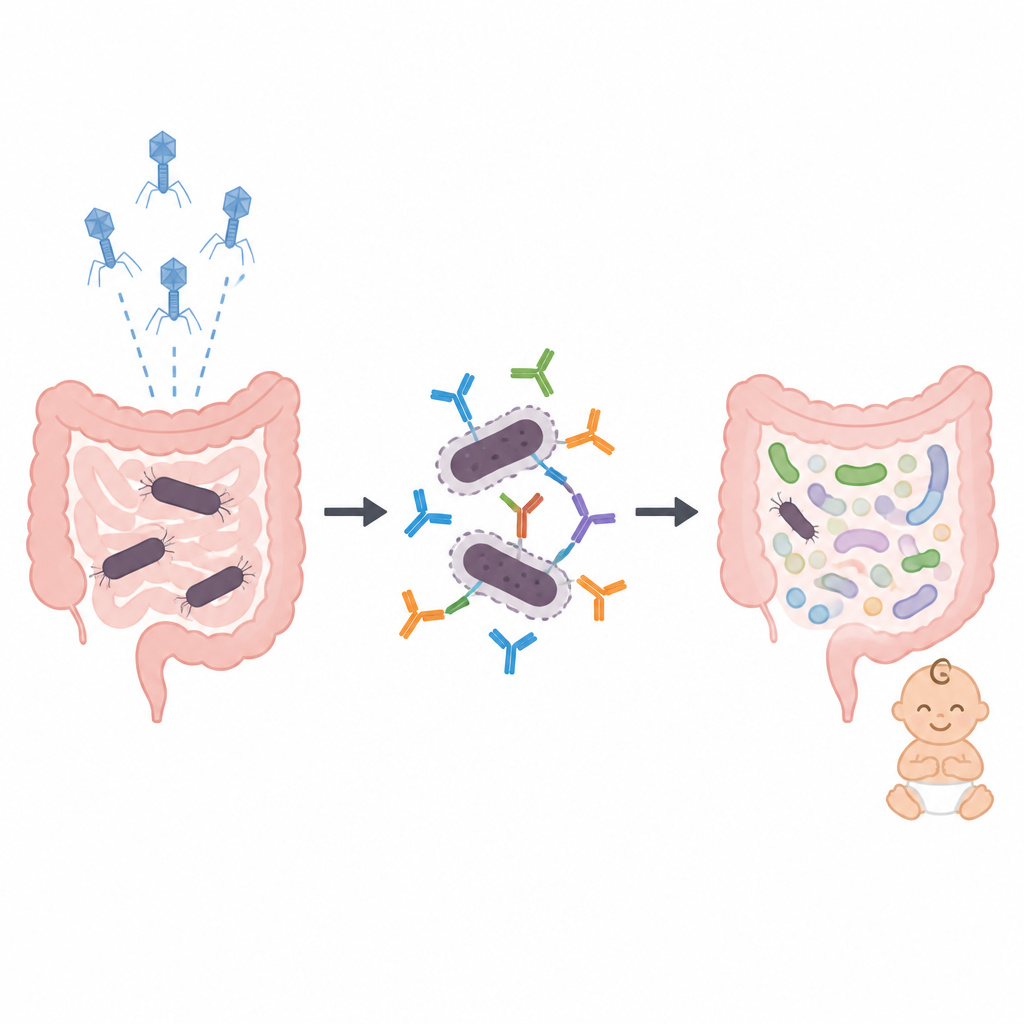
Serious blood and brain infections in newborn babies are often caused by a common gut bacterium called Escherichia coli K1. Many healthy adults quietly carry this strain in their intestines, where it usually causes no harm but can be passed to babies during birth. This study explores a way to gently reshape the gut ecosystem of future mothers so that risky E. coli are pushed out and replaced by safer bacteria, without relying on antibiotics.
A dangerous disguise on common gut bacteria
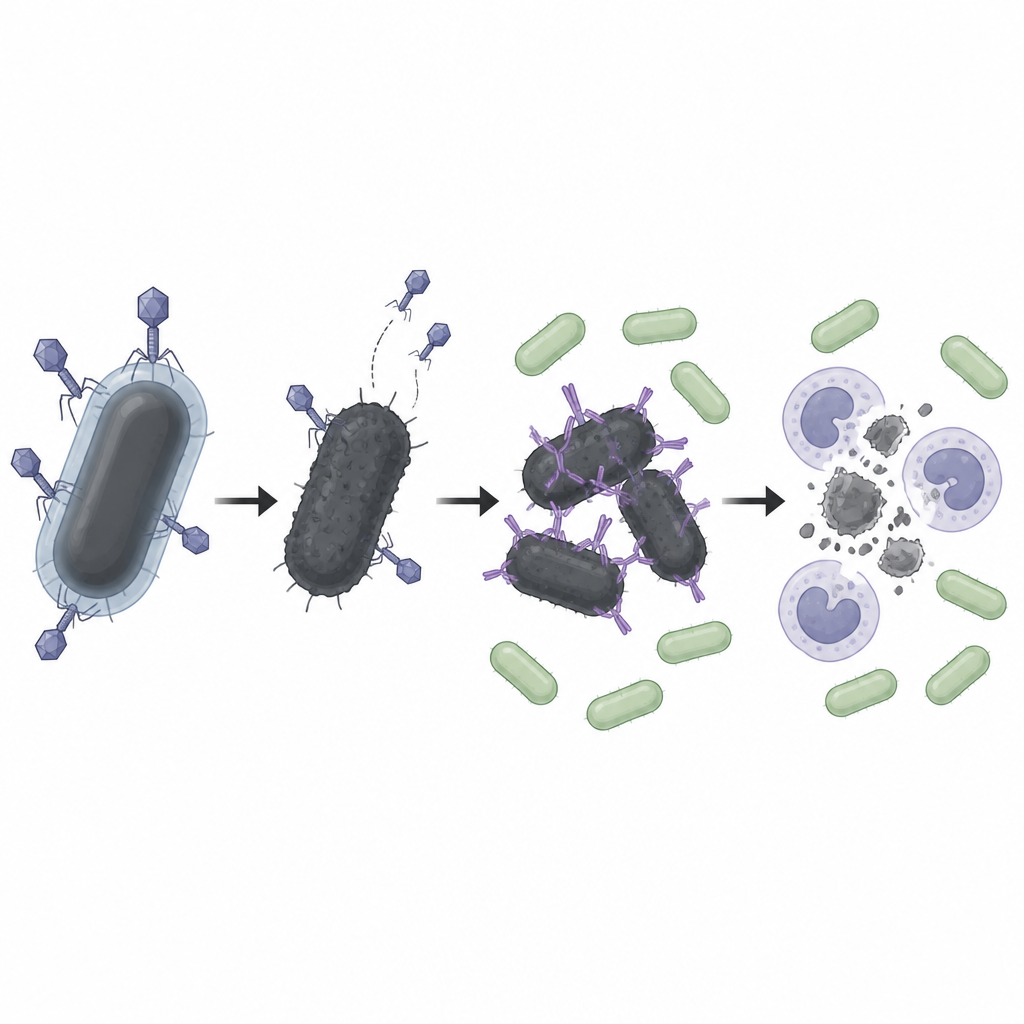
E. coli K1 is not just another intestinal microbe. It carries a sugar coat, or capsule, that looks very similar to a molecule found on human nerve cells. Because of this mimicry, the immune system largely ignores it, and standard vaccines that rely on recognizing foreign patterns struggle to target it. The capsule also shields other bacterial surface parts from attack and protects the cells from being killed in the blood. In newborns, whose guts are still immature and easier to colonize, this stealthy bacterium can move from the intestine into the bloodstream and brain, leading to sepsis and meningitis.
Using viruses that hunt bacteria to strip their armor
The researchers turned to bacteriophages, viruses that infect bacteria but not human cells. They selected phages that specifically latch onto the K1 capsule to infect E. coli K1. When these phages were added to bacterial cultures and to the guts of mice, they wiped out capsule-coated cells and rapidly favored the survival of mutants that had lost their capsule. These capsule-free mutants could no longer be infected by the same phages, but they paid a price: they became much easier for human blood components to kill and were far less able to cause lethal infections in a mouse sepsis model. In other words, phages "steered" the bacterial population toward a weaker, less dangerous form.
Letting antibodies and good microbes finish the job
Stripping E. coli of its capsule exposes hidden surface molecules that the immune system can see. The team created an oral vaccine from killed capsule-free E. coli K1 and used it to train mice to make strong IgA antibodies in the gut against these exposed surfaces. On its own, this vaccine did not affect fully shielded E. coli K1, because their capsule still blocked antibody binding. However, when combined with capsule-targeting phages, many bacteria in the gut lost their capsule and became prime targets for these antibodies. To tip the balance further, the scientists added a probiotic strain, E. coli Nissle, which does not react with the phages or antibodies. In vaccinated, phage-treated mice carrying this probiotic, the harmful E. coli were pushed down by 100- to 1000-fold, and in some animals disappeared from the gut entirely as the probiotic filled the vacant niche.
Blocking passage from mother to baby
The key test was whether this three-part strategy could curb transmission from mothers to their offspring. Pregnant mice were vaccinated before mating, then colonized with both the probiotic and E. coli K1, and finally treated with the phage mixture. In untreated or singly treated groups, most pups became colonized by E. coli K1 within the first ten days of life. Phages alone shifted the transmitted bacteria toward the safer capsule-free form but did not prevent colonization. In contrast, when mothers received both vaccine and phages along with the probiotic, only about one quarter of pups carried E. coli K1 at day ten, and most remained uncolonized until well after the most vulnerable early period. Protection was linked mainly to lower maternal E. coli loads rather than to antibody transfer in milk.
What this could mean for future care
This work shows that it may be possible to combine three tools—phages that favor weaker bacteria, vaccines that guide gut antibodies, and harmless competitors—to selectively clear a risky E. coli strain from the gut. While tested here in mice and focused on one common capsule type, the concept suggests a path to reduce maternal reservoirs of dangerous bacteria and, in turn, lower the chance that newborns encounter them in the first days of life. If adapted and proven safe in people, such targeted gut reshaping could complement or reduce reliance on antibiotics to protect infants from severe E. coli infections.
Citation: Larsson, L., Bertola, A., Wenner, N. et al. Phage-steering permits antibody-mediated clearance of E. coli K1 from the gut. Nat Commun 17, 4363 (2026). https://doi.org/10.1038/s41467-026-70808-2
Keywords: E. coli K1, bacteriophages, neonatal sepsis, gut microbiota, oral vaccination