Clear Sky Science · en
RFC4 drives temozolomide resistance in glioblastoma by activating STK38-BECN1-dependent autophagy
Why some brain tumors shrug off chemotherapy
Glioblastoma is one of the deadliest brain cancers, in part because it often stops responding to the standard chemotherapy drug temozolomide. This study digs into how certain tumor cells switch on an internal recycling system that helps them survive treatment, and pinpoints a trio of proteins that could be targeted to make the cancer sensitive to therapy again. 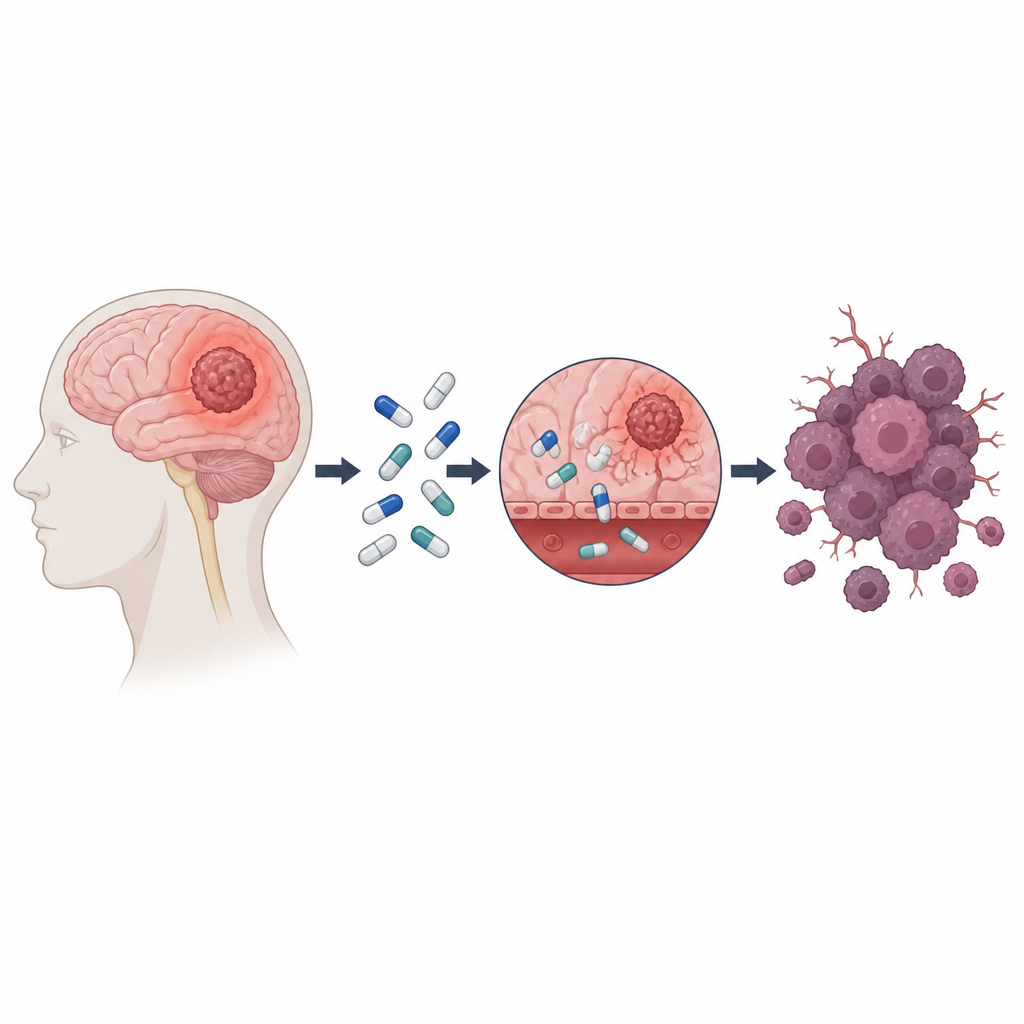
A stubborn brain cancer and its main drug
Glioblastoma grows quickly and infiltrates healthy brain tissue, making complete surgical removal nearly impossible. After surgery, patients usually receive radiation and temozolomide, a pill that damages tumor DNA. Many tumors initially shrink but then come back, having learned to tolerate the drug. The authors focused on why this resistance happens at the molecular level, using large genetic databases, patient samples, and laboratory models to look for proteins linked to poor outcomes and weak responses to temozolomide.
A DNA helper protein takes on a darker role
The team homed in on RFC4, a protein normally involved in copying and repairing DNA. They found that RFC4 levels were much higher in glioblastoma than in healthy brain tissue, and rose further in more advanced tumors and in recurrent disease after treatment. Patients whose tumors had more RFC4 tended to live for a shorter time. In cell culture, exposing glioblastoma cells to temozolomide itself caused RFC4 levels to climb, and engineering cells to make extra RFC4 made them harder to kill with the drug, while lowering RFC4 had the opposite effect.
The cell recycling system that protects tumor cells
Next, the researchers asked how RFC4 helps tumor cells survive. Their analyses showed that tumors rich in RFC4 also showed signs of heightened autophagy, the cell’s recycling and cleanup system. Autophagy normally helps cells cope with stress by breaking down damaged components and reusing their building blocks. In glioblastoma cells, boosting RFC4 turned this system on, increasing the formation and turnover of tiny recycling sacs called autophagosomes. When RFC4 was reduced, temozolomide could no longer trigger this recycling response, and cancer cells became easier to kill. In mice with brain tumors grown from RFC4-rich cells, combining temozolomide with an autophagy-blocking drug curbed tumor growth and extended survival compared with chemotherapy alone. 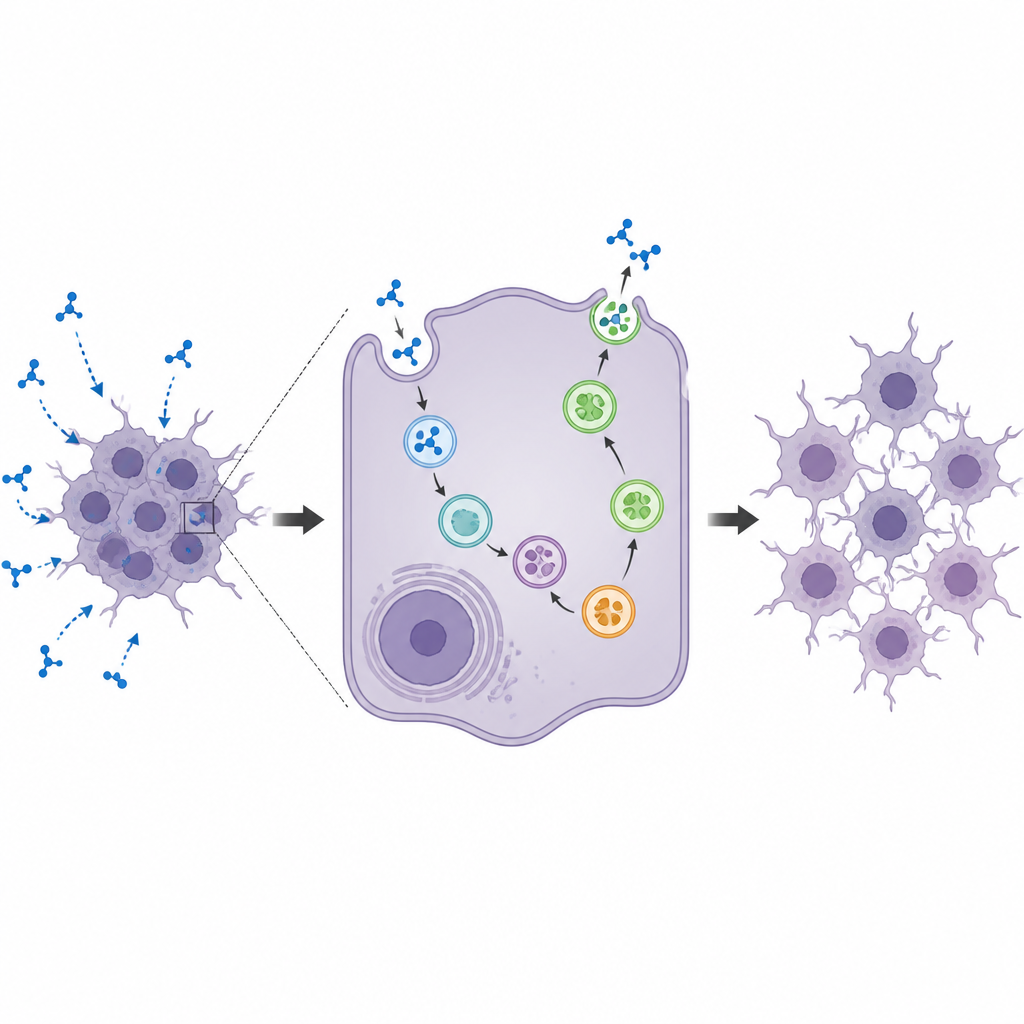
A three-protein chain that tips the balance
To understand the machinery behind this effect, the team mapped which proteins bind to RFC4 and identified a kinase called STK38 as a key partner. STK38 is known to influence autophagy. The study showed that RFC4 physically latches onto STK38 and shields it from being broken down, lengthening its lifetime inside the cell. STK38 in turn helps recruit another crucial autophagy protein, BECN1, forming an RFC4–STK38–BECN1 chain that drives the recycling process. A specific chemical switch on STK38, at a site called T444, proved essential for stable assembly of this chain. When this site was altered, STK38 could no longer cooperate effectively with RFC4 and BECN1, autophagy was blunted, and glioblastoma cells lost much of their temozolomide resistance.
How chemotherapy itself feeds the loop
The story begins even earlier, at the level of gene control. The authors found that temozolomide treatment reshapes how DNA is packed in tumor cells, opening up regions that allow a transcription factor called YY1 to bind. YY1 then boosts production of both RFC4 and STK38 at the gene level. As their levels rise, RFC4 stabilizes STK38, STK38 brings in BECN1, and autophagy ramps up, giving tumor cells a survival advantage under drug assault. This creates a feedback loop in which the chemotherapy that should kill cancer cells helps them switch on a protective recycling program instead.
What this means for future treatments
For a layperson, the take-home message is that some glioblastoma cells survive chemotherapy by turning up an internal repair-and-recycle system, and this study identifies the main levers of that system. The RFC4–STK38–BECN1 chain acts like a pro-survival circuit: when it is intact and active, temozolomide is less effective; when it is broken, the same drug can once again damage and kill tumor cells. Targeting RFC4, weakening STK38 at its critical T444 site, or disrupting its partnership with BECN1 could make standard chemotherapy work better, offering a potential path toward more effective, combination treatments for this aggressive brain cancer.
Citation: Mao, M., Ji, H., Yu, WQ. et al. RFC4 drives temozolomide resistance in glioblastoma by activating STK38-BECN1-dependent autophagy. Nat Commun 17, 4348 (2026). https://doi.org/10.1038/s41467-026-70798-1
Keywords: glioblastoma, temozolomide resistance, autophagy, RFC4, STK38