Clear Sky Science · en
Screening and regulation of nanozyme activity via liquid metals coined electron rearrangement and phase engineering
How Liquid Metals May Help Fight Cancer
Many modern cancer treatments try to tip the balance inside tumor cells toward self-destruction, but doing so safely and efficiently is hard. This study explores how tiny particles built with liquid metals can act like artificial enzymes, powerfully stirring up damaging chemistry inside cancer cells while leaving healthy cells mostly unharmed. The work shows how controlling the inner structure and electrons of these particles can make them much better at their job.
Building Tiny Helpers from Liquid Metal
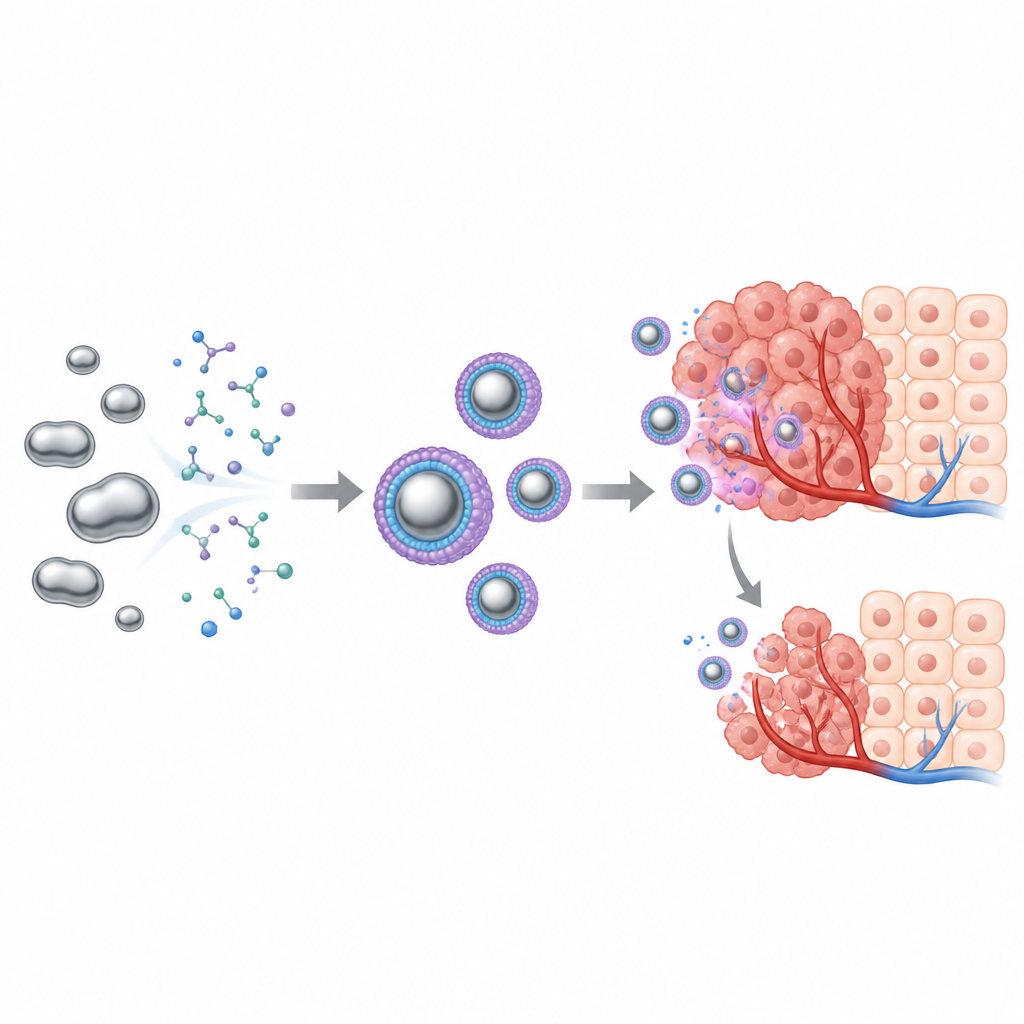
The researchers started with liquid metals made from gallium and indium, which are fluid at near-room temperature and already known to be relatively gentle to the body. They used these metals as both a template and a chemical partner to grow a shell of molybdenum and sulfur around each liquid droplet, forming core shell particles called nanozymes. By carefully varying how much indium was mixed into the gallium, they created a family of slightly different particles, each with its own internal structure and electronic behavior.
Why a Messy Structure Can Be a Good Thing
Unlike regular crystals, where atoms line up in neat repeating patterns, the best-performing particles in this study had an amorphous, or disordered, shell. This lack of order created many tiny imperfections and active spots where chemical reactions could take place. The liquid metal core also shifted electrons toward the shell, enriching key atoms with extra charge. Detailed measurements and computer simulations showed that this combination of disorder and electron donation made it easier for the particles to grab and convert small molecules, which is essential for strong enzyme-like activity.
Artificial Enzymes that Trigger Chain Reactions
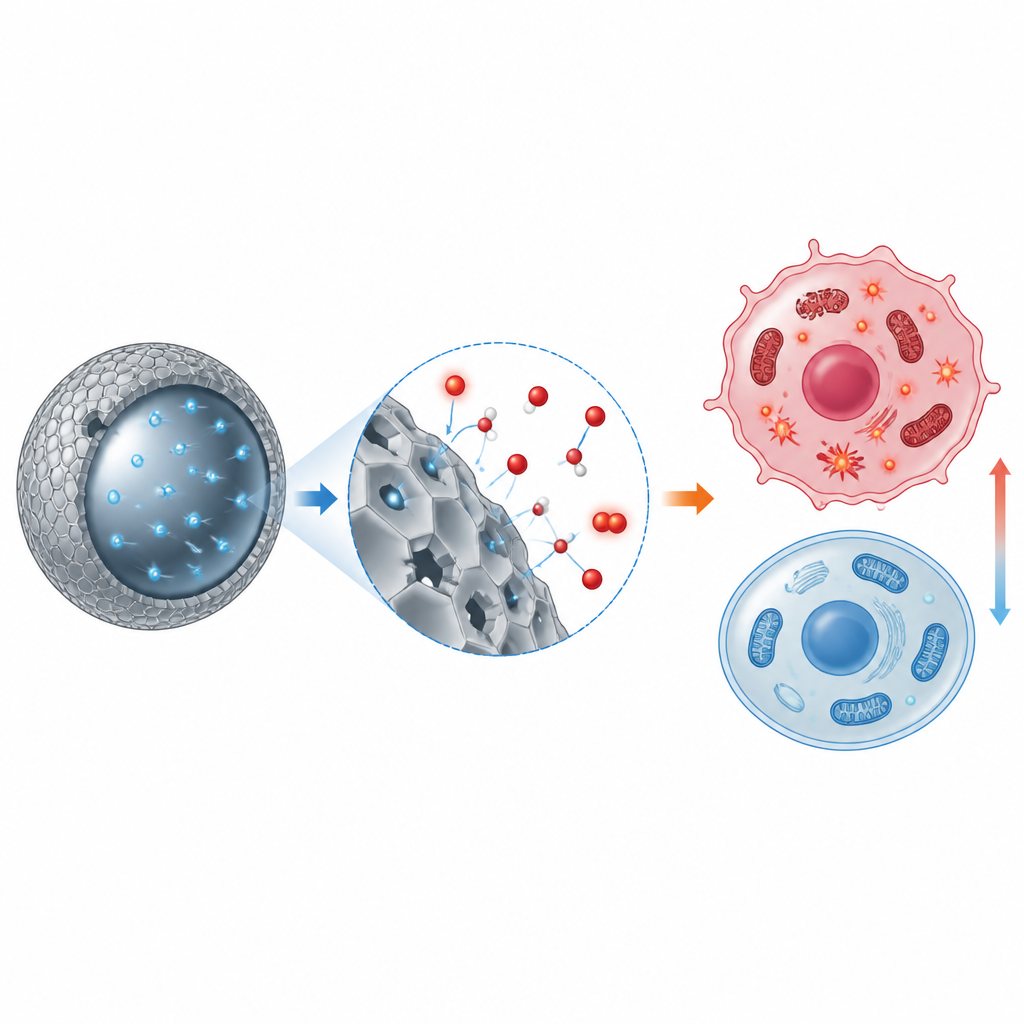
The standout nanozyme, made with a specific gallium indium mix, behaved like several natural enzymes at once. It could break down hydrogen peroxide into highly reactive molecules, use oxygen to generate harmful oxygen-based radicals, and oxidize important cellular fuels. Compared with a common reference material, crystalline molybdenum disulfide, this liquid metal nanozyme worked about ten times more efficiently at creating reactive species. It also quickly consumed protective molecules inside cells that normally keep oxidative damage in check.
Turning Tumor Chemistry Against Itself
Cancer cells often contain high levels of hydrogen peroxide and energy-rich molecules that help them survive stress. The nanozyme took advantage of this environment. Inside tumor cells, it drained key protective molecules while simultaneously producing large amounts of reactive oxygen species. This double hit created a strong imbalance between damaging and protective chemistry, leading to loss of mitochondrial function, collapse of energy production, and ultimately cell death. Healthy cells, which have lower starting levels of these fuels, were far less affected at the same doses.
Testing in Mice with Breast Tumors
To see whether this chemistry could translate into real treatment benefits, the team coated the nanozymes with hyaluronic acid, a soft biocompatible polymer that helps particles travel in the bloodstream and gather in tumors. In mice bearing breast cancer tumors, these coated nanozymes accumulated strongly at the tumor site, triggered widespread cell death inside the tumors, and sharply slowed tumor growth, all without noticeable harm to major organs or body weight. Blood tests and tissue exams suggested that the treatment was well tolerated at the tested dose.
What This Could Mean for Future Treatments
This research shows that liquid metals can be used not only as ingredients but also as smart design tools to tune how nano-sized artificial enzymes behave. By using liquid metal to shape structure and steer electrons, the team created particles that unleash potent, multi-step chemistry inside cancer cells and appear safe in early tests. While much more work is needed before such nanozymes could reach patients, the study offers a clear example of how carefully engineered materials might one day help doctors more precisely disrupt tumor chemistry from within.
Citation: Zhang, W., Zhu, J., Ren, J. et al. Screening and regulation of nanozyme activity via liquid metals coined electron rearrangement and phase engineering. Nat Commun 17, 4435 (2026). https://doi.org/10.1038/s41467-026-70795-4
Keywords: liquid metal nanozymes, catalytic cancer therapy, reactive oxygen species, tumor redox imbalance, molybdenum sulfide nanoparticles