Clear Sky Science · en
In-utero exposure to chikungunya and child morbimortality: a population-based study using linked routine data
Why this study matters for families
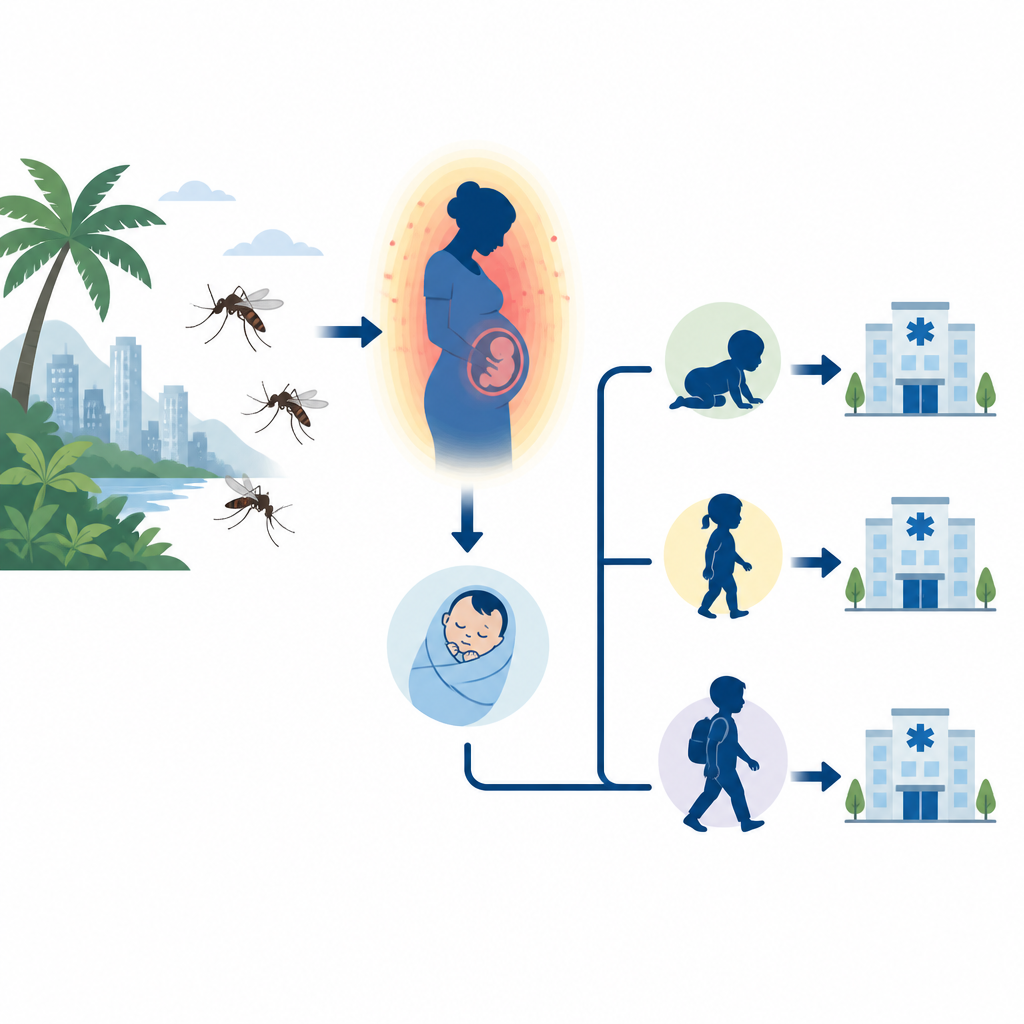
As mosquito-borne infections spread with climate change, many expectant parents wonder what happens if a mother gets sick during pregnancy. This study from Brazil asks a simple but important question: do children who were exposed in the womb to chikungunya, a painful viral fever spread by mosquitoes, face a higher chance of landing in the hospital during their first years of life?
Looking at millions of births
To explore this, researchers used national records that track births, hospital stays, and deaths among Brazilian families enrolled in social programs. From more than 5.7 million births between 2015 and 2018, they identified 1,821 babies whose mothers had chikungunya while pregnant and compared them with 18,210 similar babies whose mothers did not. The team followed these children until their third birthday, or until they were first hospitalized or died, whichever came first. By matching mothers by region and time of conception, and by accounting for factors like age, education, and prenatal care, they aimed to separate the impact of chikungunya from other social and health differences.
Tracking hospital visits in early childhood
The main focus was on all-cause hospitalizations in the first three years of life, not just infections clearly tied to chikungunya. This gives a broad picture of a child’s overall health needs. The study found that about 22 percent of children exposed in the womb were hospitalized at least once by age three, compared with about 18 percent of unexposed children. After adjusting for other influences, this translated to a 21 percent higher relative risk of hospitalization linked to in-utero exposure, or roughly 37 extra hospital stays for every 1,000 exposed children. The most common reasons for going to the hospital, such as problems around birth, infections, and breathing difficulties, were similar in exposed and unexposed groups.
Timing of infection during pregnancy
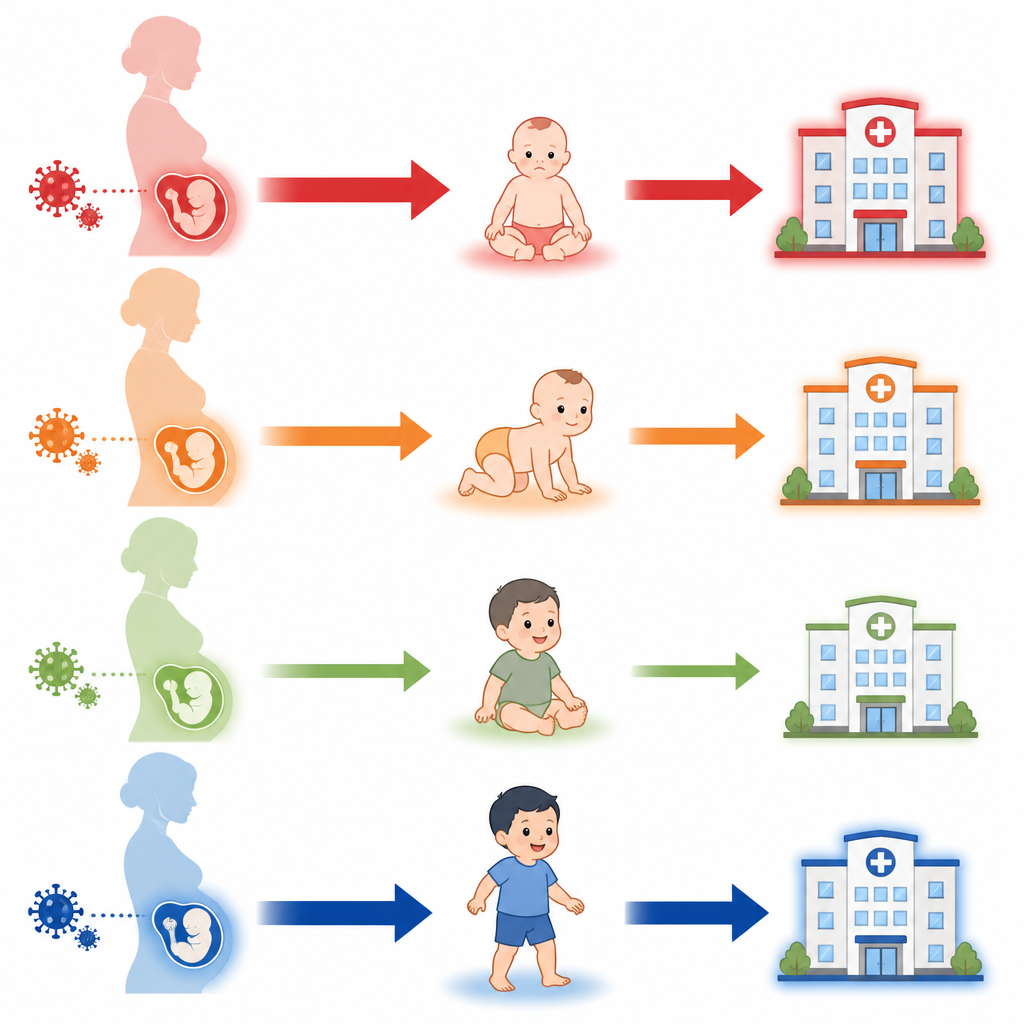
When the researchers looked more closely at when during pregnancy the mother became ill, a clearer pattern emerged. Exposure in the first and second trimesters was associated with a moderate rise in hospitalization risk. For mothers who developed symptoms very close to delivery, the risk for their infants was much higher: these intrapartum exposures were linked to roughly double the chance of a hospital stay in the first three years. This suggests that both early and very late infections may leave a lasting mark on a child’s health, possibly through different biological pathways.
What about deaths and possible explanations
The study did not find strong evidence that in-utero chikungunya exposure increased the overall risk of death by age three, although the data hint that risk could be higher when infection occurs near birth. Because deaths were relatively rare in both groups, the estimates were imprecise. The authors discuss several possible explanations for the higher hospitalization rates. These include changes in the developing immune system triggered by the mother’s infection, damage or inflammation in the placenta, and interactions with other pregnancy problems or medicines used to relieve chronic pain. They also note that some hospital admissions might reflect doctors’ caution with exposed babies, but multiple sensitivity checks suggest that true illness plays an important role.
What this means for parents and health planners
For families, the key message is that chikungunya during pregnancy appears to raise the chance that a child will need hospital care in the first three years of life, particularly if the mother falls ill early in pregnancy or right around the time of birth. The study does not show a clear increase in deaths, but it reinforces the value of protecting pregnant women from mosquito bites and ensuring good prenatal care. For health planners in Brazil and other regions where chikungunya is emerging, the findings suggest that outbreaks today can translate into extra pressure on pediatric services for several years, underscoring the importance of prevention and long-term follow-up of exposed children.
Citation: Kushibuchi, M., Carroll, O., Cerqueira-Silva, T. et al. In-utero exposure to chikungunya and child morbimortality: a population-based study using linked routine data. Nat Commun 17, 4581 (2026). https://doi.org/10.1038/s41467-026-70786-5
Keywords: chikungunya in pregnancy, in utero infection, child hospitalization, mosquito-borne disease, Brazil cohort study