Clear Sky Science · en
Durvalumab and cediranib with and without olaparib in recurrent ovarian cancer: a phase II proof-of-concept study
Why this study matters
For many people with ovarian cancer, the disease returns after standard treatment and becomes hard to control. This study tested two drug combinations that work in different ways to slow tumor growth and also looked closely at why some patients benefit much more than others. The results hint at how doctors might one day match patients to the drugs most likely to help them.
New combinations for a stubborn cancer
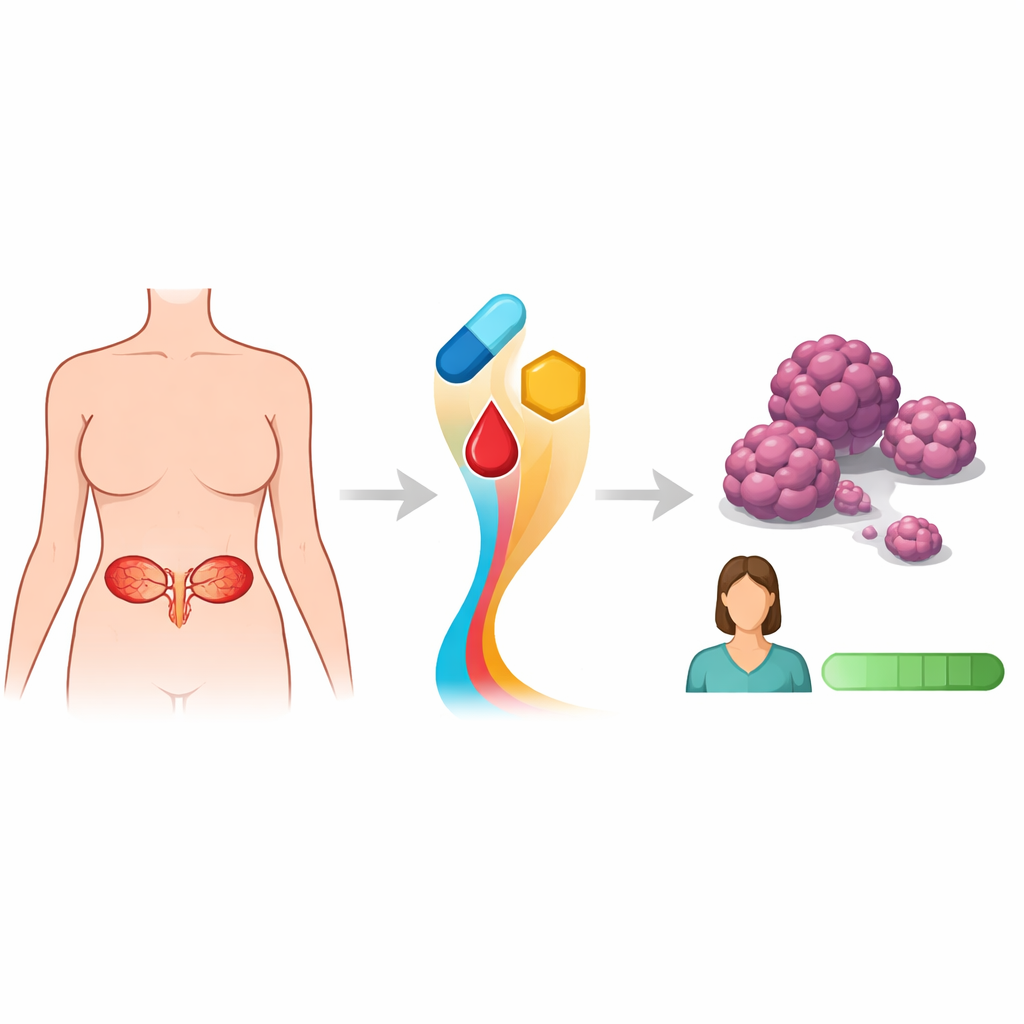
The researchers focused on recurrent epithelial ovarian cancer, a form that often comes back after chemotherapy and has few good options once it stops responding to platinum drugs. They tested two regimens: one that paired an immune therapy drug (durvalumab) and a blood-vessel–targeting pill (cediranib), and another that added a DNA-repair–blocking pill (olaparib) to this pair. Sixty-eight women were treated at a single cancer center and followed to see how their tumors responded and how long their disease stayed under control.
What the trial found in patients
Both combinations kept the cancer from worsening for a median of about four and a half months, and side effects were mostly manageable, affecting the blood and digestive system. Some tumors shrank partly, and many stayed stable for several months. Notably, in each treatment arm four women experienced unusually long periods without disease worsening, lasting a year or more. These “exceptional responders” showed that, for a subset of patients, these drug pairings can hold the cancer in check for a strikingly long time.
Clues hidden in tumor activity
To understand why outcomes differed, the team collected tumor tissue before treatment and, when possible, after therapy began. They analyzed which genes were turned on or off and how this related to benefit. Tumors from patients who did well showed signs of an already active immune environment, including signals tied to interferons, a family of molecules that help the body recognize and attack abnormal cells. In the group receiving durvalumab plus cediranib alone, helpful changes in how cells use energy and nutrients also appeared linked to better control of the disease. In contrast, tumors from patients who derived little benefit showed patterns suggesting they could remodel their blood supply and internal scaffolding to adapt and resist treatment.
Signals of resistance in the cancer’s structure
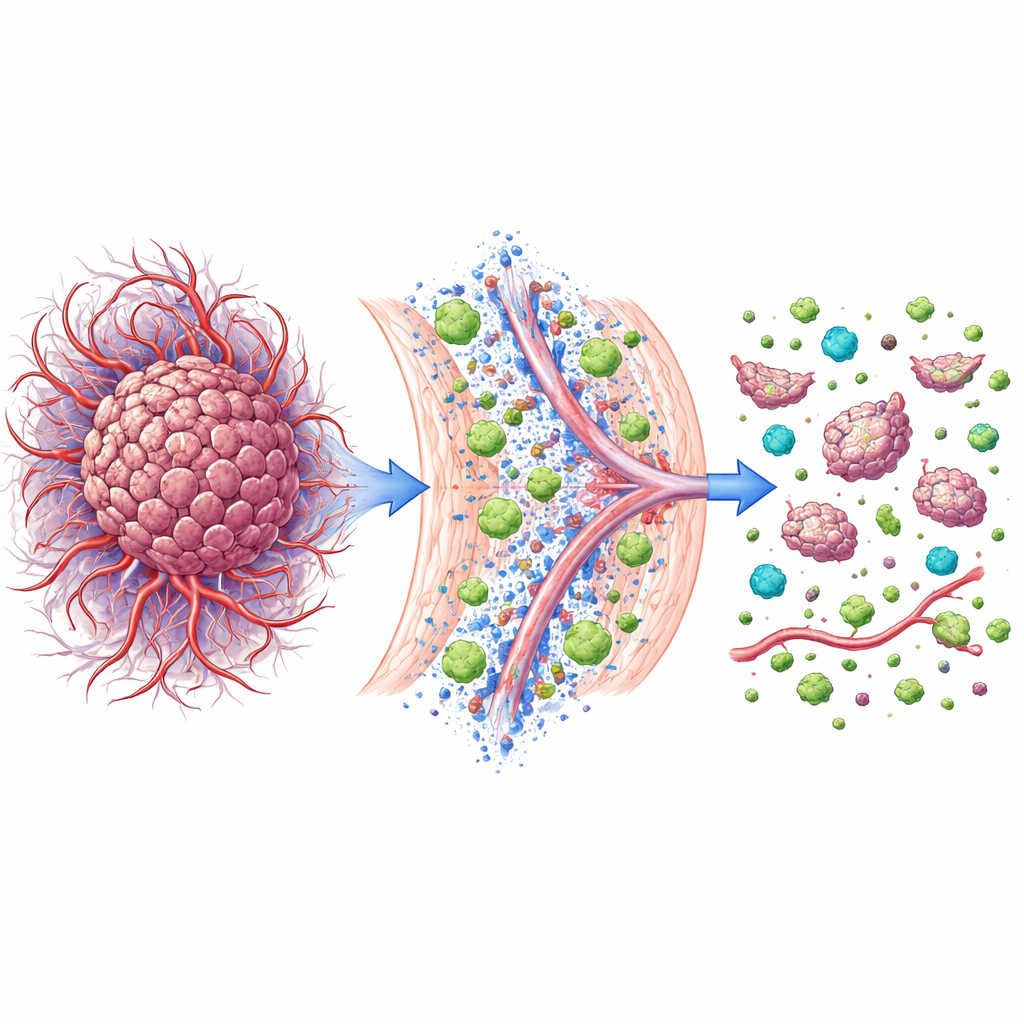
The researchers found a small set of genes that were consistently more active in tumors that did not benefit, regardless of which drug combination was used. These genes are involved in shaping cell structure and building new blood vessel routes, changes that can help tumors survive despite therapy and keep immune cells at bay. One gene, called MAP2, stood out because it was linked with shorter time before the disease worsened and appeared in both this trial and an independent study of a different drug mix. In laboratory experiments with ovarian cancer cells, lowering MAP2 levels made the cells easier to slow down with the three-drug combination and more vulnerable to attack by immune cells.
What this could mean for patients
For people living with recurrent ovarian cancer, this study does not yet deliver a new standard treatment, but it offers important direction. It shows that these drug combinations can help some patients, especially those whose tumors already show signs of immune activity and healthy energy use. Just as importantly, it uncovers warning signs in tumors that are likely to resist therapy by reshaping their blood vessels and inner structure. In the future, simple tests based on these gene patterns could help doctors steer each patient toward the options most likely to slow their cancer while sparing others from ineffective treatments.
Citation: Tabata, J., Huang, TT., Giudice, E. et al. Durvalumab and cediranib with and without olaparib in recurrent ovarian cancer: a phase II proof-of-concept study. Nat Commun 17, 4160 (2026). https://doi.org/10.1038/s41467-026-70785-6
Keywords: recurrent ovarian cancer, immunotherapy, angiogenesis inhibitors, PARP inhibitors, biomarkers