Clear Sky Science · en
Multitrait GWAS and functional validation reveal genetic loci for gastric cancer
Why stomach cancer and heart health are unexpectedly linked
Stomach (gastric) cancer remains one of the world’s deadliest cancers, especially in East Asia, yet its inherited causes are only partly known. This study shows that some of the same bits of DNA that influence heart and blood vessel disease also shape a person’s risk of gastric cancer. By tracing these shared genetic threads and testing how they affect real tumor cells in the lab, the researchers pinpoint a previously unknown genetic site that appears to help keep stomach cells from turning cancerous when it is working properly.
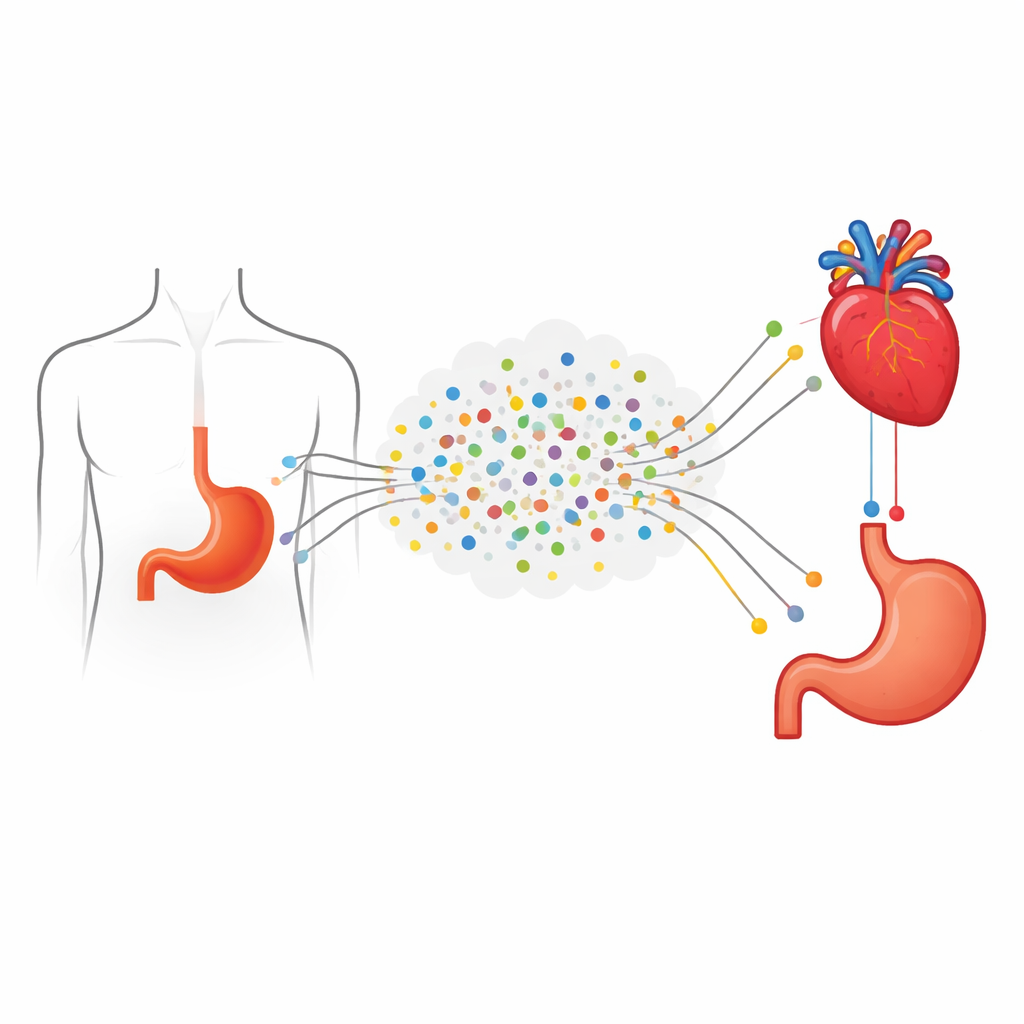
Connecting different illnesses through shared genes
The team began with health and genetic data from BioBank Japan, a large project that has scanned the DNA of hundreds of thousands of volunteers. They compared the genetic patterns of people with gastric cancer to those of 95 other traits and conditions, including heart disease, blood pressure, diabetes, blood markers, and common medications. Using statistical tools designed to measure how much two conditions share the same genetic background, they found that gastric cancer has substantial overlap with 25 traits, most of them related to cardiovascular health. Conditions such as angina, heart attack, and high blood pressure, as well as the use of blood-thinning and cholesterol-lowering drugs, showed strong genetic ties to gastric cancer, as did lung and colorectal cancers.
From statistical signals to a specific DNA region
To dig deeper, the researchers used a method called multitrait genome-wide association analysis, which combines information from genetically related traits to boost the power to find risk regions. This approach uncovered 26 previously unrecognized genetic sites linked to gastric cancer when considered together with the heart-related traits. One region on chromosome 12, called 12q22, stood out because it repeatedly appeared in joint analyses of gastric cancer with angina, heart attack, and use of certain pain-relief drugs. Additional checks in Korean and European cohorts pointed in the same direction, suggesting that this region truly affects gastric cancer risk even though larger studies will be needed to confirm it with high confidence.
A closer look at a DNA switch near key stomach genes
The critical DNA change in this region, known as rs12814712, sits in a stretch of noncoding DNA flanked by several genes, including one called VEZT. Rather than altering the structure of a protein, this change seems to act as a regulatory switch. In tumor samples from Chinese patients, individuals carrying the risk version of this variant had lower activity of VEZT and some neighboring genes, both in cancerous tissue and nearby noncancerous stomach lining. Laboratory experiments using reporter constructs showed that the risk version of rs12814712 weakens an enhancer-like element, reducing its ability to drive gene activity, particularly for VEZT. This indicates that the variant likely raises cancer risk not by breaking a gene outright but by turning down its volume.
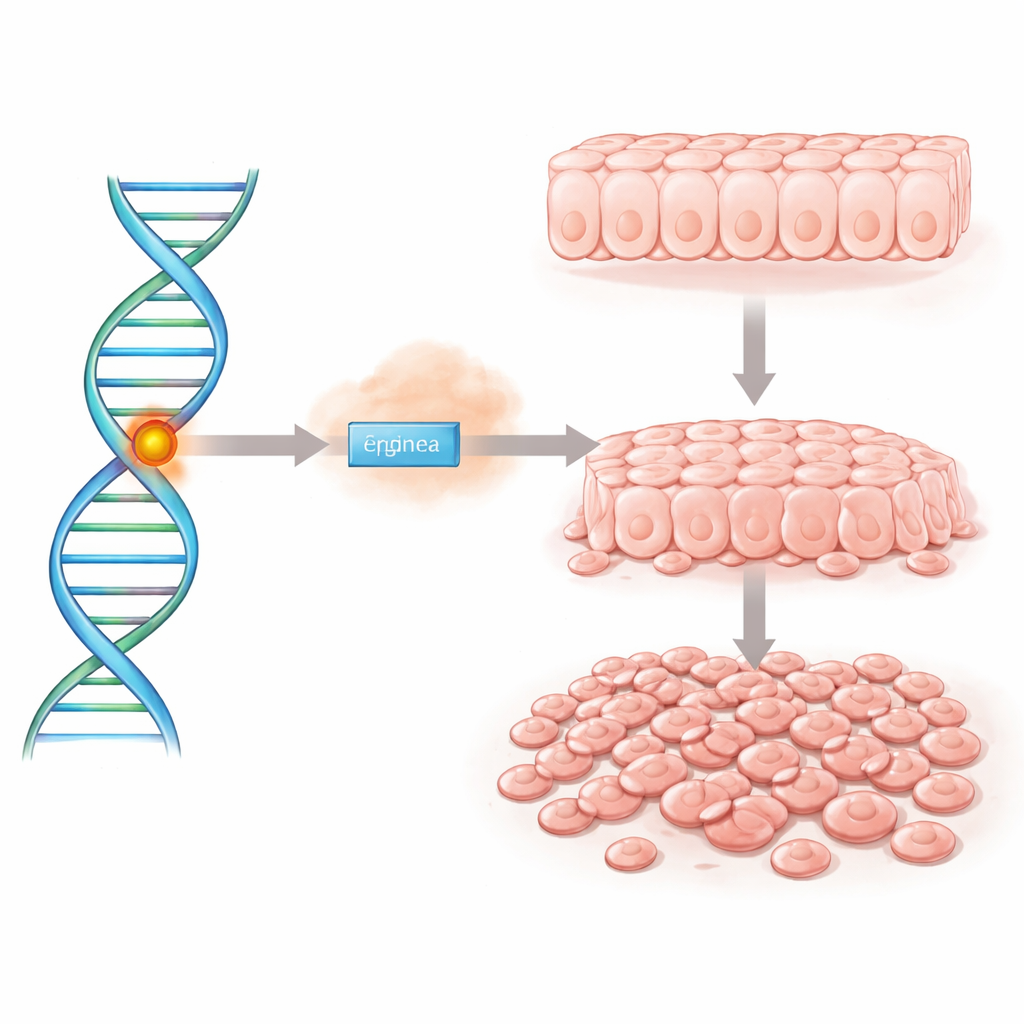
How a protective gene restrains tumor growth and spread
To see what these nearby genes actually do in gastric cancer cells, the scientists manipulated their levels in two human cell lines. When they forced cells to make extra VEZT or another gene, NR2C1, the cells divided more slowly, formed fewer colonies, and were less able to migrate across a surface or through a membrane—behaviors associated with reduced tumor growth and spread. When VEZT or NR2C1 were switched off with targeted RNA molecules, the opposite happened: cells grew faster and moved more readily. In contrast, two other genes in the same region, NDUFA12 and FGD6, did not show clear effects on cell growth or movement in these tests. Together, the evidence points to VEZT, and to a lesser extent NR2C1, as tumor-suppressing players whose activity is dampened by the risk variant.
What this means for understanding and treating disease
By combining big-data genetics with focused lab experiments, this study identifies rs12814712 at 12q22 as a new inherited risk factor for gastric cancer and links it to the dialling down of VEZT, a gene that helps keep stomach cells in check. The same genetic region also influences heart disease–related traits, highlighting how one DNA switch can affect several organs at once. While this will not change clinical care immediately, the work sharpens our picture of how gastric cancer develops and suggests that restoring or mimicking VEZT’s protective function might one day form the basis of new prevention or treatment strategies.
Citation: Ding, H., Liu, C., Sun, Q. et al. Multitrait GWAS and functional validation reveal genetic loci for gastric cancer. Nat Commun 17, 4006 (2026). https://doi.org/10.1038/s41467-026-70774-9
Keywords: gastric cancer genetics, cardiovascular risk, pleiotropic loci, VEZT gene, multitrait GWAS