Clear Sky Science · en
Molecular mechanism of menthol-induced TRPV5 channel inhibition
Why a cooling compound matters for your kidneys
Menthol is best known for the cool tingle in cough drops, toothpaste, and chest rubs. But this same compound can slip through cell membranes and interact with tiny protein “gates” that control the flow of charged minerals in our bodies. This study reveals how menthol directly interferes with a key calcium channel in the kidney, offering clues about possible side effects of high menthol exposure and pointing to a new starting point for drug design.
Calcium gates that keep the balance
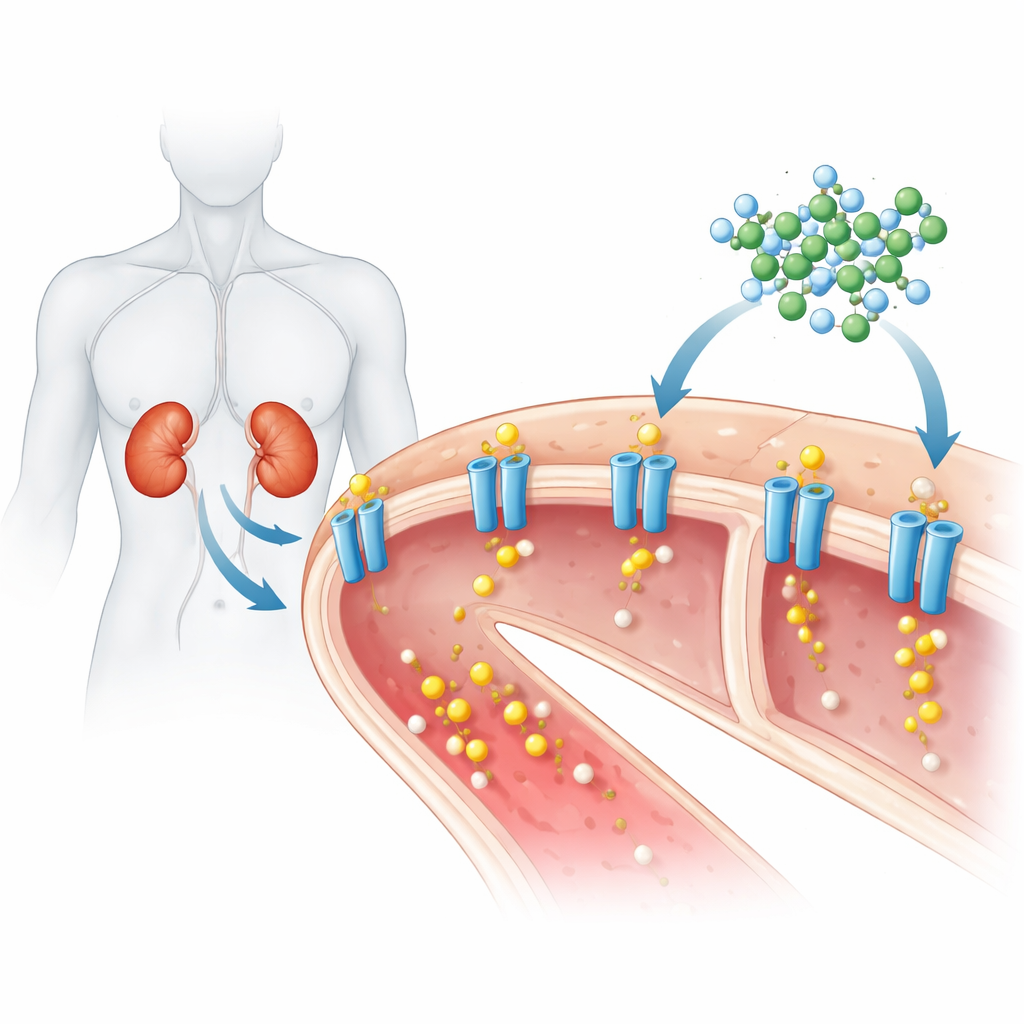
Our bodies tightly regulate calcium because this mineral is vital for bones, heartbeat, and nerve signals. One of the main gatekeepers is a protein channel called TRPV5, found on kidney tubule cells where blood is filtered and calcium is reclaimed instead of lost in urine. TRPV5 forms a narrow pore that strongly prefers calcium over other ions, allowing it to fine‑tune how much calcium returns to the bloodstream. Small changes in how often these channels are open, or how many sit in the cell membrane, can shift overall calcium balance and influence risks like kidney stones, bone loss, and possibly cancer behavior.
A familiar mint compound turns into a blocker
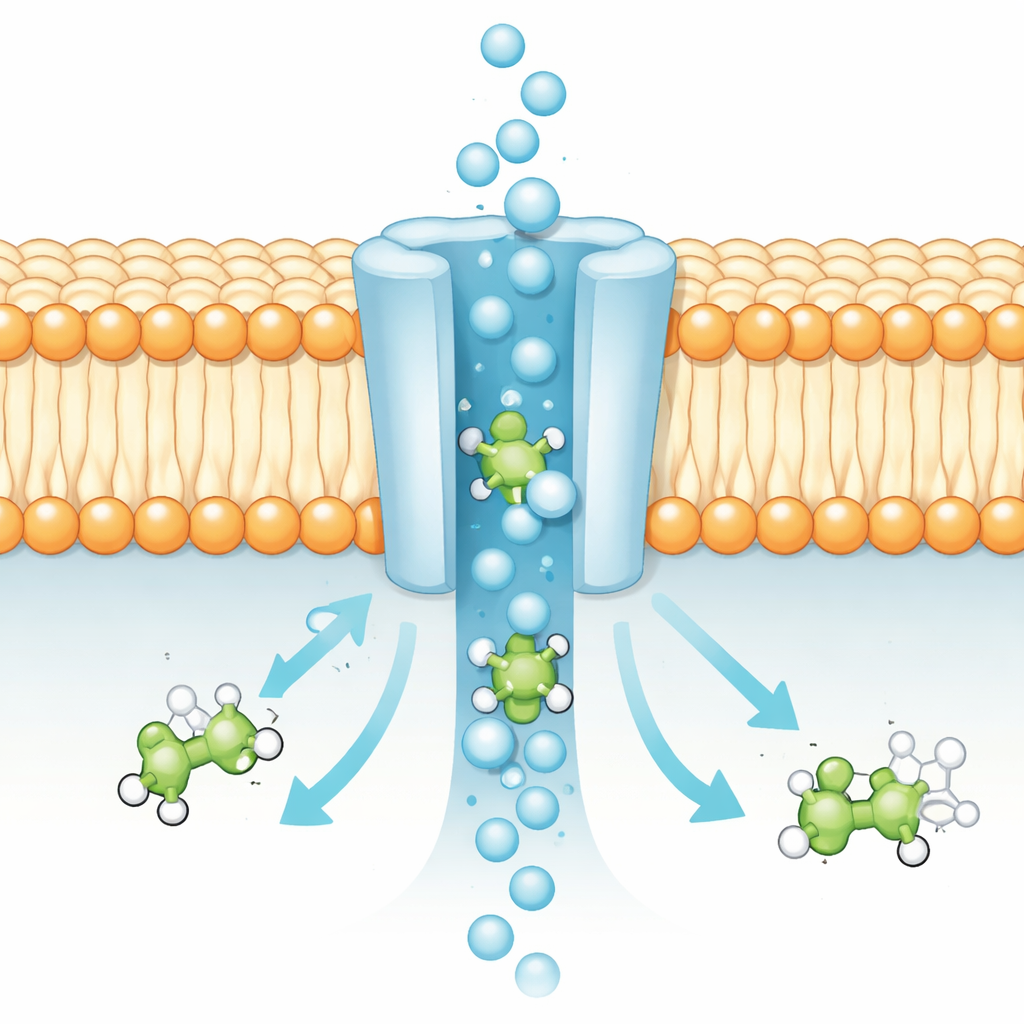
The researchers asked what menthol does to TRPV5. Using electrical recordings from single kidney‑like cells engineered to make the channel, they measured currents flowing through TRPV5 before and after adding menthol. They found that menthol reliably reduced the current by more than half at commonly used test levels, and that the effect grew stronger as menthol concentration increased. Importantly, menthol did not change the size of each individual opening event but instead made the channel stay closed for longer stretches of time. This pattern is characteristic of a “slow blocker”: a molecule that occasionally lodges in the pore, stopping ions without permanently disabling the gate.
Seeing menthol inside the pore
To understand how menthol physically blocks TRPV5, the team turned to single‑particle cryo‑electron microscopy, a technique that images frozen molecules at near‑atomic detail. They prepared TRPV5 channels held in a lipid environment and activated by a natural lipid helper, then exposed them to menthol. The resulting 3.37‑ångström structure revealed extra density at the inner mouth of the pore, consistent with a menthol molecule wedged between the inner helices that line the channel. A single amino acid, tryptophan at position 583, sat in direct contact with menthol, suggesting it acts as a docking site. Despite menthol’s presence, the overall pore shape remained close to an open state, reinforcing the idea that menthol obstructs flow rather than fully collapsing the gate.
Pinpointing the critical contact points
The authors then altered individual building blocks of the channel to confirm which ones mattered for menthol’s effect. When they replaced the key tryptophan with other residues that lacked its bulky ring or its ability to form hydrogen bonds, menthol’s ability to block the channel dropped dramatically: much higher concentrations were needed, and some mutants scarcely responded. Computer simulations supported a dynamic picture in which menthol first interacts with this tryptophan, then can drift deeper into the pore toward another residue, isoleucine 575. Changing this second site to a more water‑loving amino acid also weakened menthol block, and combining both mutations nearly abolished it. Together, these results show that a pair of hydrophobic residues at the inner entrance of TRPV5 form a small, druggable pocket where menthol can lodge.
From cool sensation to possible therapies
By revealing exactly how menthol plugs TRPV5 channels from the inside, this work links a common cooling ingredient to kidney calcium handling at the molecular level. The findings help explain why high doses of menthol have been associated with kidney problems in animal studies, and they identify a specific pocket that chemists can target to design new compounds. Such tailored blockers could one day be used to modulate calcium flow in conditions ranging from kidney stone disease to certain cancers where TRPV5 and its close cousin TRPV6 are misregulated—turning a familiar minty molecule into a blueprint for precise medicines.
Citation: Méndez-Reséndiz, A., De Jesús-Pérez, J.J., Rangel-Yescas, G.E. et al. Molecular mechanism of menthol-induced TRPV5 channel inhibition. Nat Commun 17, 3939 (2026). https://doi.org/10.1038/s41467-026-70759-8
Keywords: menthol, TRPV5 calcium channel, kidney physiology, ion channel blockers, cryo-EM structure