Clear Sky Science · en
The hidden role of rhizospheric viruses in promoting nitrogen fixation in soils
Viruses at the Root of Plant Nutrition
Farmers and gardeners know that plants need nitrogen to thrive, yet most plants cannot use the vast store of nitrogen gas in the air. This study reveals a surprising ally in turning that unusable gas into plant food: viruses living around plant roots. By uncovering how these tiny entities help soil microbes fix nitrogen, the work points to new ways of supporting crops while reducing dependence on synthetic fertilizers.
A Hidden Partner in the Nitrogen Story
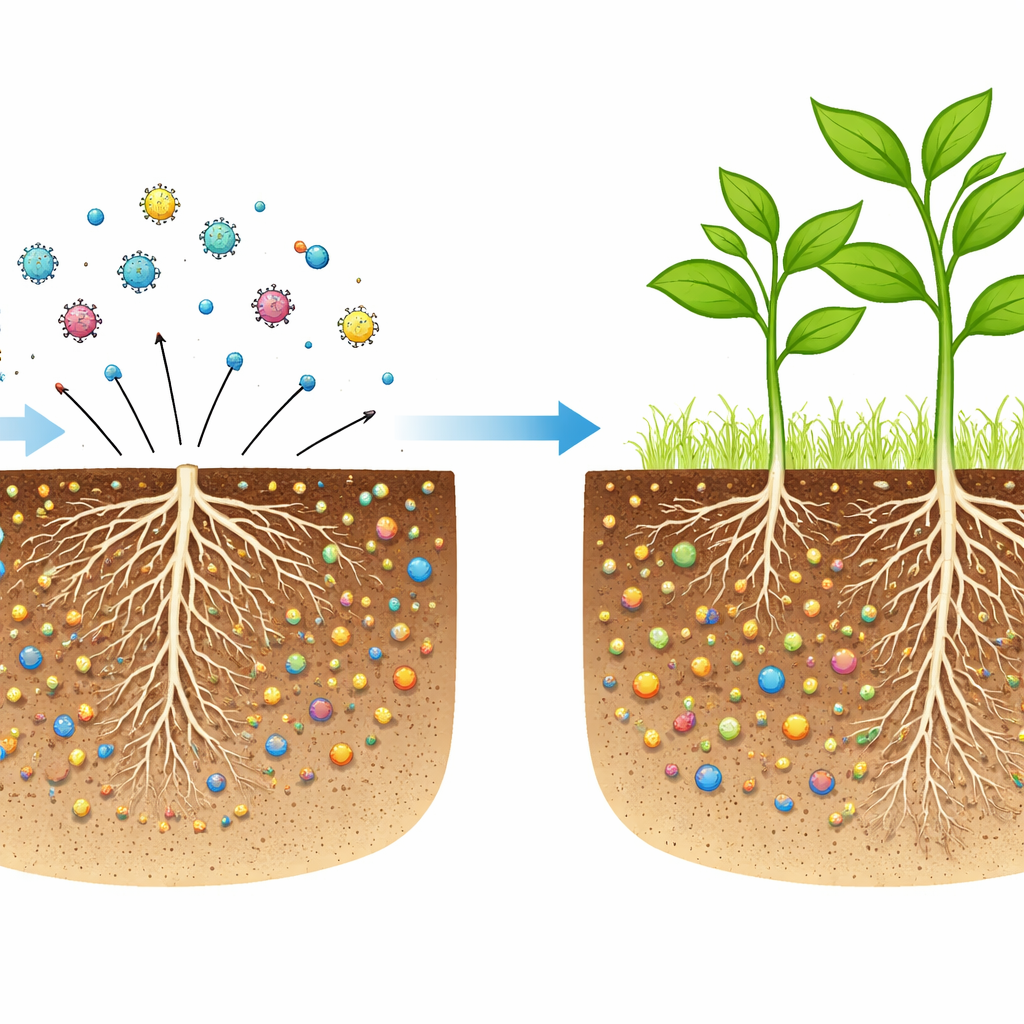
Nitrogen is essential for plant growth and global food production, but plants depend on microbes to convert atmospheric nitrogen gas into forms they can use. Traditionally, this job has been credited to specialized bacteria that carry the right genes and enzymes. The authors of this paper asked whether viruses that infect these microbes might quietly influence this process. Focusing on the thin zone of soil that clings to roots, known as the rhizosphere, they investigated whether viruses there carry and use genes linked to nitrogen fixation, and whether this affects how much nitrogen ends up in soil and plants.
Tracing Nitrogen-Fixation Genes Around the Globe
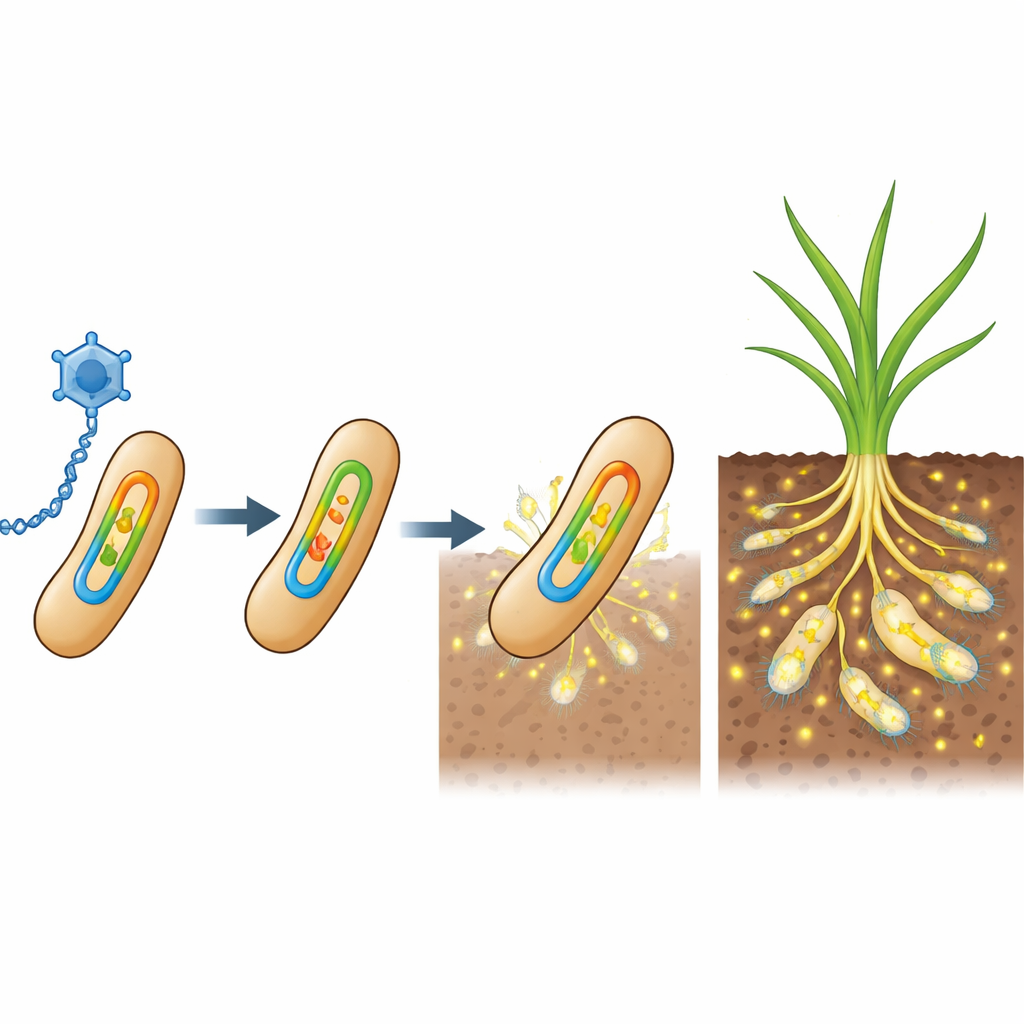
The researchers began by mining massive public DNA databases containing millions of bacterial and viral genomes from many environments worldwide. They searched for well-known nitrogen-fixation genes and found them not only in bacteria, as expected, but also in a small subset of viruses. Although these nitrogen-fixing viruses were rare, they were consistently present across North America, Europe, and Asia and tended to appear in soils and root-associated habitats. Among the viral genes, one called nifU stood out as a frequent and well-supported candidate for an "auxiliary metabolic gene"—a type of viral gene that can tweak a host’s metabolism during infection.
Zooming In on Cowpea Roots and Their Viral Community
To see how this plays out in real fields, the team sampled soils from a long-term cowpea cropping system in eastern China, comparing root-associated soil with nearby bulk soil, under both organic fertilization and no fertilization. Using high-throughput sequencing, they cataloged thousands of viral types, many previously unknown, and found that the rhizosphere hosted a richer and more complex viral community than bulk soil. Importantly, viruses carrying the nifU gene were more abundant in the rhizosphere, especially where organic fertilizer was applied. Gene expression analyses showed that nifU was much more actively expressed in root-associated soils than in surrounding soil, with most activity coming from bacteria but a clear contribution from viruses, suggesting that viral versions of the gene are present and potentially helpful back-ups.
Experiments Linking Viruses to Extra Nitrogen
Correlation alone is not enough, so the researchers set up controlled soil microcosm experiments. They sterilized soil and then reintroduced bacteria, with or without an added cocktail of viruses collected from cowpea roots, and exposed these systems to air enriched with a heavy form of nitrogen gas that leaves a detectable signature in newly formed biomass. After several weeks, soils that received extra viruses had higher total nitrogen and substantially higher nitrogenase activity, the key measure of nitrogen fixation. DNA tracing showed that nitrogen-fixing genes shifted into heavier fractions only when the heavy nitrogen gas was present, and that an efficient nitrogen-fixing genus, Azotobacter, dominated these labeled fractions when viruses were added. In those same heavy fractions, they detected a viral genome carrying nifU, with protein modeling indicating it could encode a functional helper protein for the nitrogenase machinery.
What This Means for Soils and Future Farming
Taken together, the global surveys, field observations, and microcosm experiments suggest that viruses around plant roots do more than kill bacteria. By carrying and sharing nitrogen-fixation helper genes like nifU, they can subtly reshape microbial communities and boost the activity of the bacteria that feed plants with usable nitrogen. These viral helpers are rare on a per-gene basis, so they are unlikely to replace fertilizers outright, but their widespread, persistent presence hints at a long-term evolutionary role in keeping soil nitrogen cycling flexible and resilient. In the future, understanding and perhaps gently steering these virus–microbe partnerships could become part of more sustainable strategies to maintain fertile soils while reducing chemical inputs.
Citation: Zhu, D., Zhang, W., Balcazar, J.L. et al. The hidden role of rhizospheric viruses in promoting nitrogen fixation in soils. Nat Commun 17, 4134 (2026). https://doi.org/10.1038/s41467-026-70744-1
Keywords: soil virome, rhizosphere, nitrogen fixation, auxiliary metabolic genes, plant–microbe interactions