Clear Sky Science · en
Developing a novel index for neighborhood social determinants of cardiovascular diseases in the CARDIA study
Why Where You Live Matters for Your Heart
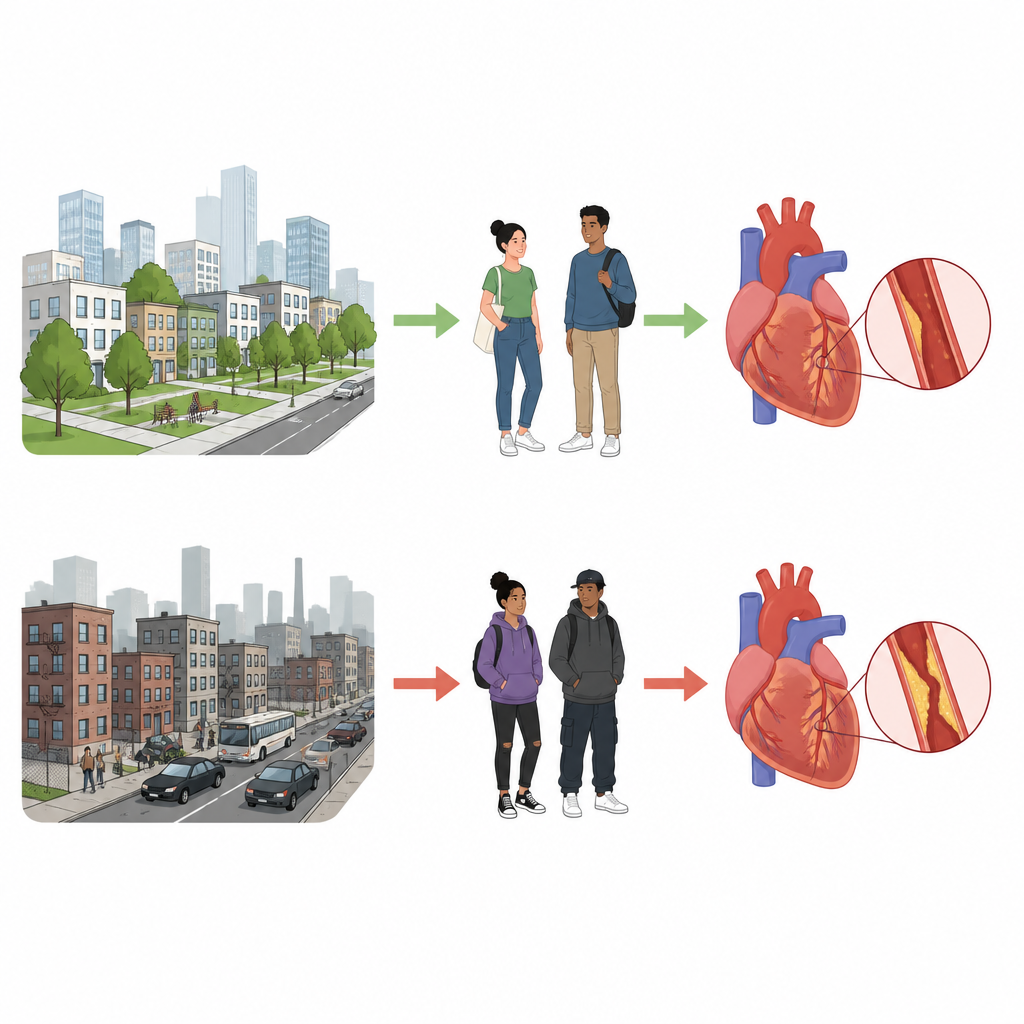
Most of us know that diet, exercise, and smoking affect heart health, but this study asks a deeper question: does your neighborhood in early adulthood leave a lasting mark on your arteries decades later? Using long term data from thousands of U.S. adults, the researchers built a new way to score neighborhood conditions and tested whether that score was linked to hidden early signs of heart disease in midlife.
Looking Beyond Personal Habits
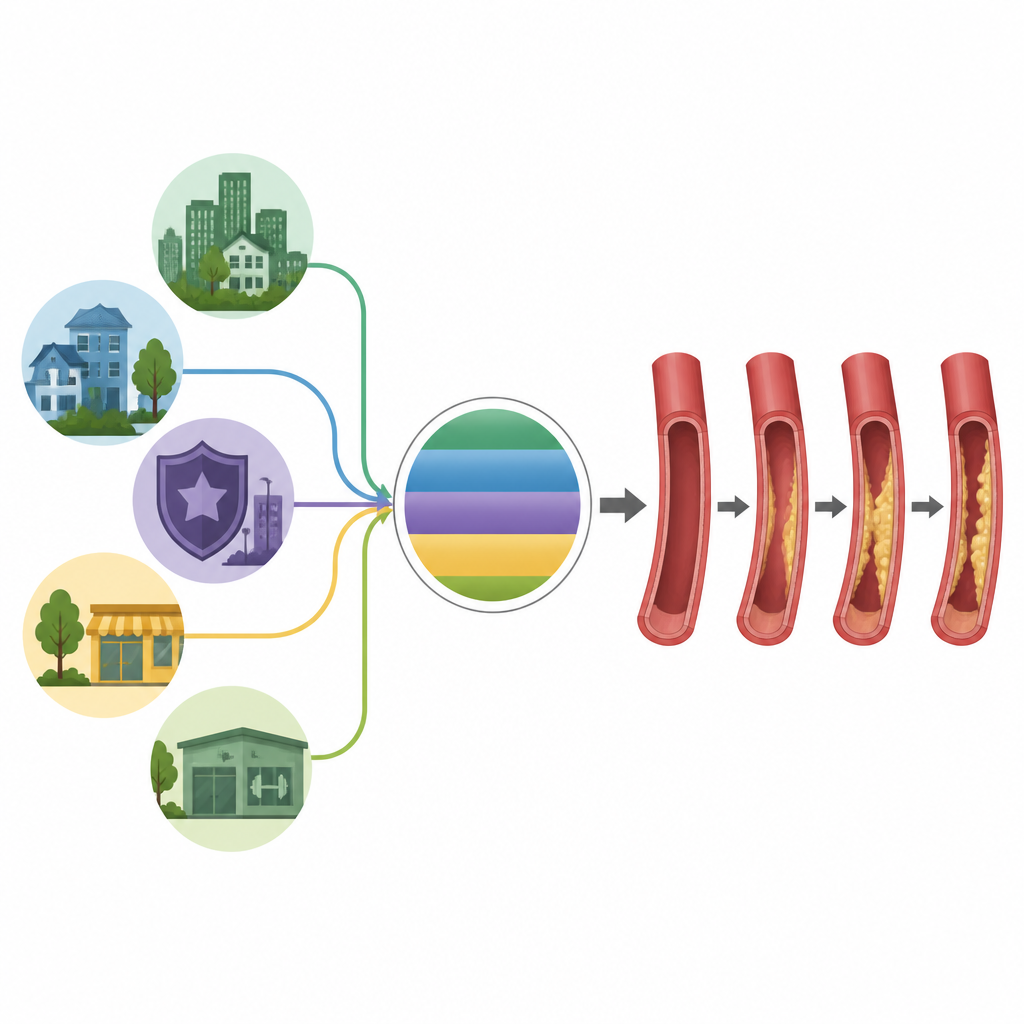
The study focused on "social determinants of health," which are the everyday conditions in which people live, work, and play. Instead of looking only at personal income or education, the team zoomed out to the neighborhood level, asking what kind of surroundings people had as they moved from young adulthood into middle age. They used information on local income, education, job types, unemployment, housing costs, crime, and the number of food and exercise places nearby. These details paint a picture of whether a community offers opportunity, safety, and healthy options or is marked by disadvantage and limited resources.
Turning Neighborhood Features into a Single Score
To combine many neighborhood features into one clear measure, the researchers created a new neighborhood social determinants of health index. They used a machine learning method called boosted regression trees to see how strongly each factor was linked to later artery health. Features that mattered more for predicting risk were given more weight. For example, median rent, the share of people in non professional jobs, and the number of nearby food outlets were among the strongest contributors at different time points. By summing the weighted factors and standardizing the result, they produced an index that could be compared across multiple study visits from age 20s to mid 40s.
Hidden Calcium in the Heart’s Arteries
The team then examined coronary artery calcification, or CAC, in nearly 3,500 participants around age 50. CAC is a sign of plaque buildup in the arteries that supply the heart; it can be detected on a specialized CT scan years before symptoms appear. Participants had been followed for 25 years in the CARDIA study, which tracked their health behaviors alongside neighborhood changes. After accounting for age, sex, race, body weight, smoking, alcohol use, and physical activity, the researchers asked whether higher neighborhood index scores earlier in life were tied to greater odds of having any calcium in the heart arteries at midlife.
What the Numbers Revealed
Each one step increase in the neighborhood index at certain visits in early and mid adulthood was linked to about 15 to 17 percent higher odds of having coronary calcium by year 25 of the study. The index helped distinguish who had CAC reasonably well, with performance similar across several time points. When results were broken down by race, a striking pattern appeared. Higher neighborhood index scores at year 7 were linked to CAC in White adults, while scores at years 15 and 20 were more strongly linked to CAC in Black adults. This suggests that harmful neighborhood conditions later in early adulthood may weigh more heavily on heart health for Black residents, who are also more likely to live in high poverty areas and face long standing structural disadvantages.
What This Means for Communities
In plain terms, the study shows that neighborhoods are not just backdrops to daily life; they are part of the story of how heart disease develops silently over decades. A higher score on the new neighborhood index reflects more social and economic strain and is associated with a greater chance of calcium buildup in the heart’s arteries by middle age. The links appear especially strong for Black adults in their 40s, hinting at the combined effects of neighborhood hardship and broader social inequities. These findings support the idea that improving local food options, job opportunities, safety, and places to be active may help protect heart health long before symptoms appear.
Citation: Gao, T., Zheng, Y., Joyce, B.T. et al. Developing a novel index for neighborhood social determinants of cardiovascular diseases in the CARDIA study. Nat Commun 17, 4622 (2026). https://doi.org/10.1038/s41467-026-70741-4
Keywords: neighborhood health, social determinants, cardiovascular disease, coronary calcium, health disparities