Clear Sky Science · en
A dual-cathode zinc-ethylene glycol/air battery for concurrent electricity generation and plastic waste upcycling
Turning Trash into Power
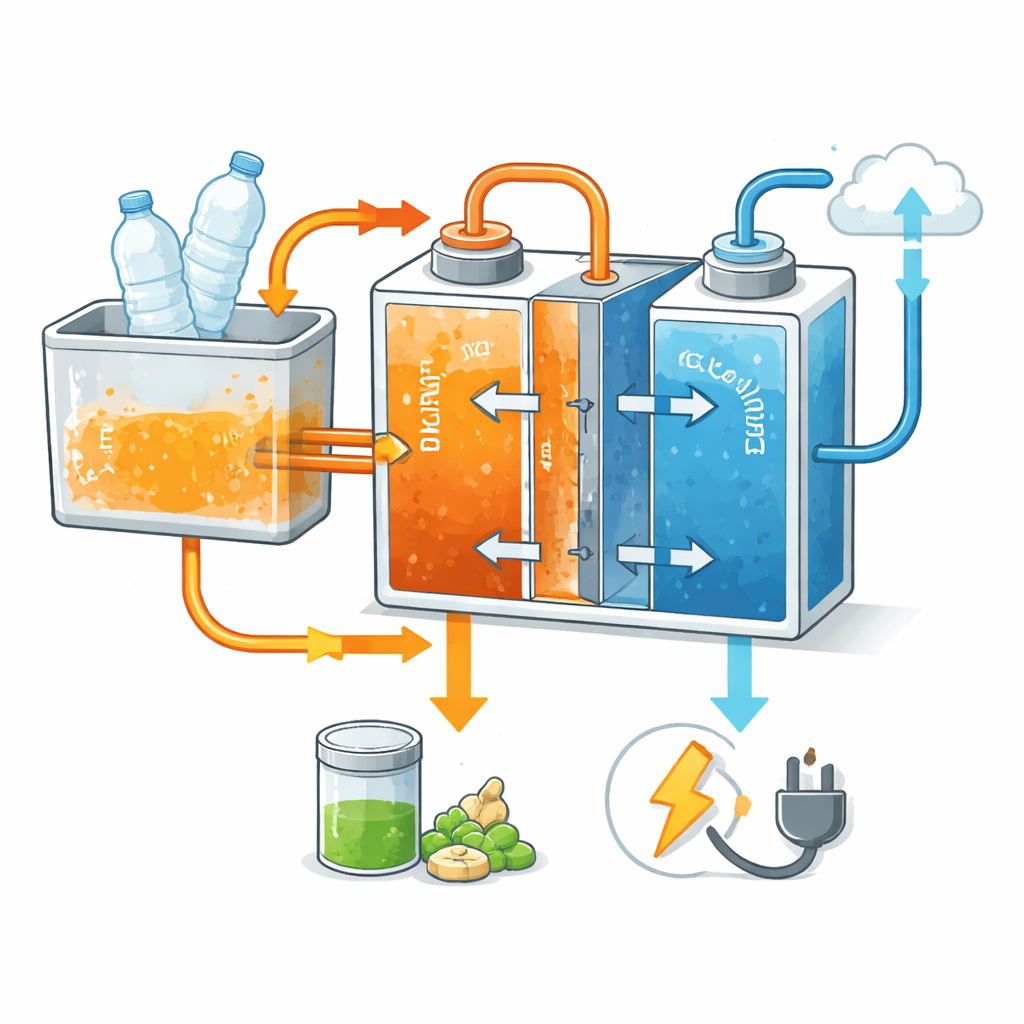
Plastic bottles and reliable batteries both shape modern life, but each brings its own problems: mountains of plastic waste and the need for cleaner, cheaper energy storage. This research shows how these two challenges can be tackled together by building a new kind of zinc-air battery that not only stores electricity efficiently, but also breaks down common plastic waste into valuable chemical ingredients.
Why Classic Zinc-Air Batteries Fall Short
Conventional rechargeable zinc-air batteries draw oxygen from the air and use a zinc metal plate to store and release energy. They are attractive because zinc is abundant and safe, and the theoretical energy they can hold is very high. However, in practice these batteries suffer from slow reaction speeds and harsh conditions at a single air electrode where two opposite reactions must occur. One reaction consumes oxygen when the battery delivers power; the other releases oxygen when it is charged. Because these reactions prefer different conditions, they damage the shared electrode over time, waste energy as heat, and only produce low-value oxygen gas during charging.
Splitting the Job Between Two Cathodes
The team redesigned the battery so that these clashing reactions no longer have to share the same space. Their dual-cathode zinc–ethylene glycol/air battery uses one side for breathing in oxygen from the air during discharge, and a separate side for a different reaction during charging. Instead of forcing the battery to make oxygen gas, the charging side uses ethylene glycol—a simple molecule that can be obtained by chemically breaking down polyethylene terephthalate (PET), the plastic in many drink bottles. In this setup, the plastic-derived liquid is gently converted into a higher-value chemical called glycolic acid, while the battery is recharged at a much lower voltage than usual. Keeping the two cathodes apart allows each to operate under conditions that are kinder to the materials and much more energy-efficient.
Designing a Smart Surface for Faster Chemistry
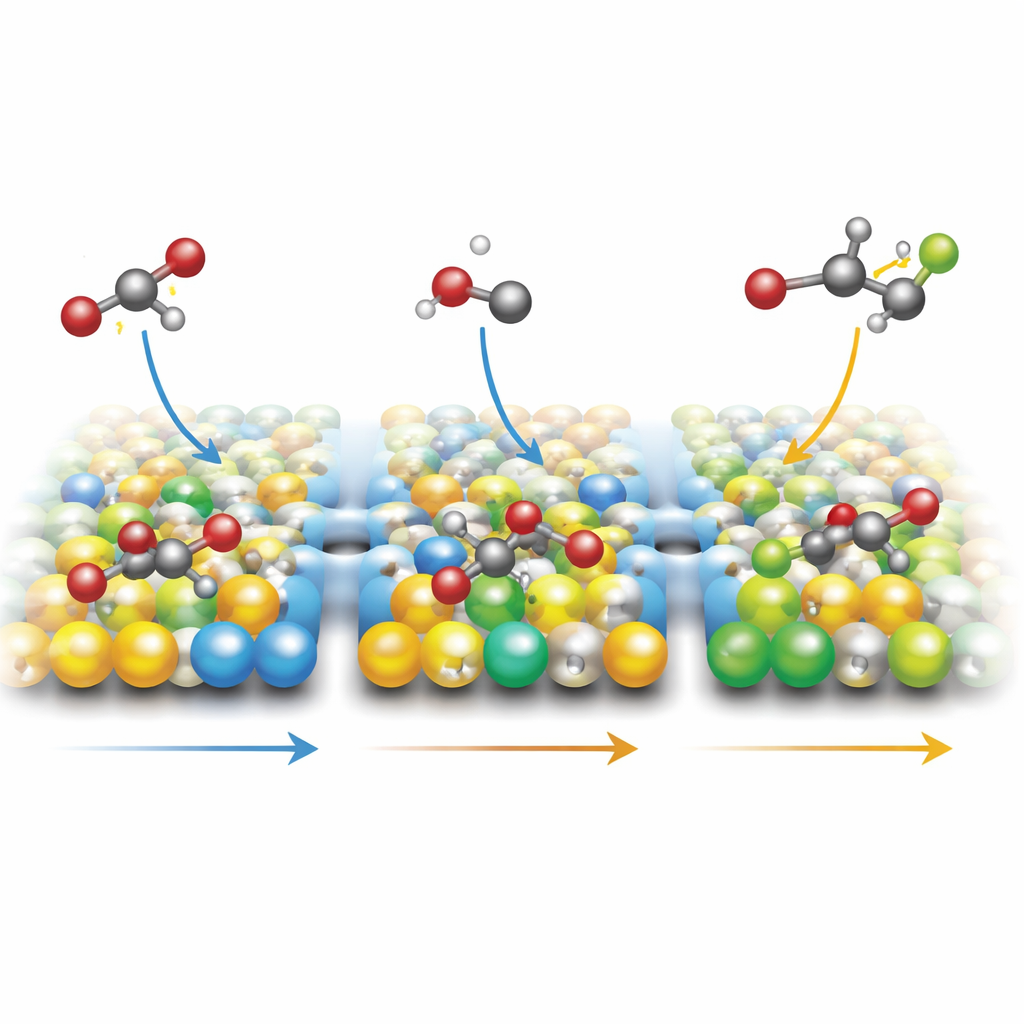
To make both sides of the battery work quickly and selectively, the researchers created an ultra-thin, sheet-like catalyst made from three metals: palladium, copper, and cobalt. These “metallene” sheets are only a few atoms thick and are full of tiny structural imperfections that expose many active sites where reactions can take place. Advanced microscopes and X-ray techniques show that mixing the three metals squeezes the atomic lattice and shifts how electrons are shared between them. These shifts weaken the grip on troublesome carbon-based intermediates and favor the smooth transformation of ethylene glycol into glycolic acid instead of unwanted byproducts. Computer simulations back up these findings, showing that the trimetal surface lowers the energy barriers for the desired reaction steps.
How the New Battery Performs
When this tailored catalyst is used on both cathodes in the dual-cathode design, the battery delivers high performance on several fronts. It can reach an energy density close to that promised by traditional zinc-air concepts while charging at significantly lower voltages, pushing its energy conversion efficiency above 90 percent. The device cycles stably for over 1,600 hours and maintains strong output even at higher charge levels. At the same time, the charging side converts PET-derived ethylene glycol into glycolic acid with more than 93 percent of the electrical charge going into making this product. In practical tests, processing 50 kilograms of shredded PET waste yields tens of kilograms of reusable chemicals with an overall mass yield of nearly 98 percent, and an economic analysis suggests the process can be profitable.
What This Means for Everyday Life
In essence, this work shows that a battery can be more than a passive energy box—it can double as a miniature recycling plant. By separating the key reactions into two cathodes and carefully engineering a three-metal catalyst, the authors turn plastic bottles into valuable chemical feedstocks while storing and releasing electrical energy efficiently. For non-specialists, the takeaway is simple: future energy devices could help clean up plastic waste rather than add to it, offering a path toward power systems that are both high-performing and deeply integrated with circular, low-waste manufacturing.
Citation: Li, N., Sun, M., Pan, Q. et al. A dual-cathode zinc-ethylene glycol/air battery for concurrent electricity generation and plastic waste upcycling. Nat Commun 17, 4018 (2026). https://doi.org/10.1038/s41467-026-70736-1
Keywords: zinc air battery, plastic upcycling, ethylene glycol, glycolic acid, electrocatalysis