Clear Sky Science · en
Chlorine radical-mediated electrochemical propylene epoxidation from seawater
Turning Ocean Water into Useful Chemicals
Propylene oxide is a quiet workhorse of modern life, hidden inside everyday products from foam cushions to plastics and solvents. Making it today, however, is costly and polluting. This research shows how we could instead use seawater, renewable electricity and metal from spent batteries to make propylene oxide in a cleaner and more efficient way, opening a path toward greener chemical factories near coastlines.
Why This Everyday Ingredient Matters
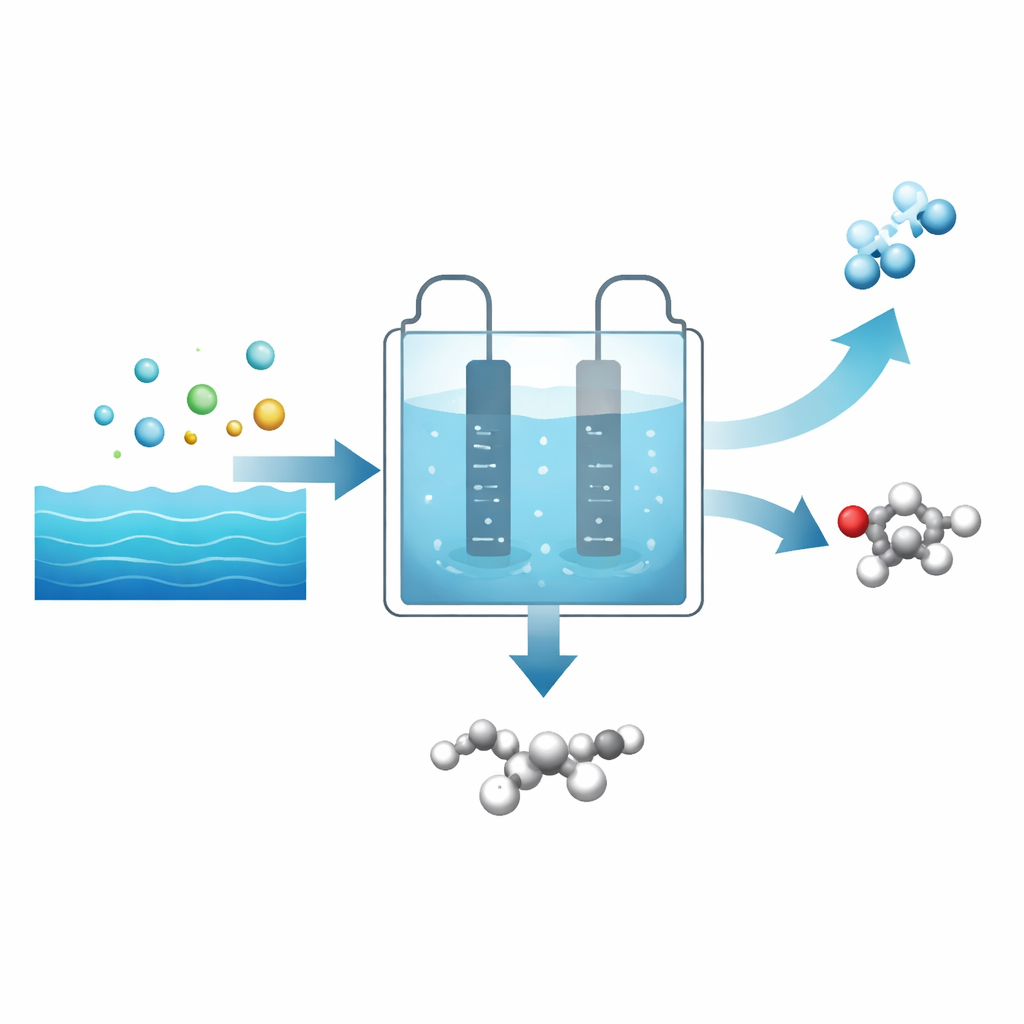
Propylene oxide is a key building block for many common materials, including polyurethanes in furniture, propylene glycol in antifreeze and cosmetics, and specialty solvents. Global demand exceeds ten million tons each year, but the dominant manufacturing routes rely on chlorine-heavy or peroxide-based chemistry that generates large amounts of waste, consumes expensive inputs and can release harmful by-products. Researchers have been searching for a route that works at room temperature, pairs well with renewable electricity, and avoids the heavy environmental footprint of current plants.
Using Salt Water and Electricity Instead of Harsh Chemistry
The team focuses on an emerging idea: using an electric current to drive a reaction between propylene gas and chloride ions from seawater. In this setup, the salt in seawater supplies chloride, which is converted at an electrode into highly reactive chlorine-based species. These in turn attack propylene and transform it into a chlorine-bearing intermediate called chloropropanol, which is then easily converted to propylene oxide in the alkaline liquid produced at the opposite electrode. This indirect “chlorine-mediated” route sidesteps some of the problems of direct electro-oxidation, such as over-burning the propylene and losing efficiency.
Making Chlorine Work Smarter, Not Harder
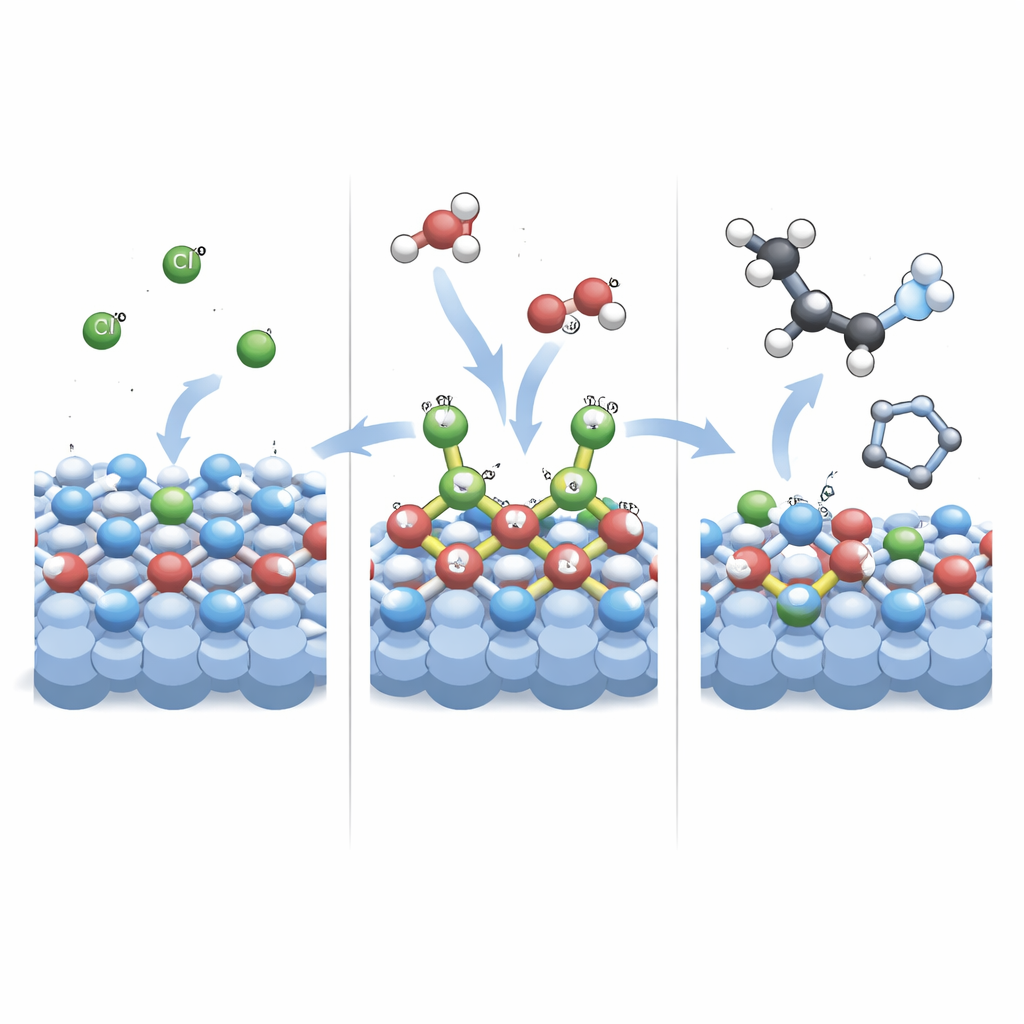
Earlier attempts along these lines ran into a stumbling block: most of the active chlorine species were wasted. They decomposed in solution or reverted to inactive forms, lowering yield and wasting electricity. The central advance of this study is redesigning the anode material so that chlorine is held and activated in a more productive way. The researchers start from a common metal oxide, cobalt oxide (Co₃O₄), and gently introduce lithium atoms into its crystal structure using a rapid heating technique adapted from battery recycling. This lithium-doped surface changes how chloride ions from seawater attach to the electrode, favoring a triangular arrangement with lithium and oxygen that makes it much easier to generate short-lived, highly reactive chlorine radicals.
Zooming In on the Hidden Steps
To understand what is really happening, the team combines advanced microscopy, spectroscopy and computer modeling. They show that lithium atoms settle into specific positions in the cobalt oxide lattice and subtly weaken nearby metal–oxygen bonds. This rearrangement creates more reactive oxygen sites and a different electrical environment at the surface. Measurements of reaction products and radical “fingerprints” reveal that, on the lithium-doped surface, chloride is mainly converted directly into chlorine radicals rather than into more stable hypochlorous acid. These radicals work together with reactive fragments derived from water to attack propylene in a stepwise fashion, forming chloropropanol far more efficiently than traditional pathways.
From Lab Discovery to Industrial Promise
Performance tests in simulated and real seawater show that the lithium-doped electrode can convert propylene to propylene oxide with nearly perfect charge efficiency and high production rates, remaining stable for more than 100 hours and functioning even at industrial-scale current densities. Economic modeling suggests that, under realistic electricity prices, this approach could compete with existing technologies once certain efficiency thresholds are met—thresholds already reached in this work. Because the lithium can come from waste lithium-ion batteries and the chloride from seawater, the process aligns naturally with circular and low-carbon manufacturing strategies.
What the Study Means for the Future
In simple terms, this study shows how a small tweak to a catalyst surface can persuade chlorine to take a more efficient route, turning common ingredients—seawater, air-derived propylene and green electricity—into a valuable industrial chemical with minimal waste. By steering the chemistry toward chlorine radicals held in a special lithium–oxygen pocket, the researchers unlock much higher yields and lower energy losses. The same design ideas could be extended to other important reactions, hinting at a future where coastal electrochemical plants quietly turn ocean salt and renewable power into the chemical building blocks of modern life.
Citation: Cheng, M., Sun, X., Zhang, P. et al. Chlorine radical-mediated electrochemical propylene epoxidation from seawater. Nat Commun 17, 3990 (2026). https://doi.org/10.1038/s41467-026-70733-4
Keywords: seawater electrocatalysis, propylene oxide, chlorine radicals, lithium-doped cobalt oxide, green chemical synthesis