Clear Sky Science · en
Built-in electric field engineering in Co2N0.67/CoP heterostructures for glycerol electrooxidation-assisted hydrogen production
Turning Waste into Clean Fuel
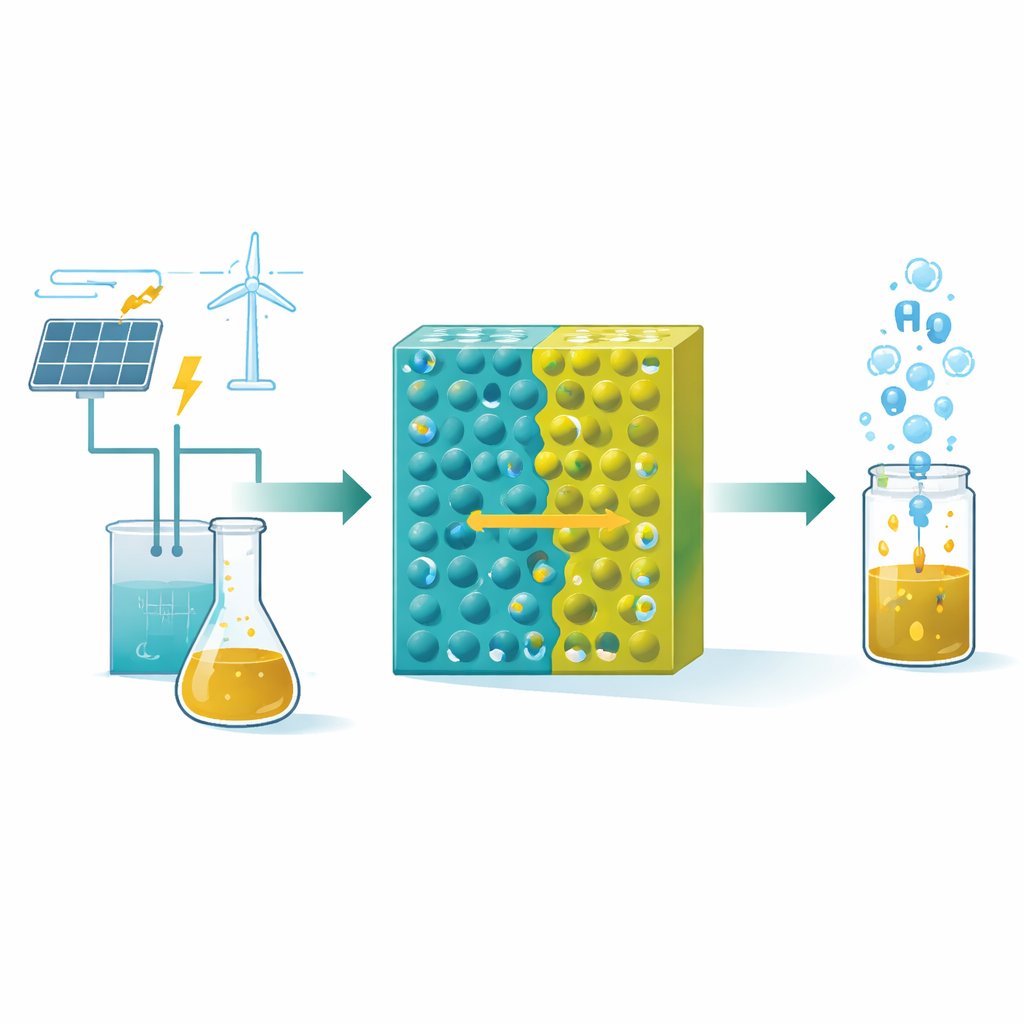
Every year, the biofuel industry produces mountains of surplus glycerol, a sticky, low-value liquid. At the same time, the world is searching for cheaper and cleaner ways to make hydrogen, a promising green fuel. This study shows how a smart new catalyst can use that unwanted glycerol to help generate hydrogen more efficiently, while converting the waste into useful chemicals—offering a two-for-one benefit for future energy systems.
Why Hydrogen Making Is Hard
Producing hydrogen from water in an electrolyzer seems simple—just split water into hydrogen and oxygen using electricity. In practice, the oxygen-forming side of the process is slow and power-hungry, and the best catalysts rely on scarce precious metals. In alkaline (basic) solutions, even the hydrogen-forming side struggles because breaking water molecules and binding hydrogen at the catalyst surface are kinetically sluggish. These hurdles drive up both the energy cost and equipment cost of green hydrogen, limiting its wider use in industry and transportation.
Swapping Oxygen for Glycerol
The researchers tackle the problem by replacing the difficult oxygen-forming reaction with the oxidation of glycerol, the cheap byproduct from biodiesel plants. Glycerol is easier to oxidize than water and contains several alcohol groups that can be upgraded into higher-value acids and small organic molecules. When this glycerol reaction is used on the “oxygen” side of an electrolyzer, the overall voltage drops markedly, cutting the electricity needed to make hydrogen. At the same time, instead of low-value oxygen gas, the cell produces profitable chemicals such as formate, improving both safety and economics.
Building a Two-in-One Cobalt Catalyst
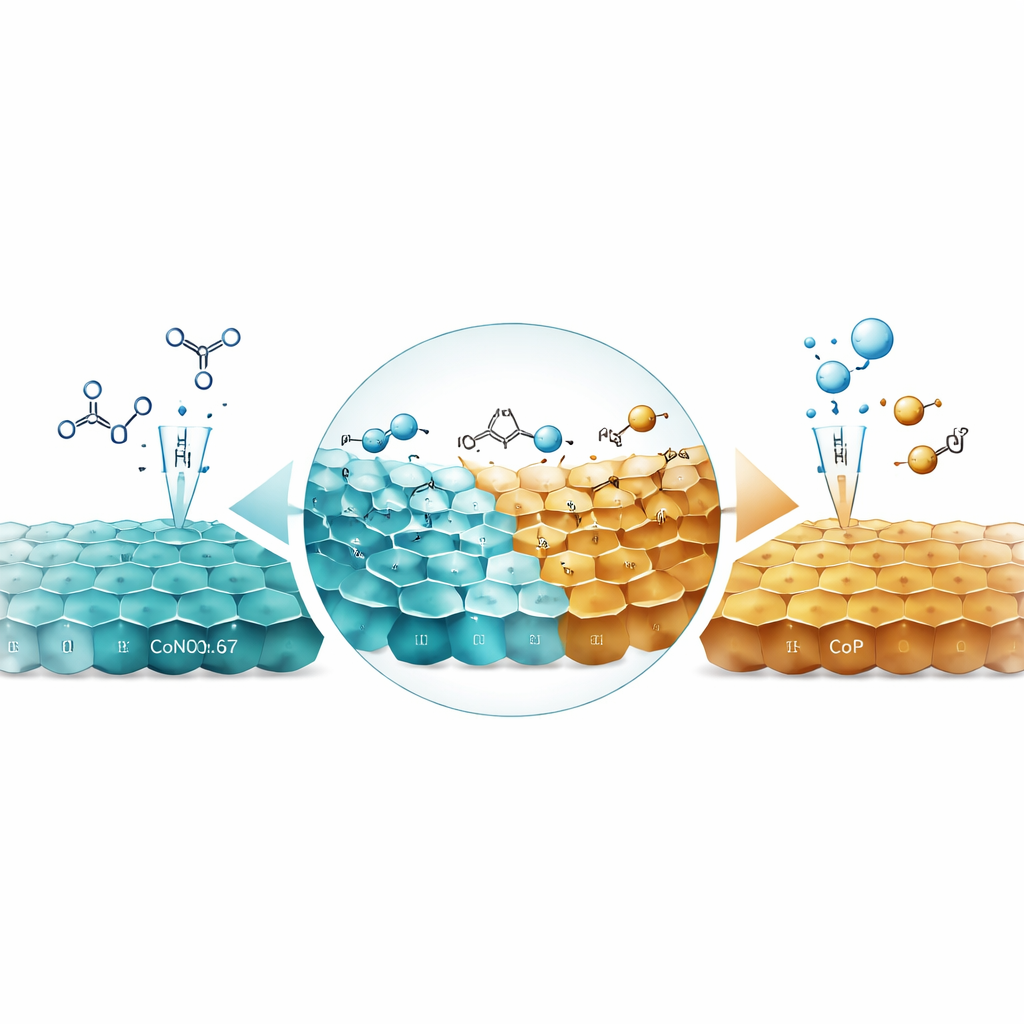
To make this swap work at industrially relevant current levels, the team designed a heterostructure catalyst built directly on porous cobalt foam. They first form a conductive cobalt nitride scaffold and then decorate it with many tiny cobalt phosphide particles. Because these two materials have different electronic properties, they spontaneously create a built-in electric field at their interface. Electrons naturally flow from the phosphide into the nitride, leaving one side relatively electron-rich and the other electron-poor. This internal charge separation turns the surface into a cooperative duo: the nitride regions are better at attracting and activating hydrogen species, while the phosphide regions accumulate oxygen-containing species needed to attack glycerol molecules.
How the Catalyst Works in Action
In tests, the combined cobalt nitride/cobalt phosphide surface outperformed either material alone for both hydrogen evolution and glycerol oxidation. It reached very high current densities with much lower voltages than typical systems and remained stable for hundreds of hours in a flow-cell device. Detailed spectroscopic measurements during operation revealed that at lower voltages, surface-bound hydroxyl groups directly oxidize glycerol in a “direct” pathway. At higher voltages, temporary high-valence cobalt oxyhydroxide species form and act as reactive centers in an “indirect” pathway. Throughout, the built-in electric field steers electrons and ions to the right spots, speeding up water splitting, hydrogen release, and selective breaking of carbon–carbon bonds in glycerol to produce mainly formate with high efficiency.
From Lab Concept to Energy Saver
The work demonstrates that carefully engineering internal electric fields inside a catalyst can unlock faster and more selective electrochemical reactions. By coupling hydrogen production with glycerol upgrading, the authors show a realistic route to lower-voltage, high-current hydrogen generation that simultaneously cleans up an industrial byproduct. For a layperson, the key takeaway is that smart catalyst design can turn waste into value and make clean hydrogen cheaper, bringing practical green energy technologies a step closer to everyday use.
Citation: Zhang, Y., Qi, Y., Zhou, H. et al. Built-in electric field engineering in Co2N0.67/CoP heterostructures for glycerol electrooxidation-assisted hydrogen production. Nat Commun 17, 4087 (2026). https://doi.org/10.1038/s41467-026-70731-6
Keywords: glycerol oxidation, hydrogen production, electrocatalyst, cobalt heterostructure, renewable energy