Clear Sky Science · en
Hepatocyte SLCO4C1 is a cAMP uptake transporter for inhibiting lipogenesis and a therapeutic target for MASLD
Why this liver story matters
Metabolic dysfunction-associated steatotic liver disease (MASLD), formerly called non-alcoholic fatty liver disease, is now one of the most common chronic liver problems worldwide. It can silently progress from simple fat buildup to inflammation, scarring and even liver cancer. Yet there are few treatments that act directly and precisely on the liver’s own control systems. This study uncovers a previously unrecognized liver “gatekeeper” protein that imports a small signaling molecule into liver cells to switch off fat production, and shows how boosting this gatekeeper or its signal could form the basis of new therapies.
A hidden gate in liver cells
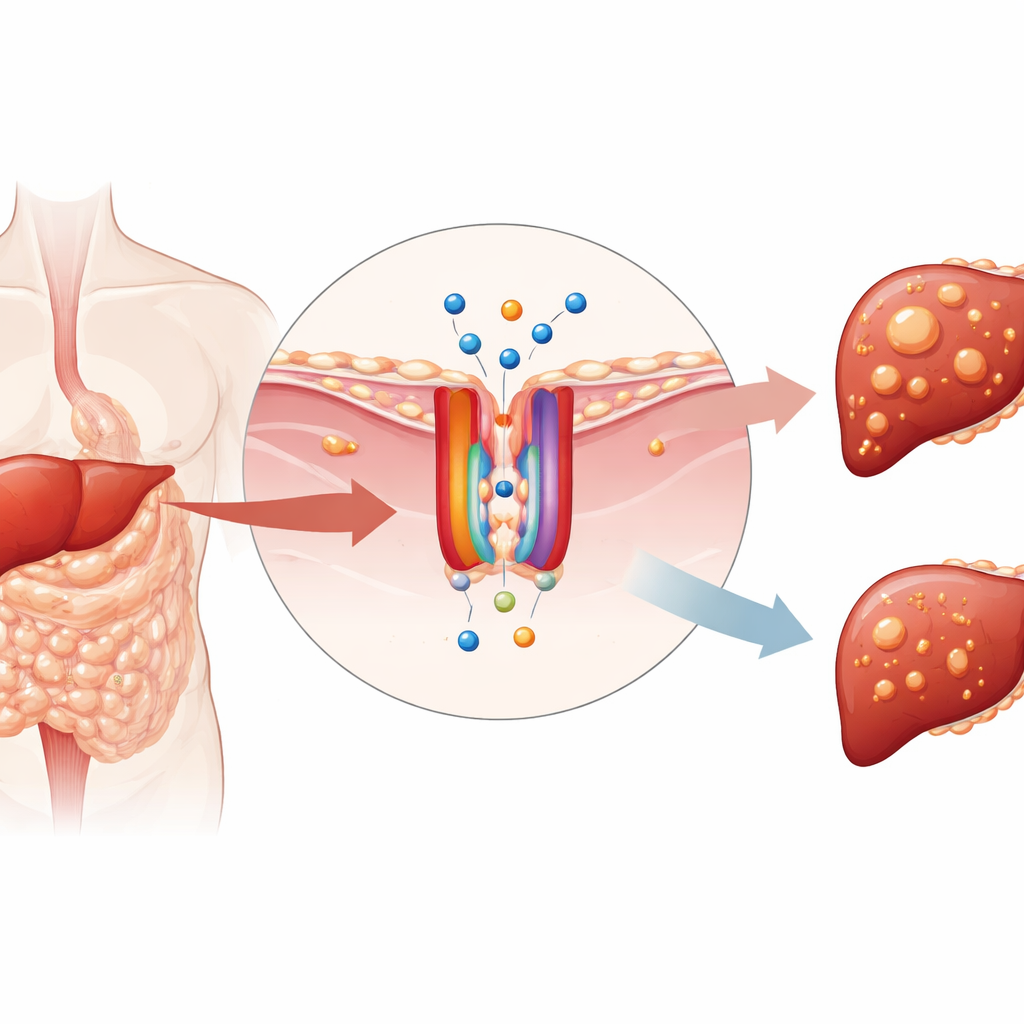
The researchers focused on a transporter protein called SLCO4C1, found in the membranes of liver cells (hepatocytes). Transporters act like gates, moving specific molecules in and out of cells. By analyzing human liver biopsies with single-cell RNA sequencing and imaging, and by studying two different mouse models of MASLD, the team found that SLCO4C1 levels are significantly higher in hepatocytes from people and mice with fatty liver disease than in healthy controls. This pattern suggested that SLCO4C1 might be part of the liver’s attempt to defend itself during metabolic stress.
Turning down liver fat from the inside
To test what SLCO4C1 actually does, the scientists removed the gene in mice and fed them a MASLD-inducing diet. Mice lacking SLCO4C1 gained more weight, developed larger and fattier livers, had higher blood markers of liver damage, and showed more inflammation, scarring and ballooned liver cells under the microscope. Detailed lipid analysis revealed that loss of SLCO4C1 boosted the levels of many fat types and increased the activity of key fat-making enzymes, including ACC1, FASN and SCD1. In liver cells grown in dishes, knocking out SLCO4C1 increased fat droplet buildup, while forcing cells to make more SLCO4C1 had the opposite effect, sharply reducing both fat content and those same fat-synthesis enzymes.
A molecular messenger crosses the gate
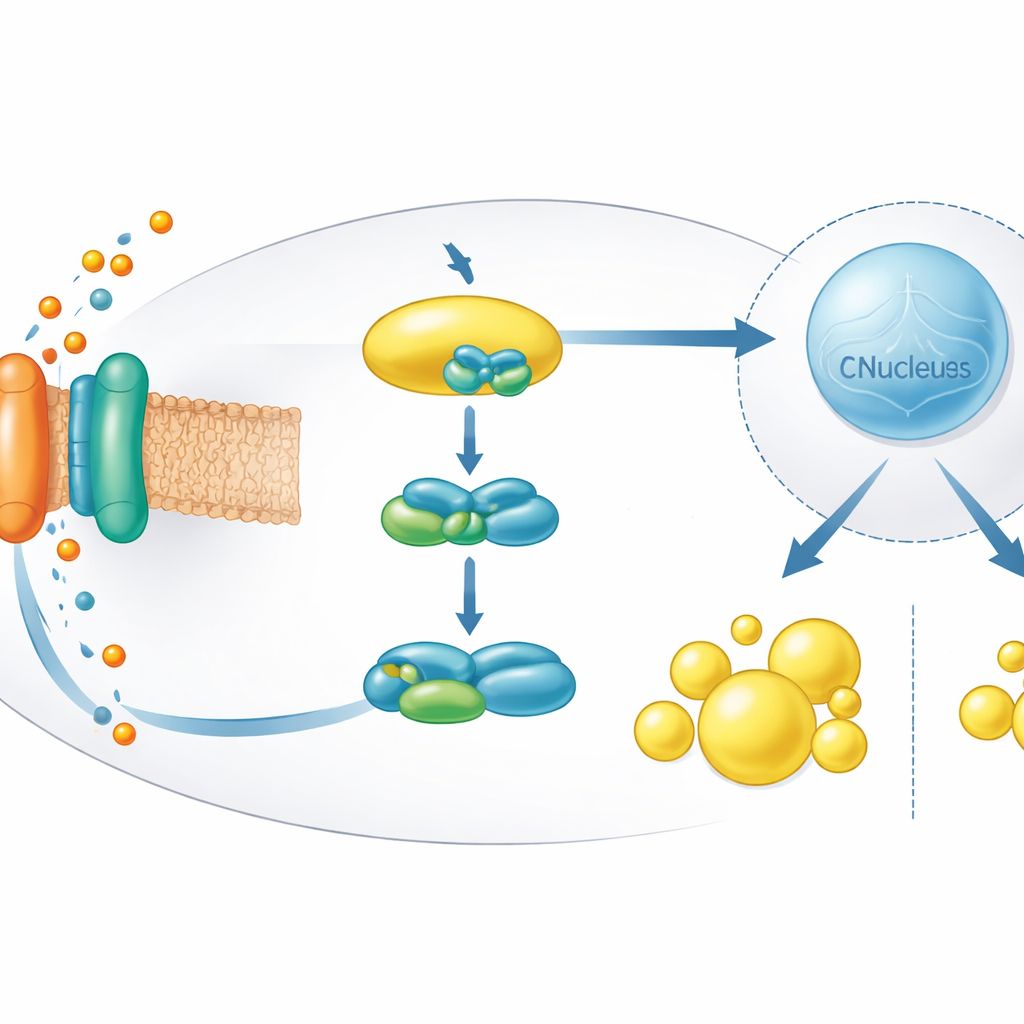
The team then asked what SLCO4C1 is transporting that could explain these effects. They homed in on cyclic AMP (cAMP), a classic “second messenger” molecule that relays signals inside cells and is known to influence metabolism. Using a custom-made fluorescent probe that glows when taken up through SLCO4C1, along with computer modeling, they showed that SLCO4C1 binds and imports cAMP via a specific amino acid within the protein. In mice lacking SLCO4C1, blood cAMP levels rose while liver cAMP fell, indicating that the transporter is needed to bring this messenger into hepatocytes. Low cAMP inside these cells blunted activation of the PKA–CREB signaling route, which normally suppresses SREBP1, a master switch for fat production. When SLCO4C1 was present and active, higher liver cAMP reawakened this pathway, reduced SREBP1 and its downstream enzymes, and limited new fat synthesis.
The body’s own hormone boost and drug mimics
Another question was why SLCO4C1 increases during MASLD. The authors found that a liver-produced hormone, fibroblast growth factor 21 (FGF21), is elevated in diseased livers and directly drives up SLCO4C1. In primary mouse hepatocytes, FGF21 activated the ERK/MAPK pathway, which raised levels of the transcription factor EGR1. EGR1 then bound to the SLCO4C1 gene’s promoter region and boosted its activity, creating a hormone-to-gatekeeper link that increases cAMP entry when the liver is under metabolic stress. The team also tested therapeutic strategies. Delivering extra SLCO4C1 specifically to hepatocytes using an engineered AAV8 virus protected mice on a fatty diet from liver fat, inflammation and fibrosis, while raising liver cAMP and reinforcing the protective signaling cascade. Separately, treating MASLD mice with forskolin, a drug that stimulates cAMP production, similarly lessened weight gain, liver injury and fat buildup, again in association with activated PKA–CREB signaling and reduced lipogenic enzymes.
What this means for future treatments
Together, these findings reveal a built-in defense circuit in the liver: metabolic stress raises FGF21, which turns on EGR1, which increases the SLCO4C1 gate, allowing more cAMP into hepatocytes. That messenger then activates an internal cascade that dials down fat production enzymes and slows the march from fatty liver to more dangerous stages. By pinpointing SLCO4C1 as a functional cAMP uptake transporter and demonstrating that enhancing this gate or raising cAMP can protect mouse livers, the study highlights a concrete, druggable target. In the long run, medicines that safely boost SLCO4C1 activity or mimic its cAMP-driven pathway could offer a more precise way to treat MASLD, moving beyond general weight loss strategies to directly reprogram how liver cells handle fat.
Citation: Huang, X., Liang, S., Zhao, N. et al. Hepatocyte SLCO4C1 is a cAMP uptake transporter for inhibiting lipogenesis and a therapeutic target for MASLD. Nat Commun 17, 3916 (2026). https://doi.org/10.1038/s41467-026-70729-0
Keywords: fatty liver disease, liver metabolism, cAMP signaling, FGF21 hormone, gene therapy