Clear Sky Science · en
Shared genetic and neuroimmune architecture links type 1 diabetes with neurocognitive traits
Why This Matters for People and Families
Type 1 diabetes is usually thought of as a disease of the pancreas and blood sugar, but many children and adults with this condition also struggle with learning, memory, and mental health. This study asks a big-picture question: are these brain and mood changes simply side effects of high blood sugar, or do diabetes and neurocognitive traits actually share common roots in our genes and immune system?
Looking Beyond Blood Sugar
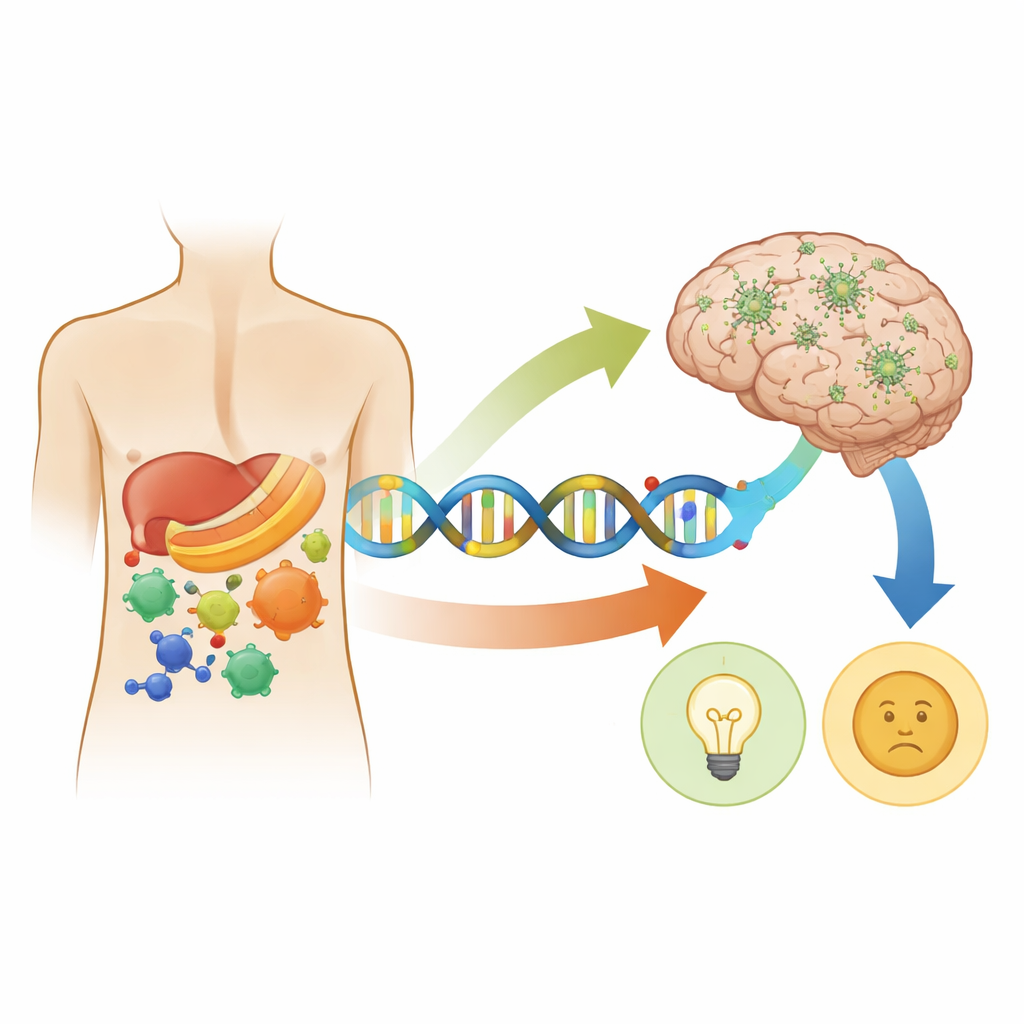
The researchers began by examining the full landscape of genetic changes that raise the risk for type 1 diabetes. Instead of focusing only on the pancreas and circulating immune cells, they overlaid these genetic signals onto detailed maps of the human brain, from before birth through adulthood. They discovered that many diabetes-linked variants sit in stretches of DNA that are especially active in brain-resident immune cells called microglia, and to a lesser degree in other brain cell types. This pattern appears across development, suggesting that the biological seeds of both autoimmunity and altered brain function may be planted early in life, long before diabetes is diagnosed.
Shared Roots with Thinking and Mood
Next, the team asked whether the genetic architecture of type 1 diabetes overlaps with that of traits such as intelligence, executive function (mental skills used for planning and self-control), educational attainment, and psychiatric and neurological diseases. Using large genetic datasets, they found that people who inherit more risk variants for type 1 diabetes tend, on average, to inherit fewer variants that favor higher intelligence and strong executive function. They also observed genetic links between diabetes and bipolar disorder, myasthenia gravis, multiple sclerosis, migraine, and Alzheimer’s disease, indicating that many of these conditions share pieces of the same inherited puzzle.
Untangling Cause and Effect
Because overlapping genes do not automatically mean one condition causes another, the researchers used a statistical approach called Mendelian randomization to test directional relationships. When they treated cognitive traits as “causes” and type 1 diabetes as the “outcome,” they found that a genetic tendency toward higher educational attainment and intelligence appeared to protect against developing diabetes. In contrast, a genetic predisposition to neuroimmune diseases such as multiple sclerosis and myasthenia gravis increased diabetes risk, and diabetes risk in turn increased the likelihood of myasthenia gravis. These findings suggest that some brain- and immune-related traits may sit on the same causal pathways as diabetes, rather than being mere companions.
Key Genetic Hotspots in Brain and Immune Cells
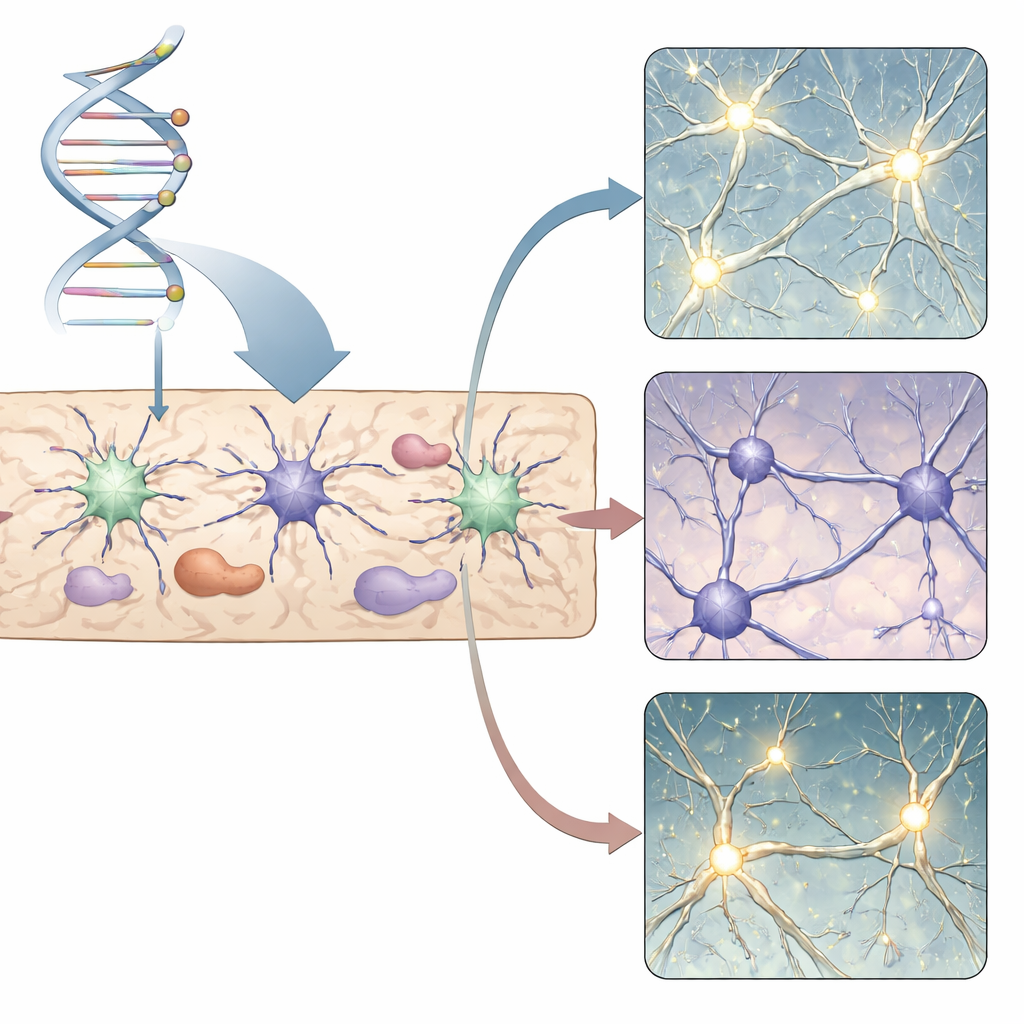
To move from broad patterns to specific mechanisms, the authors combined the diabetes and neurocognitive genetic data with information about how DNA variants alter gene activity in brain tissue and in immune cells. They pinpointed several genomic regions where the same regulatory changes influence both diabetes and neurocognitive traits. One standout area, known as 17q21.31, acts as a central hub: genes here are active in microglia, neurons, and peripheral immune cells and have been implicated in learning, mood, and neurodegenerative diseases. Other regions on chromosomes 1, 5, 6, 12, and 16 showed similar dual effects, with individual genes tipping risk up or down for both diabetes and cognitive or psychiatric outcomes depending on how strongly they are switched on.
What This Means for Patients and Future Care
Taken together, the study reframes type 1 diabetes as not only a disorder of blood sugar and peripheral immunity but also as part of a broader “neuroimmune” network that touches thinking, brain structure, and mental health. For patients and families, this means that cognitive and emotional changes seen in diabetes may reflect shared biological wiring rather than just complications of poor glucose control. In the long run, understanding these shared pathways could help identify children at greatest risk for both metabolic and neurocognitive problems and point to treatments that target brain–immune communication, aiming to protect both metabolic health and the mind.
Citation: Saarah, P., Syeda, Z.A., Xu, Z. et al. Shared genetic and neuroimmune architecture links type 1 diabetes with neurocognitive traits. Nat Commun 17, 4057 (2026). https://doi.org/10.1038/s41467-026-70694-8
Keywords: type 1 diabetes, neuroimmune, microglia, cognition, genetic risk