Clear Sky Science · en
Wireless, non-invasive, high-resolution thrill sensor for continuous vascular access monitoring of hemodialysis patients
Listening to the Lifeline in the Arm
For hundreds of thousands of people with kidney failure, staying alive depends on hemodialysis, which requires a surgically created blood vessel connection in the arm. That access is a fragile lifeline: if it clogs or fails, dialysis can suddenly become impossible. Doctors traditionally judge its health by feeling a faint vibration under the skin, called a “thrill.” This study turns that age‑old bedside trick into a precise, wearable sensor system that can continuously watch over a patient’s access at home.
A Hidden Vibration That Signals Trouble
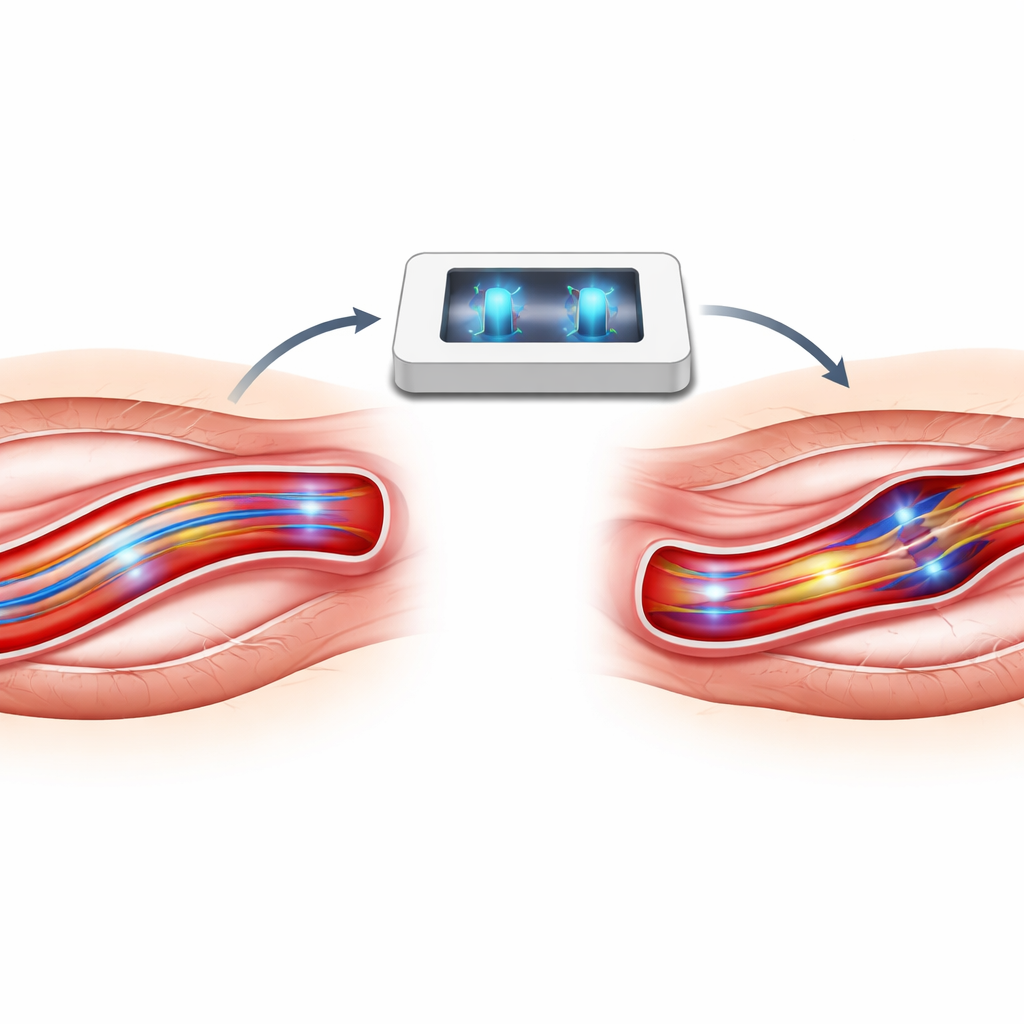
When an artery is connected to a vein to create a dialysis access, blood rushes through with unusual speed and turbulence. This motion shakes the vessel wall and nearby skin, producing a high‑frequency buzz distinct from a normal pulse. Clinicians gently place their fingers on the access to feel this thrill, judging whether it is strong, weak, or oddly pounding. But this method is subjective, depends on experience, and is done only occasionally in the clinic. Meanwhile, current imaging tools like ultrasound and angiography, though accurate, are bulky and used too rarely to catch early, mild narrowing before it becomes dangerous.
A Small Patch That Feels What Fingers Cannot
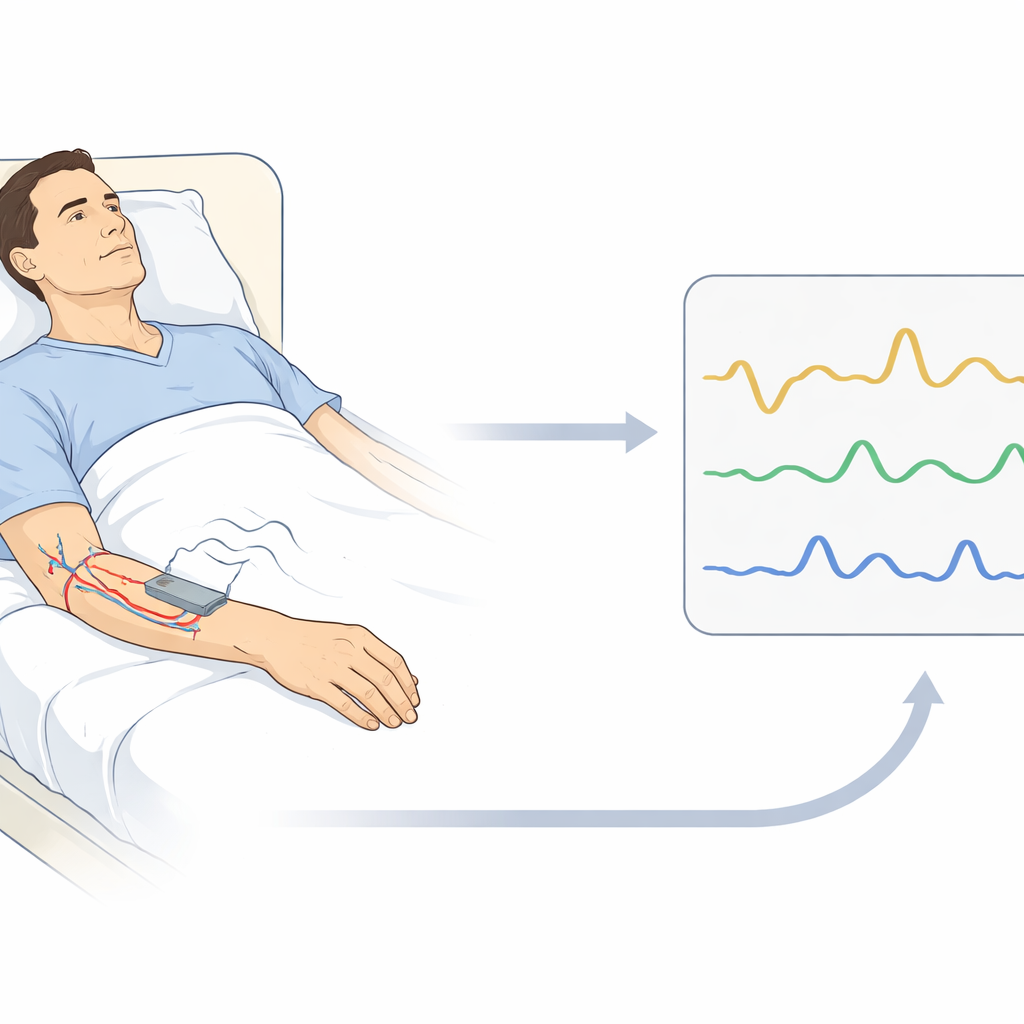
The researchers developed a thumb‑sized wireless patch that sticks to the skin above the access and captures these tiny vibrations with two ultra‑sensitive accelerometers. One sits directly over the access to pick up the thrill; the other senses broader arm motion such as raising or moving the limb. By subtracting the motion signal from the combined reading, the device isolates the true vascular vibration with far better clarity than earlier approaches. It streams data via Bluetooth and can map how the thrill changes over time and along the entire length of the graft, all without needles, wires, or gels.
From Lab Models to Dogs to Patients
To test whether these vibrations truly reflect vessel health, the team moved stepwise from a lab model to animals and then to patients. In a silicone “arm” with artificial vessels, they created controlled narrowings and showed that thrill intensity steadily fell as the blockage worsened, while severe vein‑side narrowing produced a telltale, strong pulse‑like beat. In dogs with surgically created grafts, they confirmed that a well‑functioning access showed a strong, high‑frequency thrill that weakened as blood flow was reduced, and regained strength after a repair procedure. By sliding the sensor to ten positions along each graft, they found a consistent pattern in healthy accesses: the thrill was strongest near the arterial connection, dipped in the middle bend, and rose again toward the venous end.
Spotting Weak Links and Hotspots in Human Arms
In nine hemodialysis patients, the same patterns emerged. In three with well‑functioning grafts, the thrill varied smoothly along the access and its overall strength rose with higher blood flow measured by ultrasound. In six patients with problems, the global vibration level was more than 20 percent lower than in healthy grafts, signaling reduced function. Crucially, each faulty graft also showed a local “hotspot” where the thrill was abnormally strong, coinciding with a narrowed segment, a sharp bend, a bulging section, or a stent. These focal spikes in vibration intensity pinpointed the lesion’s location without imaging, suggesting a way to guide targeted further tests or treatment.
Turning a Bedside Touch into a Daily Guardian
By transforming a subjective fingertip impression into a quantitative, continuous measurement, this wireless thrill sensor offers a new kind of early‑warning system for dialysis patients. A gradual drop in vibration along the whole graft warns that overall flow is falling, while a sudden bright spot in one segment signals a developing blockage. Used at home or before each dialysis session, such monitoring could prompt earlier, simpler interventions, reduce emergency failures, and make a vulnerable lifeline more reliable over the long term.
Citation: Wang, Y., Wang, J., Tian, Y. et al. Wireless, non-invasive, high-resolution thrill sensor for continuous vascular access monitoring of hemodialysis patients. Nat Commun 17, 4004 (2026). https://doi.org/10.1038/s41467-026-70687-7
Keywords: hemodialysis access, wearable sensor, vascular stenosis, arteriovenous graft, vibration monitoring