Clear Sky Science · en
BMP–Smad1/9 signaling plays a critical role in regulating zebrafish PGC proliferation
How tiny fish help us understand fertility
Every animal must make germ cells, the special cells that become eggs or sperm. This study uses zebrafish, a small freshwater fish often used in biology labs, to explore how a common cell signal keeps these germ cells alive and multiplying. By learning how this signal works in fish, scientists gain clues about fertility, birth defects, and how cells protect their DNA across many vertebrate species, including humans.
A cell signal with two different jobs
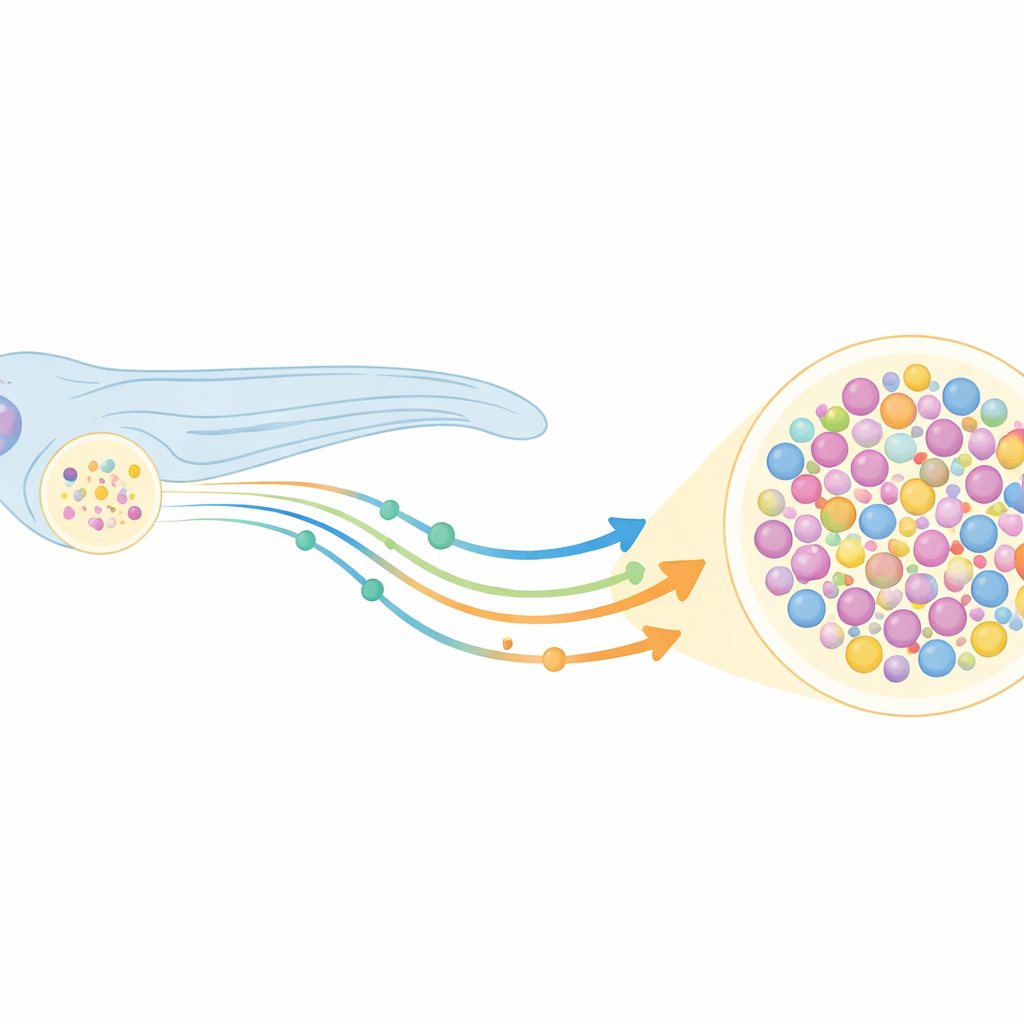
In mammals such as mice, a group of molecules called bone morphogenetic proteins, or BMPs, help decide which early cells in the embryo will turn into germ cells. In zebrafish, however, this first decision is made by material that the mother loads into the egg before fertilization. The open question was whether BMP signals mattered at all for germ cell development in these fish. The authors focused on BMP’s main messengers inside the cell, proteins named Smad1 and Smad9, and tracked a specific form of these messengers that lights up when the pathway is active. They found that this signal is clearly turned on in zebrafish primordial germ cells during early development, especially on one side of the embryo where BMP levels are higher.
Switching off the signal cuts germ cell numbers
To test how important this signal is, the team used both drugs and genetic tricks to dim BMP activity. Treating embryos with a BMP-blocking compound, or using antisense molecules to lower Smad1 and Smad9, led to a clear drop in the number of germ cells without drastically disturbing overall body shape. The researchers then created fish in which only germ cells lost Smad1 or Smad9, using a transgenic system that turns on the gene-cutting tool Cas9 specifically in these cells. In these animals, germ cells still formed in the right place and migrated normally, but fewer of them were present from mid-embryo stages onward. As adults, these fish showed a strong bias toward becoming males, a known outcome when zebrafish start life with too few germ cells.
Slowed growth and increased cell death
Why were the germ cells disappearing? Live imaging showed that germ cells lacking Smad1 divided much less often during early stages. A chemical test that marks cells copying their DNA confirmed this slowdown in growth. At later stages, many germ cells in the mutants broke up into fragments, and staining for activated Caspase-3, a standard marker of cell suicide, showed that cell death had increased. Despite these changes, the key genes that define germ cell identity stayed at normal levels, and the cells still reached the future gonad. This means BMP–Smad1/9 signaling is not deciding what the cells are, but rather whether they can safely expand their numbers.
DNA damage and an emergency brake pathway
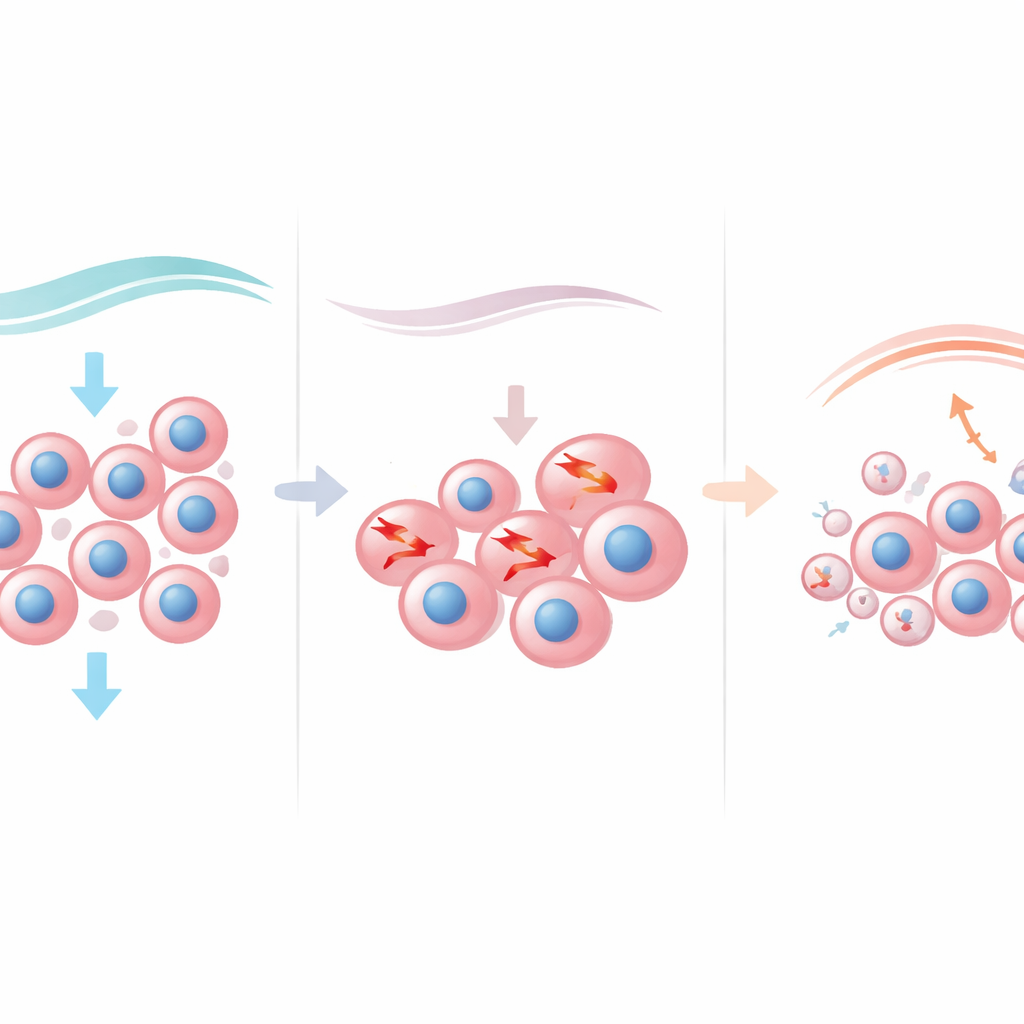
To understand the deeper cause, the authors compared gene activity in sorted germ cells from normal and Smad1-deficient embryos. Many of the genes switched on in the mutants were linked to DNA damage response, cell cycle checkpoints, and chromosome handling. The team then stained for molecular flags of broken or stressed DNA and found higher levels in the mutant germ cells. A key damage-sensing pathway, controlled by the ATR and Chk1 proteins, was also abnormally active. When embryos were treated with a small-molecule inhibitor of ATR, germ cell numbers in Smad1-deficient fish partially bounced back, while normal embryos were largely unchanged. Additional analyses showed that loss of Smad1 altered how many genes involved in DNA repair and chromosome control are spliced, hinting that the pathway also fine-tunes RNA processing to safeguard the genome.
What this means for germ cells and beyond
This work shows that in zebrafish, BMP–Smad1/9 signaling is not needed to create germ cells in the first place, but is crucial to help them multiply and survive by keeping DNA damage in check. When this support is removed, germ cells suffer replication stress, trigger an emergency ATR response, slow their division, and often die, leaving too few cells to support normal gonad development. Because BMP and Smad proteins are deeply conserved in vertebrates, these findings highlight a shared but flexible toolkit for managing germ cell health and genome stability across species, with possible relevance for understanding certain infertility and developmental disorders.
Citation: Zheng, T., Li, Y., Li, G. et al. BMP–Smad1/9 signaling plays a critical role in regulating zebrafish PGC proliferation. Nat Commun 17, 4034 (2026). https://doi.org/10.1038/s41467-026-70624-8
Keywords: zebrafish germ cells, BMP signaling, Smad1 Smad9, DNA damage response, fertility research