Clear Sky Science · en
Persistence and turnover of soil organic carbon in global drylands
Why Dry Soils Matter for the Climate
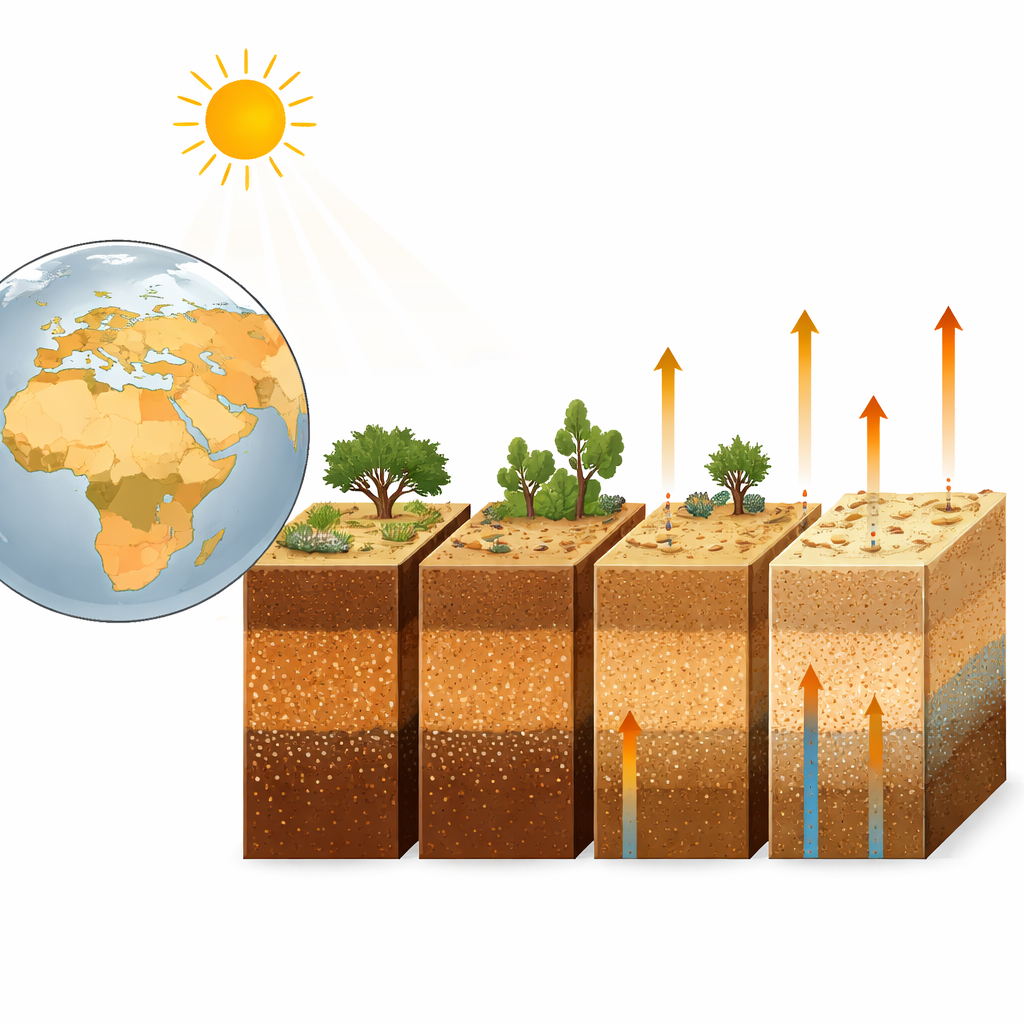
Drylands – the world’s deserts, shrublands, and savannas – cover over 40% of Earth’s land and store vast amounts of carbon in their soils. This hidden underground reservoir helps regulate how much carbon dioxide accumulates in the atmosphere. Yet scientists have long struggled to pin down how long this soil carbon stays put and how quickly it returns to the air, especially in regions where water is scarce. This study uses radiocarbon "dating" across nearly one hundred dryland sites worldwide to reveal that much of this underground carbon is far older, and more vulnerable, than models have assumed.
Hidden Carbon Banks Beneath Drylands
The researchers sampled topsoils from 97 dryland ecosystems spanning six continents, from grasslands and shrublands to deserts and alpine meadows. They focused on soil organic carbon – the carbon bound up in decayed plants and microbes – and on the carbon dioxide released when these soils were rewetted and allowed to respire in the lab. By measuring radiocarbon, a naturally occurring isotope that decays over thousands of years, they could estimate how long carbon atoms had been in the soil and how old the carbon being breathed out as CO2 really is. This method captures both ancient carbon fixed by plants millennia ago and "bomb" carbon, enriched in radiocarbon by nuclear weapons testing in the 1960s.
Ancient Carbon, Young Breaths
The measurements revealed a striking contrast between what is stored in the soil and what comes out as gas. On average, bulk soil organic carbon in these drylands had a mean age of about 2,100 years, indicating that very little of it comes from plant material fixed in the last 60 years. In other words, the top few centimeters of dryland soils are dominated by truly ancient carbon. Yet the CO2 released during incubations was much younger – with a mean age of roughly 520 years – and carried a mixed signal from both recent plant inputs and old soil carbon. This shows that microbes are not just feeding on fresh litter; they are also tapping into long-stored carbon that was once thought to be securely locked away.
Drying Climates Tip the Balance
To understand what controls these ages, the team related radiocarbon signals to climate, vegetation, and soil properties. Aridity – a measure combining low rainfall and high evaporation – emerged as the dominant factor shaping how old soil carbon is in drylands, more important than temperature. As conditions became drier, plant productivity and soil carbon stocks declined, and the average age of stored soil carbon increased. The study uncovered a sharp threshold at an aridity level of about 0.87, beyond which soil carbon suddenly shifted to much older ages and millennia-old carbon was lost more abruptly. At the same time, the age gap between stored carbon and respired CO2 widened, highlighting a growing decoupling between what is held in the soil and what is actively cycling through microbes.
Old Carbon Is Not Fully Safe
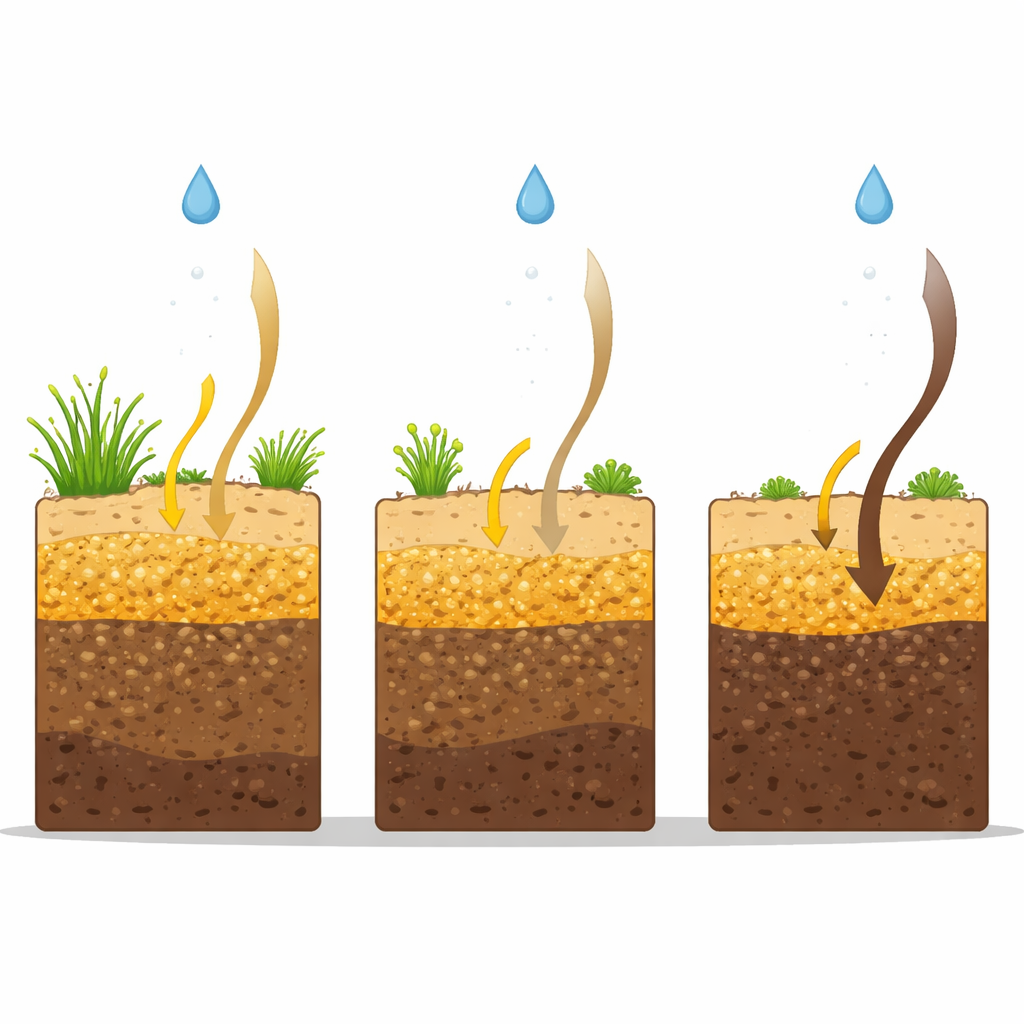
The radiocarbon patterns challenge a long-standing assumption that very old soil carbon is protected by being chemically bound to minerals or physically locked in aggregates. In these drylands, even carbon thousands of years old can be decomposed after rewetting, contributing to the large CO2 bursts often seen following rainfall events. The authors show that a noticeable fraction of the CO2 released in drylands originates from these older pools, not just from the most recent plant material. This behavior is poorly captured in current Earth system and machine-learning models, which typically predict soil carbon to turn over in only decades and focus mainly on fresh inputs from vegetation.
What This Means for Our Future
As climate change intensifies aridity in many regions, this work suggests that dryland soils may become older, leaner carbon banks that are less able to store new carbon and less able to keep their ancient carbon safely underground. Land management strategies that aim to boost carbon storage in drylands – such as planting more vegetation – may initially increase stocks but also speed up cycling, limiting long-term gains. Because much of the carbon released after rainfall can come from centuries- to millennia-old stores, the study warns that drylands may play a larger role in amplifying climate change than most models currently allow. Recognizing and representing the vulnerability of these old carbon reserves will be essential for making reliable projections of future carbon–climate feedbacks.
Citation: Wang, H., Maestre, F.T., Lu, N. et al. Persistence and turnover of soil organic carbon in global drylands. Nat Commun 17, 3565 (2026). https://doi.org/10.1038/s41467-026-70623-9
Keywords: soil carbon, drylands, radiocarbon, aridity, carbon cycle