Clear Sky Science · en
Microbial growth rates captured using Raman-SIP reveal a highly active subsurface biosphere fueled by serpentinization
Life Hidden Deep in the Rocks
Far beneath our feet, in dark fractures of ancient ocean crust now uplifted on land, microbes are quietly at work. These tiny organisms live in groundwater that seeps through iron-rich rocks and reacts to produce hydrogen and other energy‑rich molecules. Until now, scientists assumed life in these harsh, alkaline waters crept along at a geologic crawl. This study shows instead that many of these subsurface microbes can grow on timescales of days to months, reshaping how we think about Earth’s hidden biosphere and its role in future hydrogen energy and carbon storage projects.
Strange Waters in a Stone World
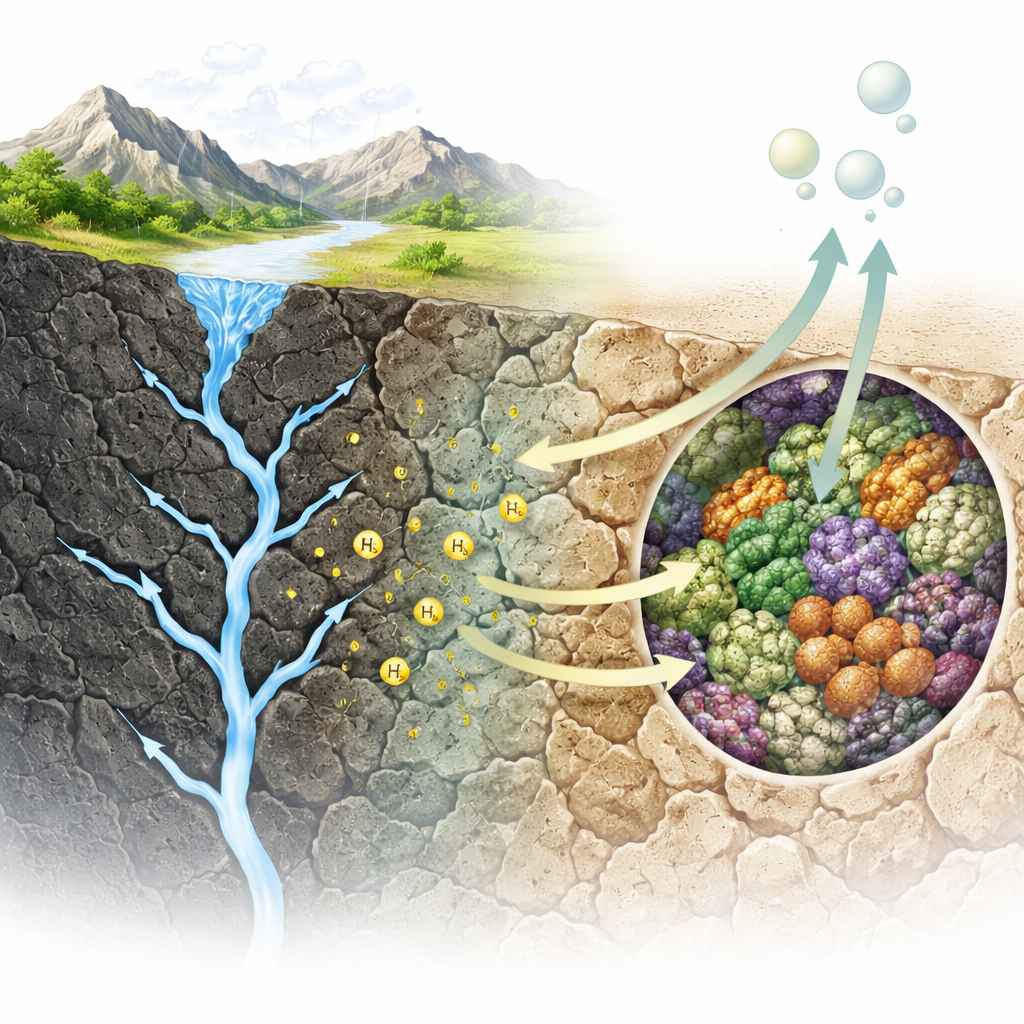
In Oman’s Samail Ophiolite, pieces of former seafloor mantle now lie exposed on land. Rain and groundwater trickle into cracks and react with the ultramafic rocks in a process called serpentinization. As the water moves deeper, it becomes more alkaline, richer in hydrogen and methane, and poorer in dissolved carbon and other nutrients. The researchers sampled three types of groundwater from 250–270 meters below the surface: a mildly alkaline fluid with plenty of dissolved carbon and oxidants; an intermediate fluid with moderate alkalinity and abundant sulfate; and a hyperalkaline fluid extremely rich in hydrogen and methane but starved of dissolved carbon. These natural gradients create a set of contrasting “worlds” for subsurface microbes to inhabit.
Weighing Microbial Growth One Cell at a Time
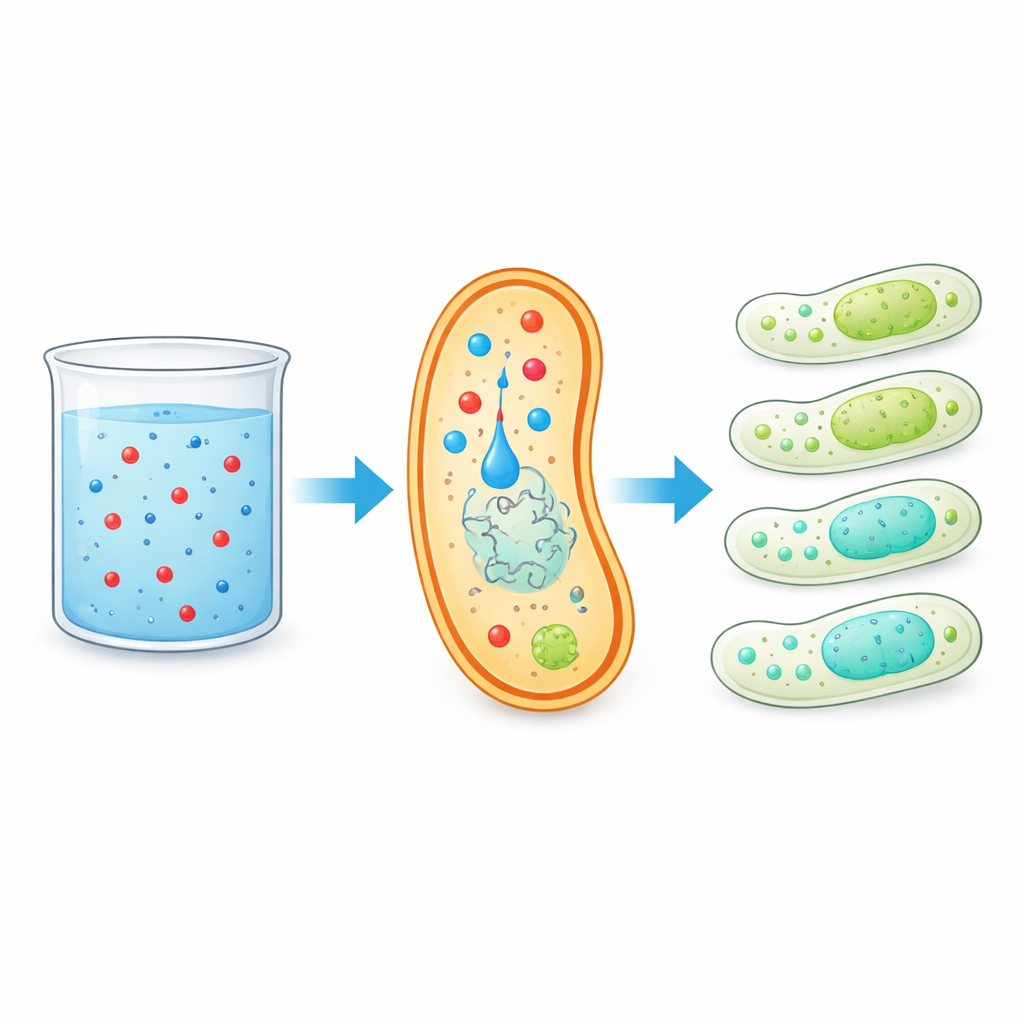
Measuring how fast microbes grow underground is notoriously difficult. Instead of tracking a specific food source, the team used “heavy water” containing deuterium, a heavier form of hydrogen. Because all growing cells need water to build new biomass, any microbe that is actively synthesizing cellular material will quietly swap some of its normal hydrogen for deuterium. Using Raman microspectroscopy—a laser-based technique that reads out the chemical vibrations inside individual cells—the scientists could detect how much deuterium each single cell had incorporated. From this, they inferred growth rates and generation times for more than two thousand individual microbes, without needing to know their identity or diet in advance.
Fast Growers in an Unexpected Place
The single-cell measurements revealed a surprisingly busy subsurface biosphere. In the mildly and moderately alkaline waters, most cells were active, and a large fraction were fast growers with generation times on the order of days to weeks. Even without adding extra food, many cells doubled in under two weeks. In stark contrast, the hyperalkaline fluid—where pH is close to that of household drain cleaner and dissolved inorganic carbon is extremely scarce—harbored slower populations, with typical generation times stretched to months or even years. Still, even in these extreme waters, a meaningful minority of cells were clearly active and capable of growth.
Microbes That Turn Rock Chemistry into Methane
DNA sequencing showed that methane‑producing archaea (methanogens) and sulfate‑reducing microbes dominated the communities after incubation. Tracking methane and sulfide production over time confirmed that these groups were not just present but metabolically vigorous. Methane accumulated fastest in the less alkaline fluids and slowed markedly as pH rose, pointing to limitations imposed by the scarcity of dissolved carbon dioxide. When the researchers added bicarbonate—a form of inorganic carbon—many communities responded with some of their fastest growth and methane production rates. This response indicates that in these rock‑hosted ecosystems, microbes are finely tuned to use dissolved inorganic carbon, even in highly alkaline groundwaters where most carbon is locked in less accessible forms.
Implications for Clean Energy and Other Worlds
By combining single-cell growth measurements with estimates of cell numbers and methane output, the authors calculated how much hydrogen subsurface microbes could consume at the scale of an entire rock reservoir. Their results suggest that microbial communities in serpentinizing rocks can potentially use up hydrogen faster than it escapes to the surface, and can convert a significant portion of hydrogen and injected carbon dioxide into methane and sulfide. For plans to harvest “geologic hydrogen” or to store carbon dioxide in such rocks, this means that native microbes could strongly reshape the chemistry, with both risks and opportunities. More broadly, the finding that life in these deep, alkaline rocks can be both active and adaptable strengthens the case that similar rock‑water systems on worlds like Mars or icy moons could host detectable biospheres of their own.
Citation: Kashyap, S., Caro, T.A. & Templeton, A.S. Microbial growth rates captured using Raman-SIP reveal a highly active subsurface biosphere fueled by serpentinization. Nat Commun 17, 4128 (2026). https://doi.org/10.1038/s41467-026-70622-w
Keywords: subsurface microbiology, serpentinization, geologic hydrogen, methanogenesis, biosphere habitability