Clear Sky Science · en
Meta-analysis shows that plant mixtures reduce pathogens and invertebrate herbivores and increase plant productivity
Why mixing plants matters for our food and forests
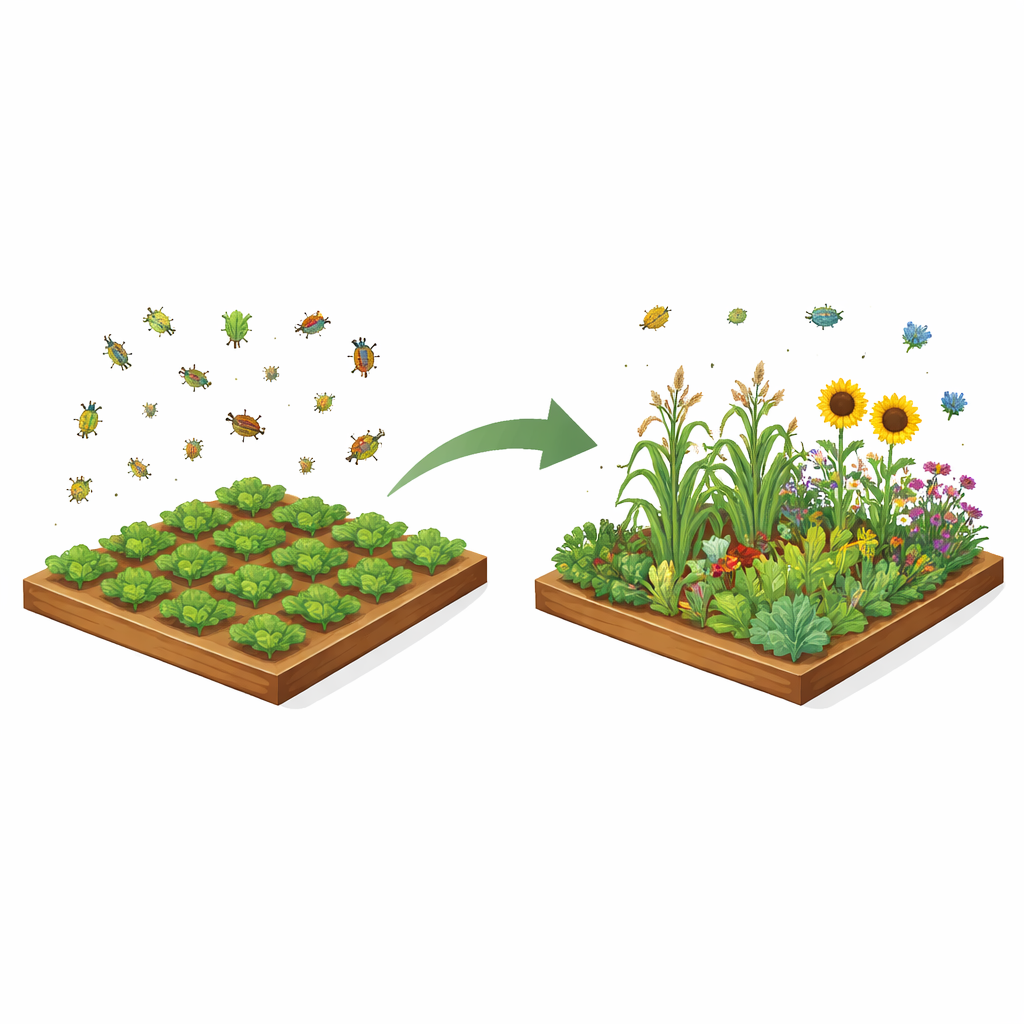
Across farms, forests, and grasslands, people often plant large areas with just one kind of crop or tree. It looks tidy and simple to manage, but such monocultures can become easy targets for insects and diseases. This study brings together results from hundreds of experiments worldwide and shows that planting mixtures of different plant species can both curb pests and diseases and make plants grow more. In other words, diversity on the ground can mean healthier plants and higher yields.
Bringing together evidence from around the world
The researchers performed a meta-analysis, which means they pooled data from many separate studies to look for broad patterns. They compiled 2315 observations from 316 experiments carried out in croplands, forests, grasslands, and pot studies across the globe. Each experiment compared plant mixtures to their component monocultures, asking: Do more diverse plantings change how many pathogens and invertebrate herbivores show up, how much damage they cause, and how much plant biomass or yield is produced?
Plant mixtures mean fewer enemies and more growth
When all the data were combined, plant mixtures clearly outperformed monocultures. On average, mixtures reduced the abundance of plant pathogens by about 30% and the damage they inflicted by a similar amount. Invertebrate herbivores such as insects, nematodes, and mites also became less abundant and less damaging, dropping by roughly 20–25% in mixtures. At the same time, plant productivity in mixtures was about one-third to two-fifths higher than in monocultures. This pattern held across different ecosystems and for both aboveground and belowground enemies, showing that mixed plantings are generally better at resisting biological threats while growing more biomass.
How diversity changes pests and diseases
The study dug deeper into what “diversity” really means by looking at three aspects: how many species are present (taxonomic diversity), how different their traits are (functional diversity), and how distantly related they are on the tree of life (phylogenetic diversity). All three tended to strengthen the ability of mixtures to suppress pathogens. Pathogens that specialize on particular hosts were especially sensitive: the more diverse the plant community, the harder it was for these specialists to find suitable hosts and spread. Invertebrate herbivores told a more complex story. While mixtures reduced their overall abundance and damage, the strength of this effect did not consistently increase with any single diversity measure, and generalist herbivores that feed on many species were far less affected than specialists.
Time, pest lifestyle, and hidden helpers
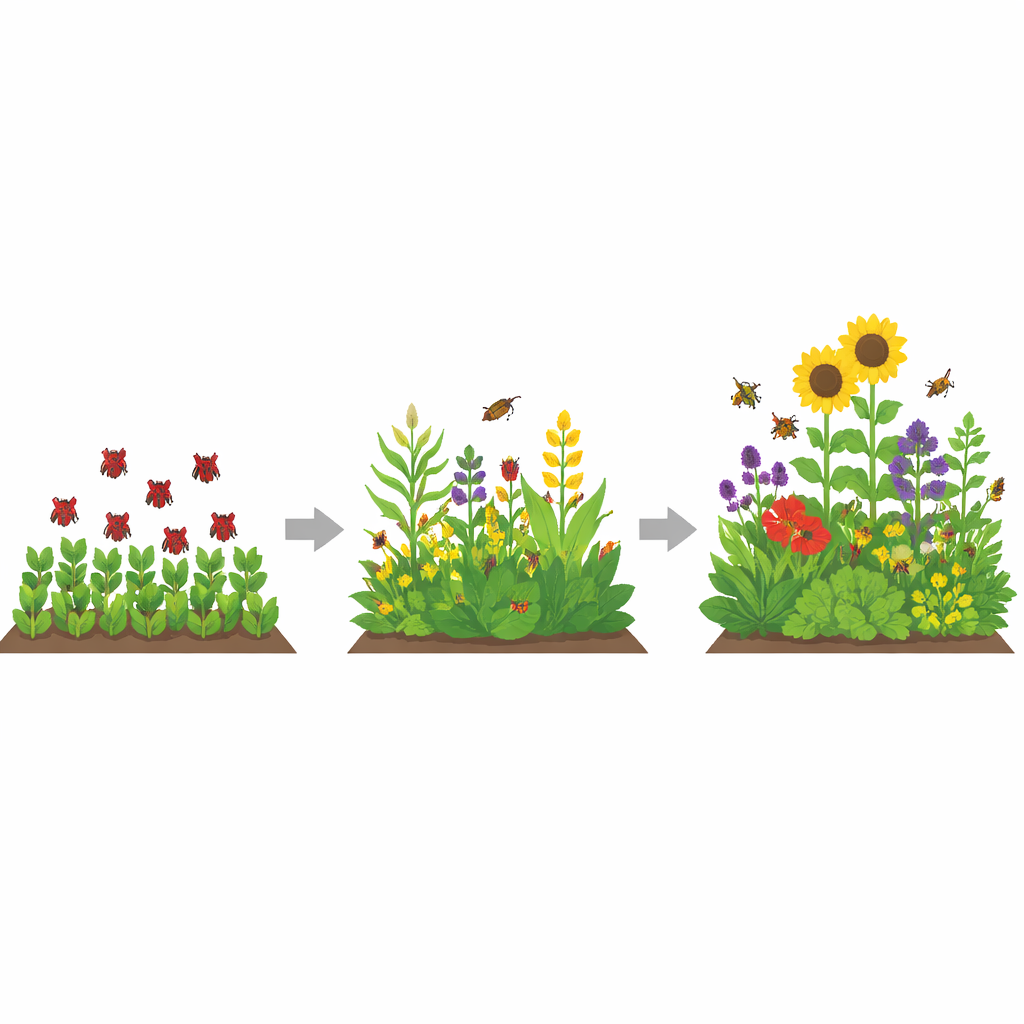
Plant communities also change as they age. The analysis showed that as stands grew older, the benefits of mixtures against pathogens became stronger, while the initial reductions in invertebrate herbivores gradually weakened and could even flip to slight increases. The authors suggest that, over time, diverse plantings may foster beneficial soil microbes and natural enemies that keep diseases in check, while herbivores adapt to the more complex plant neighborhood. Climate factors such as average temperature and rainfall, surprisingly, did not strongly alter the advantage of mixtures, and the negative effects on pathogens were seen in all major ecosystem types. Statistical models further indicated that plots where mixtures most strongly reduced pathogens and herbivores were also the plots where productivity increased the most, linking pest and disease suppression directly to higher growth.
What this means for farms, forests, and conservation
For non-specialists, the take-home message is simple: mixing different kinds of plants is a powerful, nature-based way to defend against pests and diseases while boosting plant growth. Rather than relying solely on chemicals or single high-yield varieties, designing fields, plantations, and restoration projects with a richer blend of species—and with a wide range of traits and evolutionary backgrounds—can make ecosystems more robust. Over time, such diversity can help maintain healthier soils, lower pest pressure, and support higher and more stable productivity, offering a practical path toward more sustainable agriculture and forest management.
Citation: Huang, C., Chen, H.Y.H., Wenda, C. et al. Meta-analysis shows that plant mixtures reduce pathogens and invertebrate herbivores and increase plant productivity. Nat Commun 17, 4045 (2026). https://doi.org/10.1038/s41467-026-70609-7
Keywords: plant diversity, crop mixtures, pests and diseases, ecosystem productivity, biodiversity management