Clear Sky Science · en
Synergistic surface modification of Cu with schiff-base networks for high selectivity and durability in CO2-to-C2H4 electroreduction
Turning Climate Gas into Useful Fuel
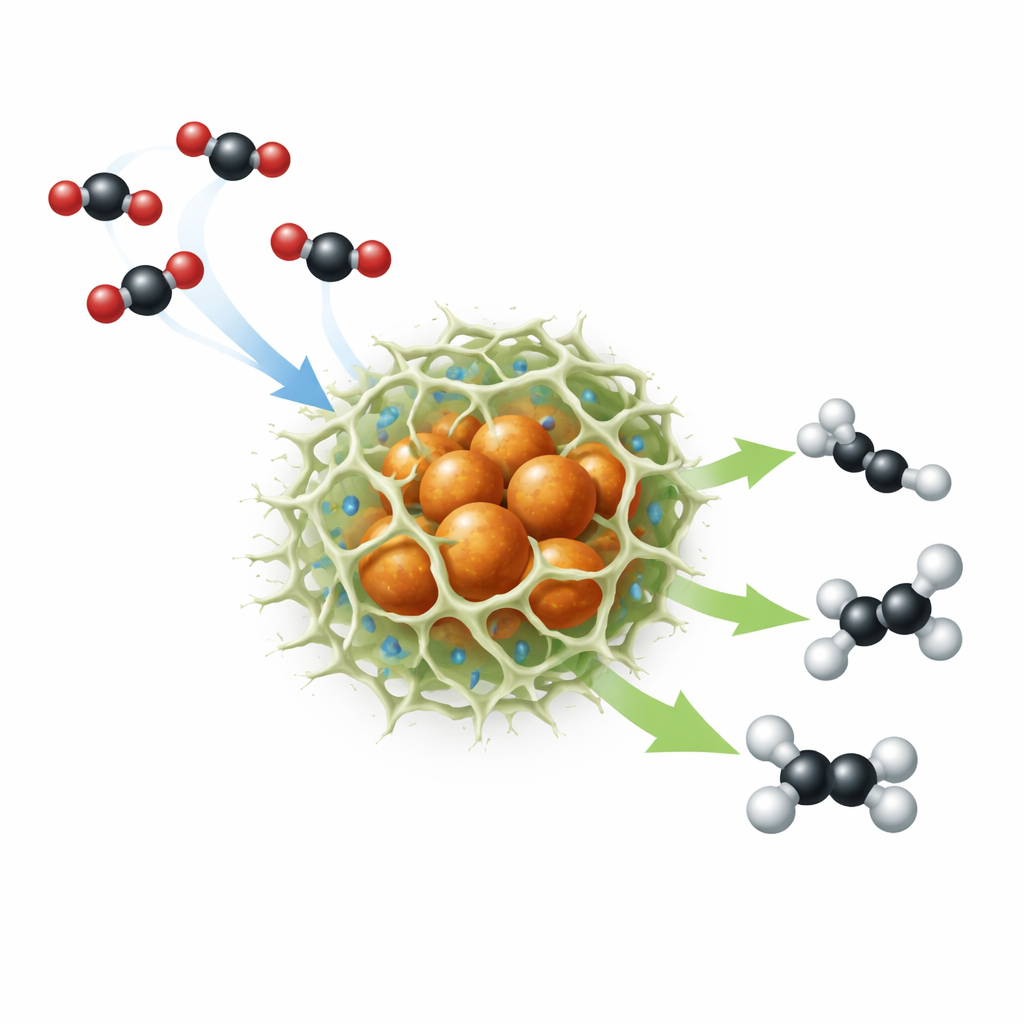
Carbon dioxide from factories and power plants is a major driver of climate change, but it is also a carbon-rich resource. This study explores how to turn CO2 into ethylene, a key building block for plastics and many everyday products, using electricity and specially designed copper-based catalysts. The goal is to make this process more efficient, more selective—so that mostly ethylene is made instead of waste products—and durable enough to run for long periods in real devices.
Why Ethylene from CO2 Matters
Today, ethylene is produced mainly from oil and gas in energy-hungry, carbon-intensive plants. If we could instead make ethylene directly from CO2 using renewable electricity, we could both recycle a greenhouse gas and reduce dependence on fossil fuels. Copper is one of the few materials that can drive this reaction toward multi‑carbon products like ethylene, but copper surfaces tend to produce a mix of products and often degrade under the harsh conditions required. Improving both selectivity and lifetime is essential before such technology can move from the lab to industry.
Designing a Smarter Copper Surface
The researchers created tiny copper particles in three shapes: cubes, spheres, and tetrahedra (pyramids with triangular faces). Each shape presents different atomic “faces” to the reacting molecules, which strongly influences what products are formed. They then wrapped these particles in a nitrogen-rich organic coating called a Schiff-base network. This network forms a porous shell around the copper, able to soak up CO2 and interact electronically with the metal underneath without blocking it completely. Tests showed that the cubic particles, which mostly expose a particular copper face called (200), gave the best starting point for making ethylene.
Boosting Performance and Keeping the Catalyst Intact
When the copper cubes were coated with the Schiff-base network, their performance improved dramatically. At industrially relevant current densities, the modified cubes converted CO2 to ethylene with a Faradaic efficiency of about 71%, placing them among the best copper-based systems reported. The organic network not only enriched CO2 near the active sites but also altered how electrons are distributed between copper and nitrogen atoms, which helped stabilize key reaction intermediates on the surface. At the same time, the coating made the catalyst slightly more water-repelling, reducing unwanted hydrogen formation and slowing down corrosion of the copper.
Seeing Atoms Move and Tracing Reaction Steps
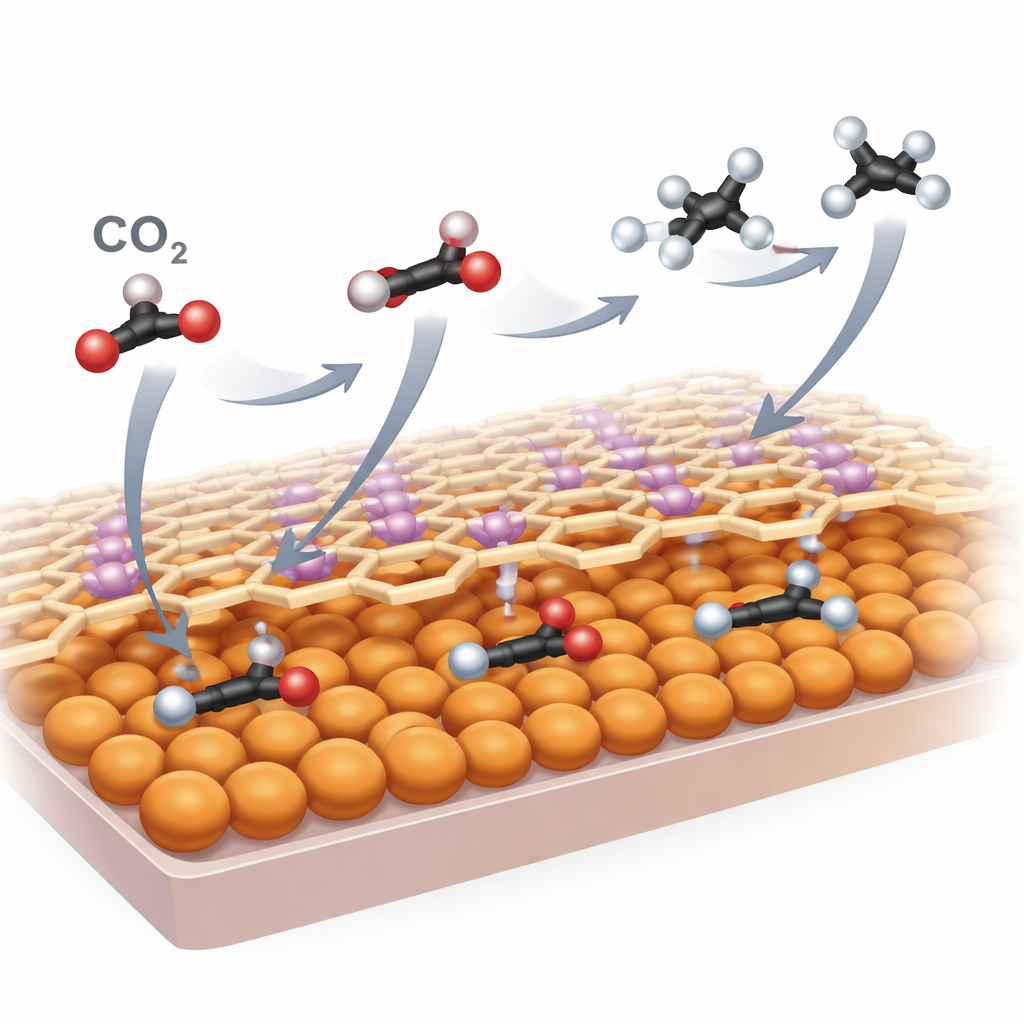
To understand why the coated catalysts lasted longer, the team used advanced electron microscopy while the reaction was running. Bare copper cubes quickly corroded and lost their well-defined shape, whereas the coated cubes showed only minor changes, keeping their beneficial crystal faces for much longer. Additional identical-location imaging before and after reaction confirmed that the Schiff-base network acts like a protective armor. In parallel, infrared spectroscopy tracked short-lived surface species and revealed that the coating promotes the build-up of carbon-containing intermediates that can pair up to form carbon–carbon bonds—a key step on the way to ethylene. Computer simulations supported these findings, showing that the organic shell tunes the reaction energy landscape so that forming and releasing ethylene is easier than making competing products such as methane, carbon monoxide, or hydrogen.
What This Means for Future Clean Chemistry
In simple terms, this work shows that carefully shaping copper nanoparticles and surrounding them with a smart, porous organic network can make the conversion of CO2 to ethylene both more efficient and more robust. The coated copper cubes guide the reaction toward ethylene while resisting structural damage over day-long operation. Although further engineering is needed before such catalysts reach commercial devices, the study provides a clear blueprint: combine control over metal shape with tailored molecular coatings to turn climate-warming CO2 into valuable chemicals using renewable electricity.
Citation: Xie, W., Tian, T., Yue, S. et al. Synergistic surface modification of Cu with schiff-base networks for high selectivity and durability in CO2-to-C2H4 electroreduction. Nat Commun 17, 3968 (2026). https://doi.org/10.1038/s41467-026-70595-w
Keywords: CO2 electroreduction, copper catalysts, ethylene production, Schiff-base network, carbon utilization