Clear Sky Science · en
Quantitative corrosion framework for anti-corrosive passivation design to extend calendar life in lithium metal batteries
Why Protecting Batteries Matters
Lithium metal batteries are often described as the next big leap for phones, electric cars, and grid storage because they can store far more energy than today’s lithium‑ion cells. But there is a catch: the highly reactive lithium metal inside them slowly corrodes even when the battery is just sitting on a shelf. That hidden damage shortens the calendar life of the battery, drives up cost, and can create safety concerns. This study tackles that problem head‑on by both explaining how this corrosion really works and by building a protective coating that keeps lithium metal stable for much longer.
What Goes Wrong Inside Lithium Metal Batteries
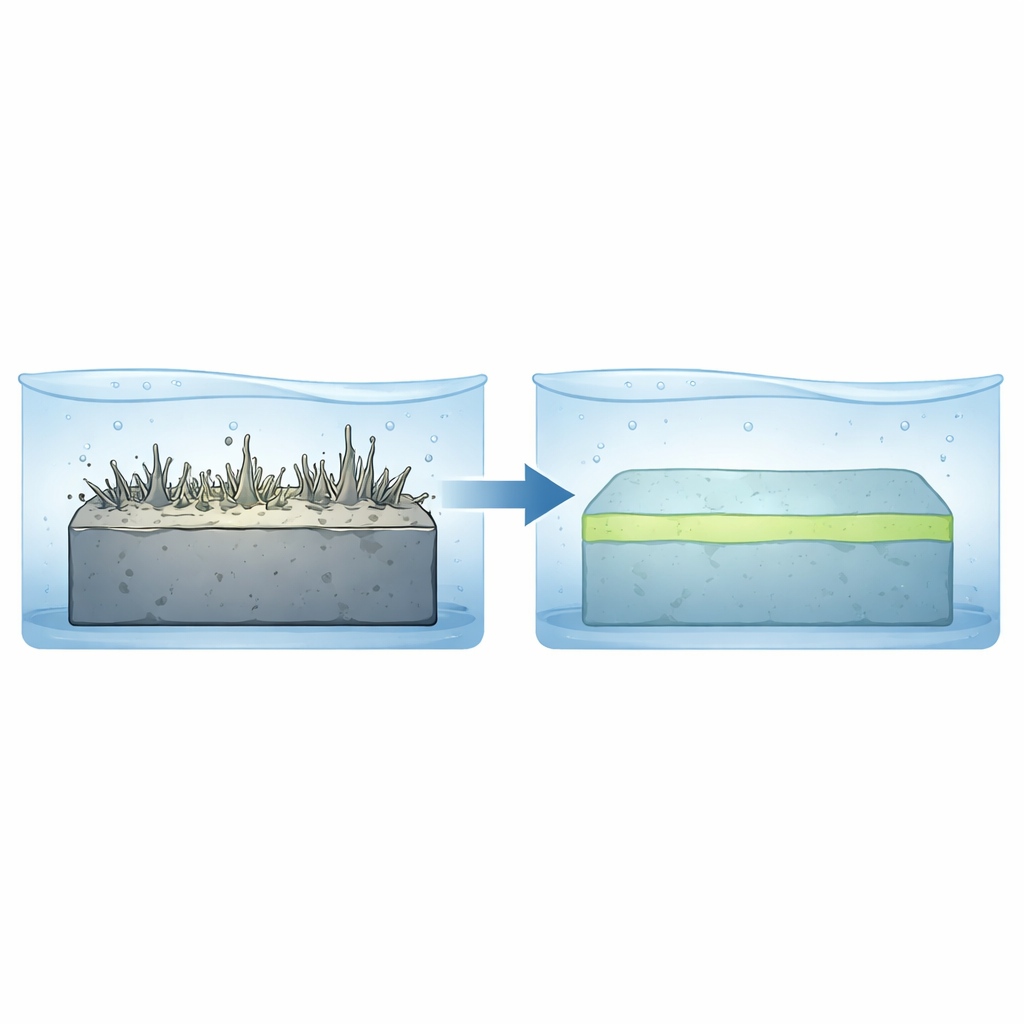
When lithium metal touches the liquid inside a battery, it instantly reacts and forms a thin, complex skin called the solid–electrolyte interphase, or SEI. In theory this skin should act like a raincoat, blocking further reactions while still letting lithium ions move through. In practice, the SEI on bare lithium is uneven, fragile, and partly soluble in the surrounding liquid. It swells, cracks, and partially dissolves, repeatedly exposing fresh metal. Each time that happens, more lithium and electrolyte are consumed, the resistance at the interface rises, and needle‑like “dendrites” grow that can eventually short‑circuit the cell. Previous work had mostly described this behavior in qualitative terms, leaving battery designers without a clear, quantitative way to link corrosion, surface damage, and loss of capacity.
A New Framework for Measuring Corrosion
The authors introduce a quantitative model they call the chemical corrosive dissipation model. Rather than treating corrosion as an abstract side effect, the model connects three measurable pieces: how fast the SEI thickens over time, how much the true surface area of the lithium expands as it roughens, and how much charge is irreversibly lost. By tracking the growth of interfacial resistance and the increase in surface area using techniques like impedance spectroscopy and gas‑adsorption analysis, they can predict how much capacity will be lost during storage. The model matches experimental data across several kinds of protective layers with very high accuracy, showing that corrosion‑driven SEI growth and surface roughening together control long‑term efficiency.
Designing a Two‑Layer Protective Skin
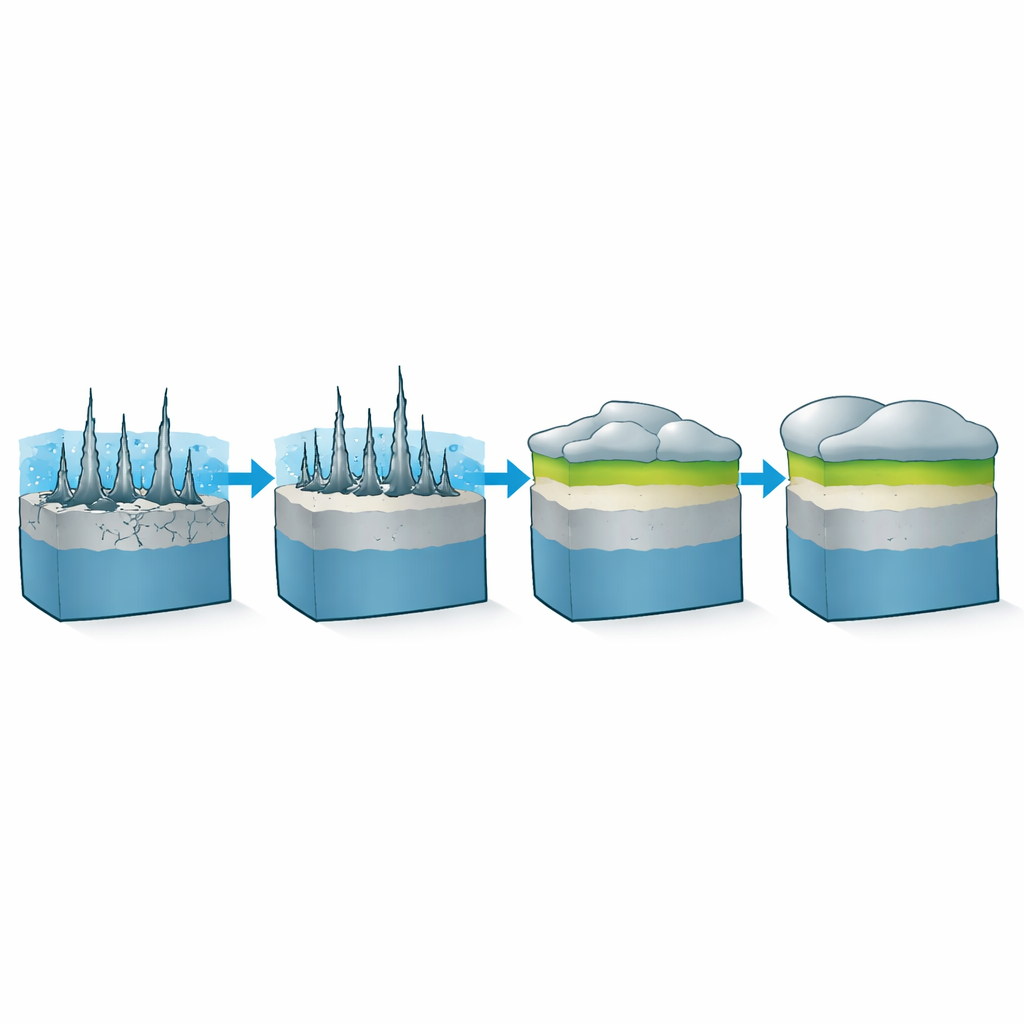
Guided by this framework, the team engineered a bi‑layer coating they call LPLA, built directly on top of lithium metal. The outer layer is a lithium polyacrylate polymer that is designed not to swell or dissolve in common battery liquids, forming a flexible yet tight seal that blocks electrons and keeps the electrolyte at bay. Beneath it sits an inorganic layer rich in lithium fluoride and a lithium–silver alloy. This inner layer offers fast pathways for lithium ions and makes the surface more welcoming for smooth lithium deposition. Advanced microscopes and surface probes show that this two‑layer structure is continuous, well adhered, and remains intact and thin even after many charge–discharge cycles.
How the Coating Changes Battery Behavior
Electrochemical tests in simple lithium‑versus‑lithium cells reveal how strongly the coating changes behavior. Protected electrodes need less extra voltage to start plating lithium, maintain low resistance over long cycling, and avoid the abrupt jumps in voltage that signal cracking and dendrite growth. The effective fraction of current carried by lithium ions remains high and stable, and the average efficiency of lithium transfer is markedly improved. When paired with practical, high‑capacity positive electrodes such as nickel‑rich NCM811 or lithium iron phosphate and cycled under demanding conditions, cells with the LPLA‑protected lithium retain most of their capacity over hundreds of cycles, even when each cycle is followed by hours of rest that strongly accelerate corrosion in unprotected cells.
Seeing Corrosion and Dendrites in Real Time
To watch what actually happens to lithium during storage and reuse, the researchers used operando X‑ray microscopy, imaging the metal inside a working cell. On bare lithium, resting in electrolyte carved out voids and pits; during later charging, mossy, dendritic lithium shot out preferentially from these corroded regions, dramatically increasing surface area and waste. With the LPLA layer, those pits do not form. Instead, lithium deposits grow as smooth, compact layers without sharp spikes, even at high capacities. Mechanical tests show that the coated surface is stiffer and more robust, resists swelling, and dissipates stress more gently, helping the SEI stay intact.
What This Means for Future Batteries
In everyday terms, this work shows how to give high‑energy lithium metal batteries a much longer and more reliable shelf and cycle life. By quantifying how corrosion eats away at capacity and by building a coating that both blocks harmful reactions and still lets lithium move freely, the study delivers a practical recipe for more durable cells. Batteries using the protected lithium maintain high capacity and efficiency over many fast and slow cycles, even under realistic rest periods. The broader message is that successful next‑generation batteries will require not only better materials but also smart, quantitatively guided surface designs that keep those materials from quietly destroying themselves over time.
Citation: Kang, S.K., Hong, S., Kim, M. et al. Quantitative corrosion framework for anti-corrosive passivation design to extend calendar life in lithium metal batteries. Nat Commun 17, 3839 (2026). https://doi.org/10.1038/s41467-026-70585-y
Keywords: lithium metal batteries, battery corrosion, solid electrolyte interphase, passivation coating, dendrite suppression