Clear Sky Science · en
LysG-driven transcriptional network rewiring underlies lineage-specific phenotypes in Mycobacterium tuberculosis
Why tiny differences in TB bacteria matter
Tuberculosis remains one of the world’s deadliest infectious diseases, yet its bacterial cause, Mycobacterium tuberculosis, looks almost genetically uniform. This study shows that even small DNA changes between two major families of the germ can rewire how the bacteria behave, respond to stress, and tolerate modern TB drugs. Understanding these hidden control circuits could help explain why some strains spread faster, cause more severe disease, and are harder to treat.
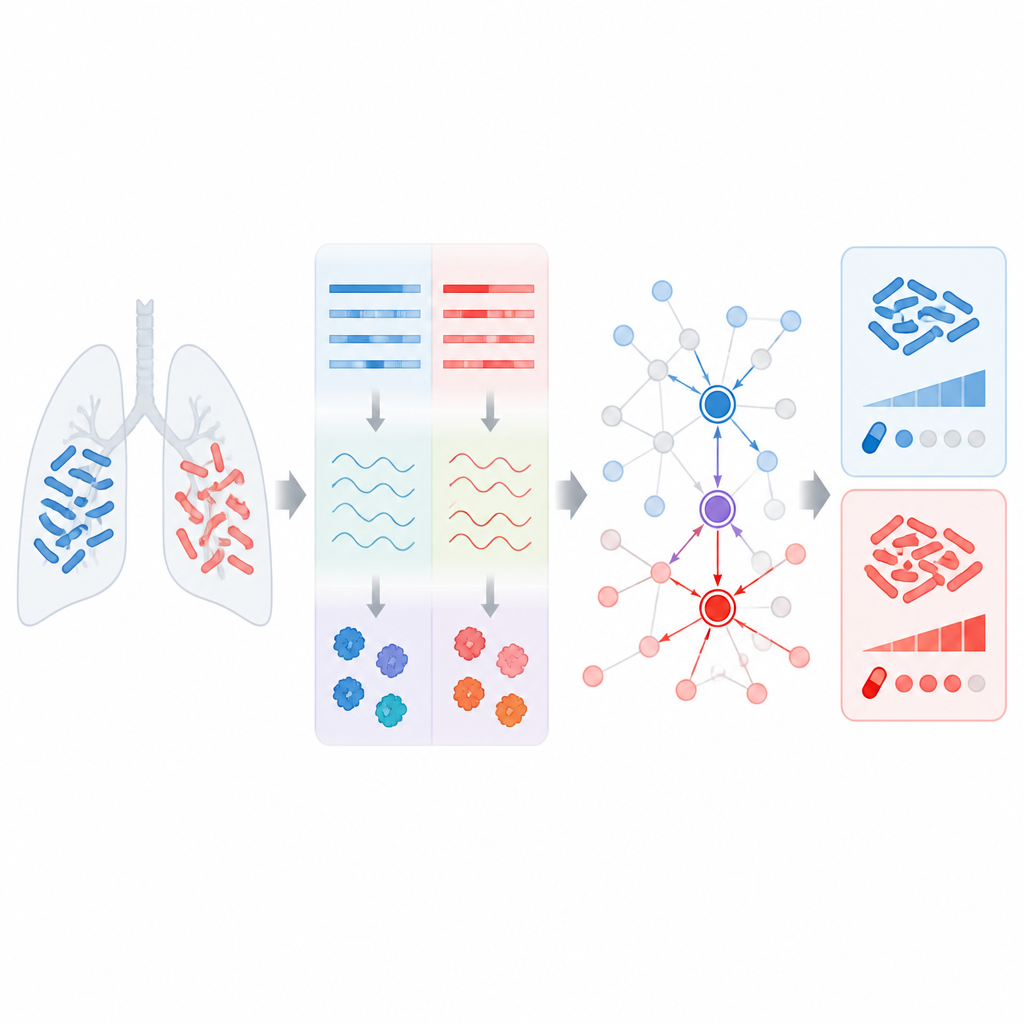
Two families of TB with very different habits
The researchers focused on two human-adapted lineages of the tuberculosis bacterium. Lineage 1 is common around the Indian Ocean and tends to be less aggressive and less often drug resistant. Lineage 2 is widespread, highly virulent, more easily transmitted, and more often linked to drug resistance. Although these lineages differ by relatively few DNA letters, they show clear contrasts in how they cause disease. The challenge has been to connect their limited genetic differences to the striking differences doctors see in the clinic.
Reading DNA, RNA, and proteins at once
To tackle this, the team used a comprehensive “multi-omics” approach. They grew three strains from each lineage under controlled lab conditions and measured their genomes, RNA molecules, and proteins. This allowed them to compare thousands of genes and proteins at the same time. They found hundreds of RNAs and proteins that differed in abundance between the two lineages, especially in genes linked to survival under stress, interaction with the human immune system, and use of nutrients such as lipids and iron. Essential housekeeping genes, in contrast, were mostly unchanged, suggesting that evolution has mainly tuned how the bacteria cope with hostile environments.
Hidden control layers inside the cells
The team then asked how strongly RNA levels matched protein levels. In many bacteria, RNA is a good stand-in for protein. Here, the match was only moderate and varied by gene function, hinting at strong control after RNA is made, such as through protein degradation. Notably, genes tied to virulence and regulation were less tightly controlled at the protein level in the more aggressive Lineage 2 than in Lineage 1. By combining their data with published maps of DNA binding, the scientists built a genome-wide model of which regulatory proteins control which genes. They found that just four transcription factors together accounted for about a quarter of all expression differences between the lineages.
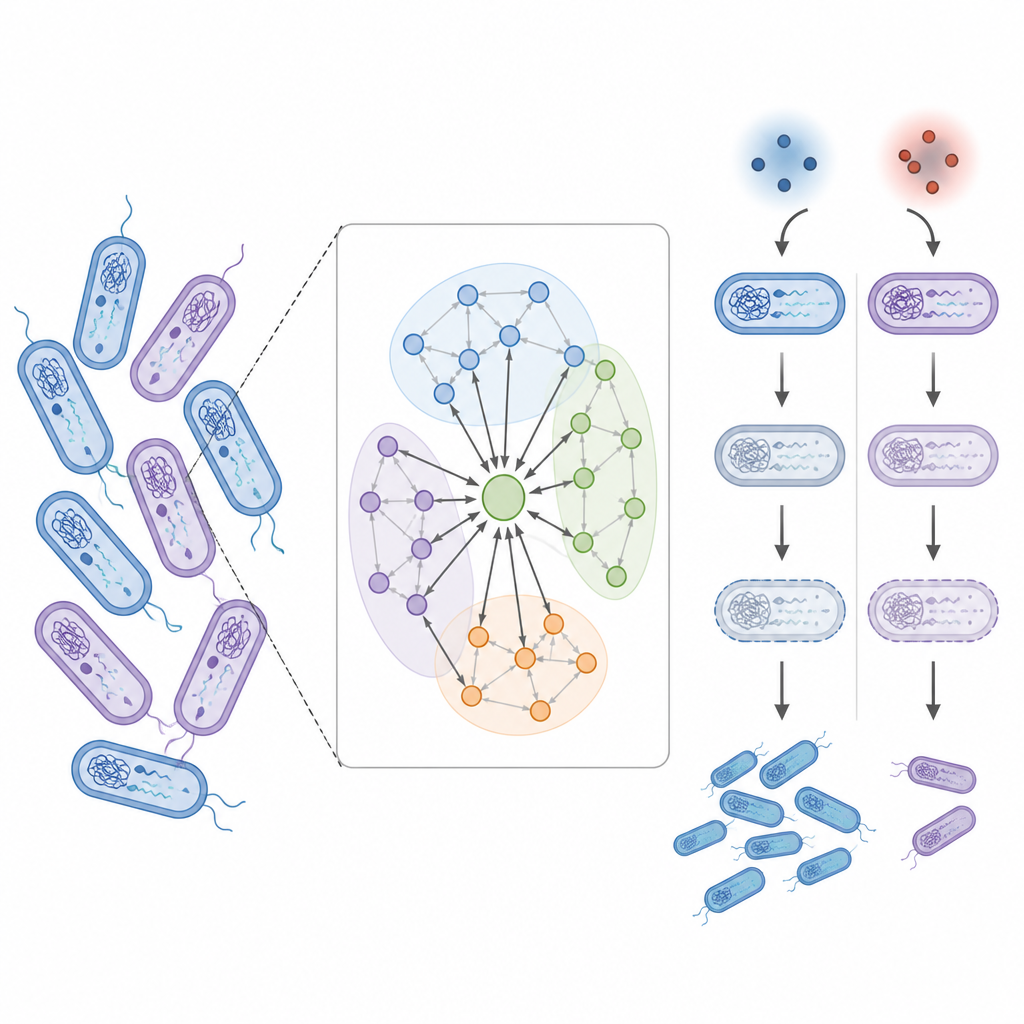
A key switch that shapes stress response and drug tolerance
Two regulators, DosR and LysG, emerged as especially important. DosR controls a set of genes that help the bacterium survive low oxygen and nitric oxide, conditions it faces inside immune cells. Lineage 2 strains had higher baseline levels of DosR-controlled proteins and reacted more strongly when exposed to nitric oxide, recovering their growth faster than Lineage 1. LysG, a much less studied regulator, turned out to control a large network of genes, many shared with DosR. When the researchers artificially increased LysG in a standard lab strain and subjected it to low oxygen followed by re-exposure to air, they saw broad shifts in gene activity. LysG reduced metabolic activity during recovery, affecting pathways such as energy production and transport, and influenced the activity of many other regulators.
Connecting molecular wiring to tougher TB
The reduced metabolism linked to LysG activity matches earlier observations that Lineage 2 strains show lower energy levels inside cells and greater tolerance to the TB drug bedaquiline. By showing that limited genetic variation can rewire a small set of master switches, this work explains how one lineage can become more resilient under stress and more tolerant to treatment without large changes in its genome. For non-specialists, the key message is that subtle differences in how TB bacteria manage their internal control networks can have outsized effects on how easily they spread, how long they persist in the body, and how well they respond to modern drugs.
Citation: Banaei-Esfahani, A., Borrell, S., Trauner, A. et al. LysG-driven transcriptional network rewiring underlies lineage-specific phenotypes in Mycobacterium tuberculosis. Nat Commun 17, 4352 (2026). https://doi.org/10.1038/s41467-026-70539-4
Keywords: tuberculosis lineages, gene regulation, multi omics, drug tolerance, Mycobacterium tuberculosis