Clear Sky Science · en
Proteostasis failure and mitochondrial dysfunction contribute to chromosomal instability-induced microcephaly
When Brain Growth Goes Off Balance
Some children are born with unusually small brains, a condition called microcephaly that can cause serious developmental problems. In a rare disorder known as mosaic variegated aneuploidy (MVA), many cells carry the wrong numbers of chromosomes, and most patients develop microcephaly. This study uses fruit flies to uncover why chronic chromosome mis-sorting in brain stem cells can shrink the brain, revealing a surprising link to disrupted protein quality control and failing energy factories inside cells.
Brain Builders Under Stress
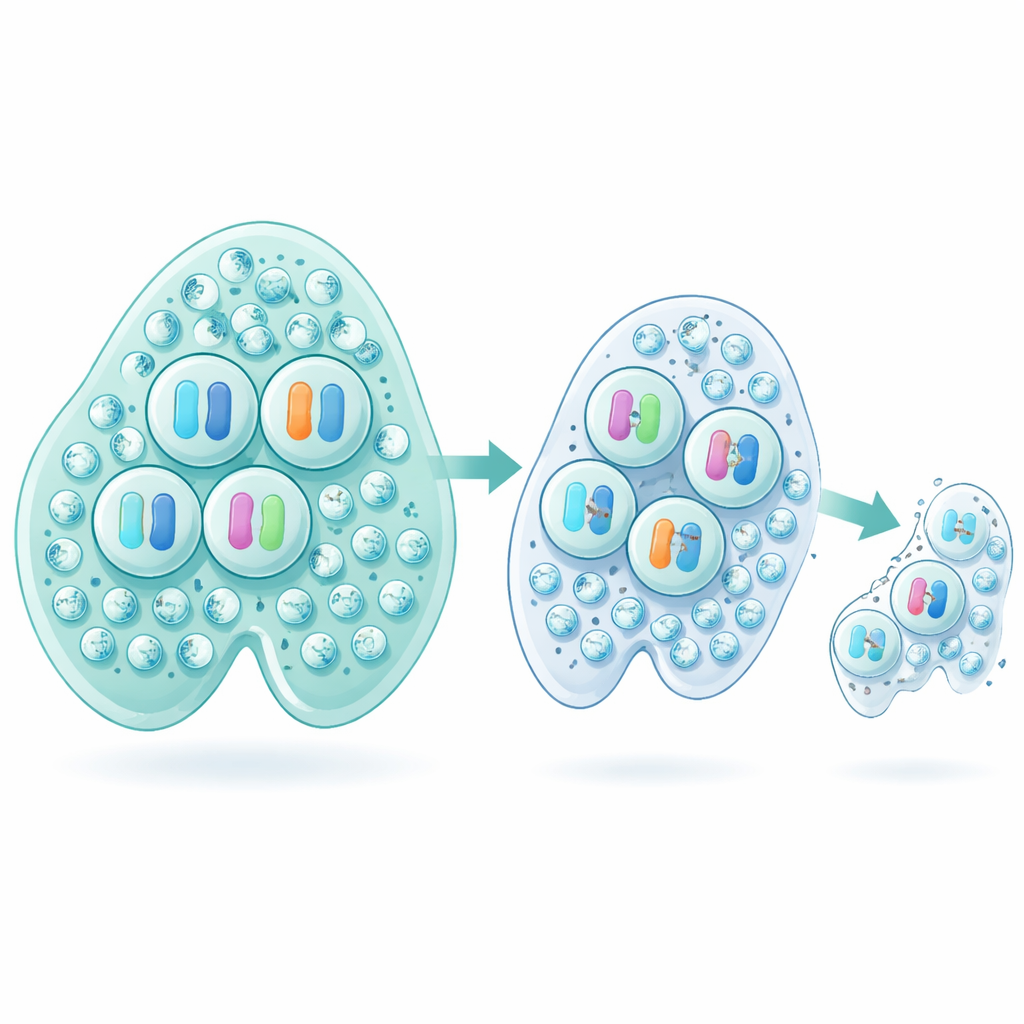
Growing brains rely on neural stem cells, which act as self-renewing “seed” cells that keep dividing to produce neurons and support cells called glia. The researchers mimicked MVA in fruit flies by weakening a single gene from the spindle assembly checkpoint, a safety system that normally ensures chromosomes are shared evenly when cells divide. When this checkpoint was disabled specifically in neural stem cells, the larval and adult brains became smaller, with fewer stem cells, neurons, and glial cells. Careful timing experiments showed that the stem cells did not disappear immediately; instead, their numbers dropped only after many rounds of division, hinting that damage accumulated gradually rather than being instantly lethal.
Complex Chromosome Errors, Not Simple Ones
To figure out what kind of chromosome mistakes mattered most, the team compared several situations. In one set of flies, whole-brain “simple” aneuploidies were created by adding just one extra copy of a single chromosome. Despite the large number of genes affected, these animals showed only mild delays, and their neural stem cell counts and final brain sizes were largely preserved. Likewise, directly damaging DNA with intense X-rays did not immediately kill stem cells or halt their divisions; the major impact appeared days later, once chromosome losses and gains had built up. By tracking individual chromosomes in stem cells, the scientists found that checkpoint-defective brains accumulated “complex” aneuploidies—many gains and losses across different chromosomes—which tightly matched the timing of stem cell loss and brain shrinkage.
Stem Cells Lose Their Identity and Energy
Having pinpointed complex aneuploidy as the main culprit, the authors looked inside affected stem cells. Gene activity measurements showed that many genes involved in making ribosomes (the cell’s protein factories), processing RNA, and supporting mitochondria (the cell’s power plants) were dialed down. At the same time, genes tied to protein folding and cellular recycling pathways were turned up. Microscope studies confirmed that aneuploid stem cells had smaller nucleoli, lower levels of the growth-promoting factor dMyc, and signs that their stem cell identity was weakening: key self-renewal markers were lost, and differentiation markers invaded the nucleus. Instead of simply dying or maturing too soon, many cells entered an irreversible arrest, unable to keep dividing while still failing to behave as healthy stem cells.
Protein Overload and Tired Mitochondria
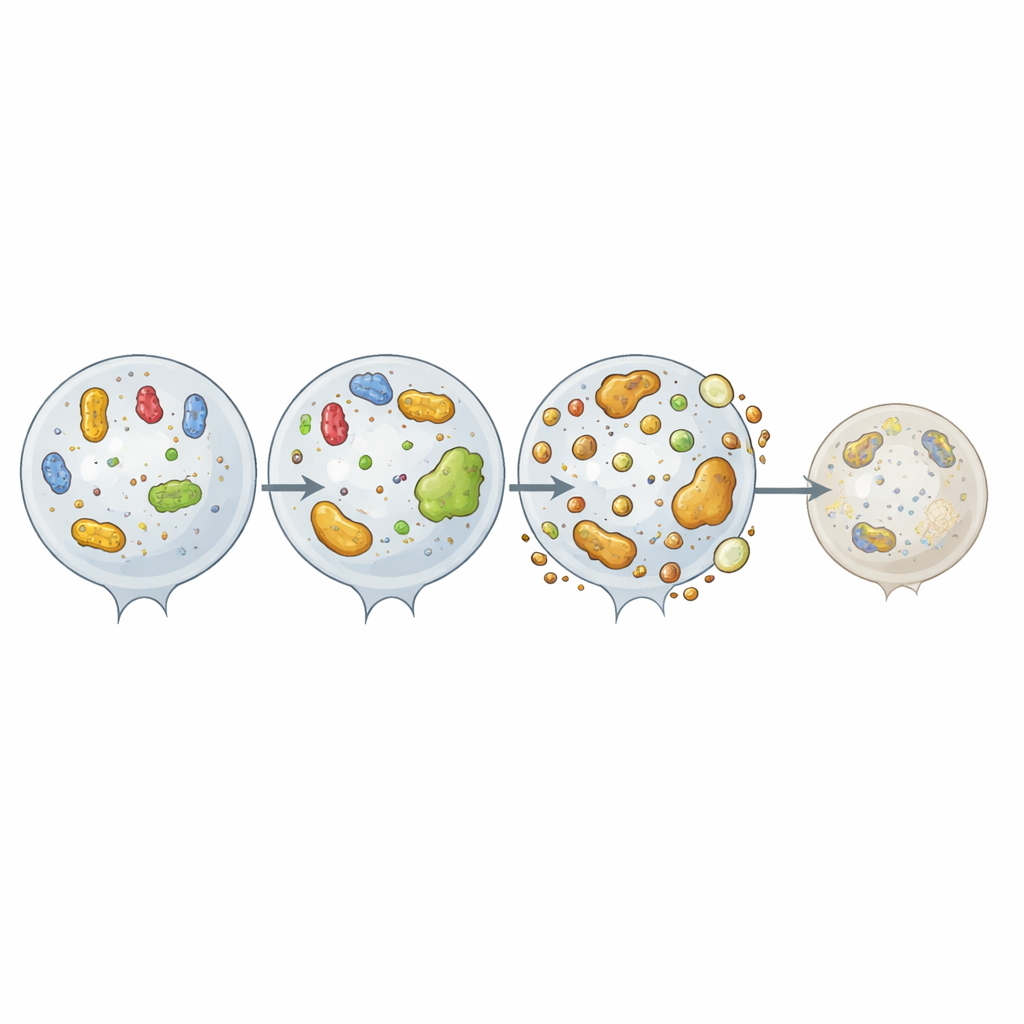
The study then zoomed in on two stress systems: proteostasis, which keeps the cell’s proteins correctly folded and disposed of, and mitochondrial health. In checkpoint-defective stem cells, a reporter protein that is normally quickly degraded by the proteasome built up, indicating that the main disposal machinery was overloaded. Another test protein, usually evenly spread, clumped into aggregates, revealing a sensitized environment where misfolded proteins easily pile up. Autophagy—bulk cellular recycling—was strongly activated, especially around stem cells, yet seemed close to saturation. Mitochondria became clumped and oxidized, and markers of specialized mitochondrial recycling (mitophagy) suggested that damaged mitochondria were not being cleared efficiently, further straining the cell’s energy supply. These combined stresses are especially harmful to stem cells, whose high energy demand supports rapid growth and division.
Ways to Help a Stressed Growing Brain
Finally, the researchers tested whether easing protein and energy stress could soften the impact of aneuploidy. Gently boosting autophagy, either genetically or with a drug that inhibits the growth regulator TOR, helped preserve more stem cells in chromosome-unstable brains, though it did not fully restore brain size. Strikingly, overproducing antioxidant enzymes that neutralize reactive oxygen species, or chaperone proteins that assist mitochondria, not only increased stem cell numbers but also brought brain size back to normal. Blocking the cell-suicide program (apoptosis) had a similar effect on overall brain size, likely by protecting the offspring of damaged stem cells. Together, these results paint a cohesive picture: in MVA-like conditions, it is the slow build-up of complex chromosome imbalances that overburdens protein control and mitochondrial health, undermining the very stemness of neural stem cells and leading to microcephaly. Interventions that restore mitochondrial balance or limit unnecessary cell death may offer promising paths for future therapies.
Citation: González-Blanco, A., Acuña-Higaki, A., Boettger, D. et al. Proteostasis failure and mitochondrial dysfunction contribute to chromosomal instability-induced microcephaly. Nat Commun 17, 3829 (2026). https://doi.org/10.1038/s41467-026-70521-0
Keywords: microcephaly, aneuploidy, neural stem cells, mitochondrial dysfunction, proteostasis